The NS-Dok Museum Cologne: Lessons from Germany’s Dark Past

on Feb 01, 2026, Updated Jun 17, 2026
This post may contain affiliate links. Please read our disclosure policy.
Here’s why you should plan a visit to the NS-Dok Museum Cologne for a powerful look at Nazi history, just steps from the famous Cologne Cathedral.
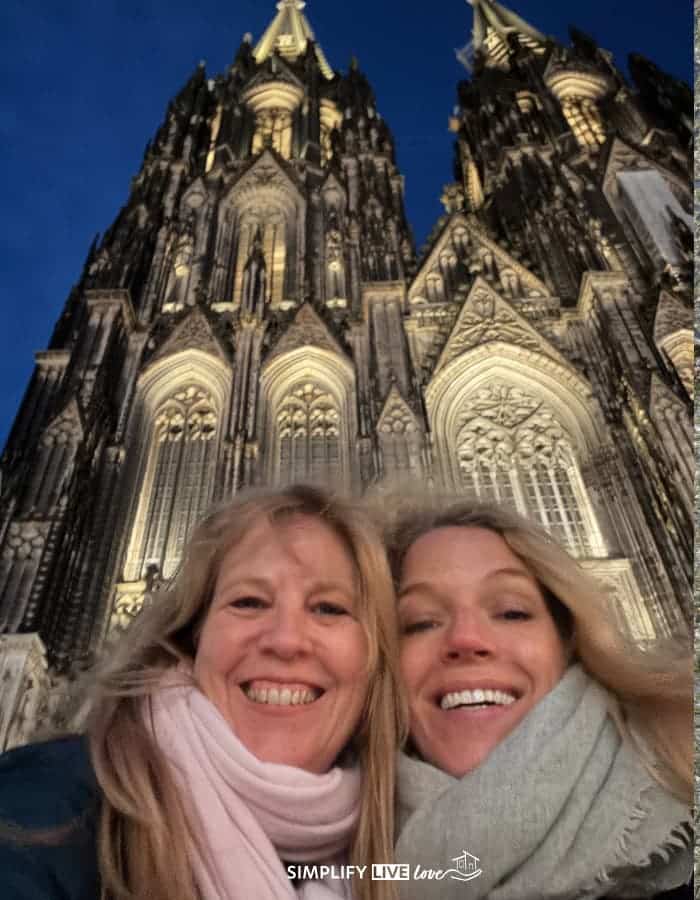
Last fall, my German friend Sarah and I decided to break up our five hour drive from Heidelberg to Amsterdam with an overnight stop in Cologne. Like most visitors, we planned to see the famous cathedral. While looking up other things to do nearby, I came across the NS-Dok Museum Cologne, just a five-minute walk from the Dom, a place many tourists overlook.
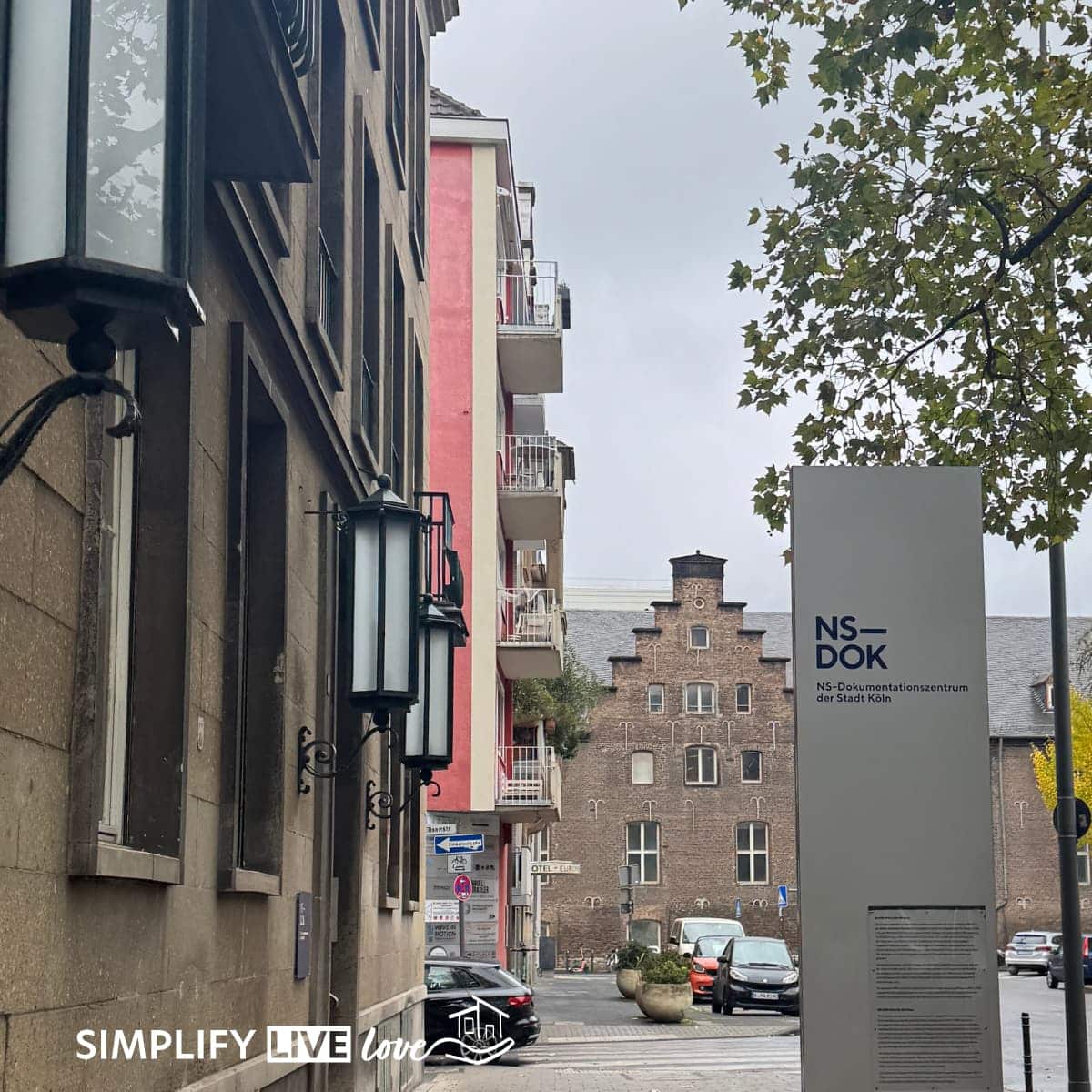
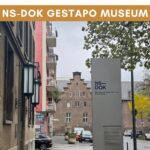
I’m grateful Sarah also wanted to visit this museum. Tucked behind the city’s busy Appellhofplatz, the NS-Doc Museum offers one of the most powerful glimpses into Cologne’s wartime past I’ve encountered.
While the soaring Gothic spires of the cathedral represent spiritual aspirations, this nearby museum, located in a building called the EL-DE Haus is exactly the opposite. What a stark reminder of our capacity for darkness.
The NS-Dok Museum Cologne: A Powerful Stop Near the Cathedral
Table of Contents
- The NS-Dok Museum Cologne: A Powerful Stop Near the Cathedral
- Visiting the NS-Documentation Center: What to Expect
- Why Visit the NS-Dok Museum: Connecting Holocaust History Across Europe
- Ready to travel? Use these helpful links to book your stay!
- Location and Practical Information: NS-Documentation Center Near Cologne Cathedral
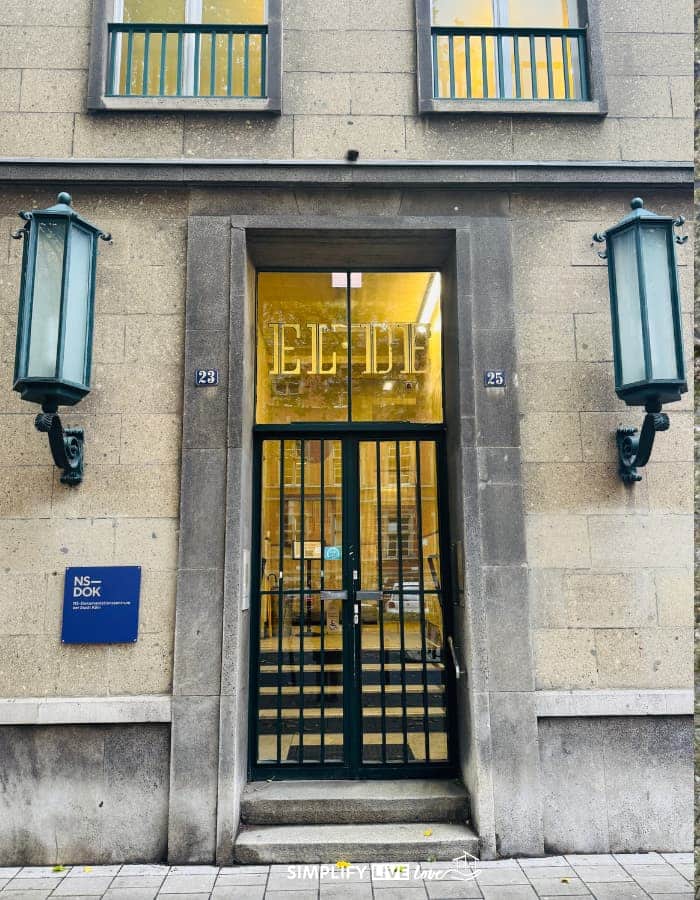
The EL-DE Haus: From Gestapo Headquarters to Memorial
The EL-DE Haus was built in the early 1930s by jeweler Leopold Dahmen, whose initials gave the building its name. In 1935, the Gestapo seized it, converting the upper floors into offices and the basement into a prison. Here, thousands of people including resistance members, forced laborers, and ordinary citizens accused of defying Nazi laws, were interrogated, tortured, and many were executed.
Remarkably, the building survived Cologne’s devastating wartime bombing almost untouched. When Allied forces liberated the city in 1945, the Gestapo fled, leaving the building behind. For decades, it quietly housed city offices while few spoke openly about what had happened within its walls.
How the Gestapo Prison Became the NS-Documentation Center Cologne
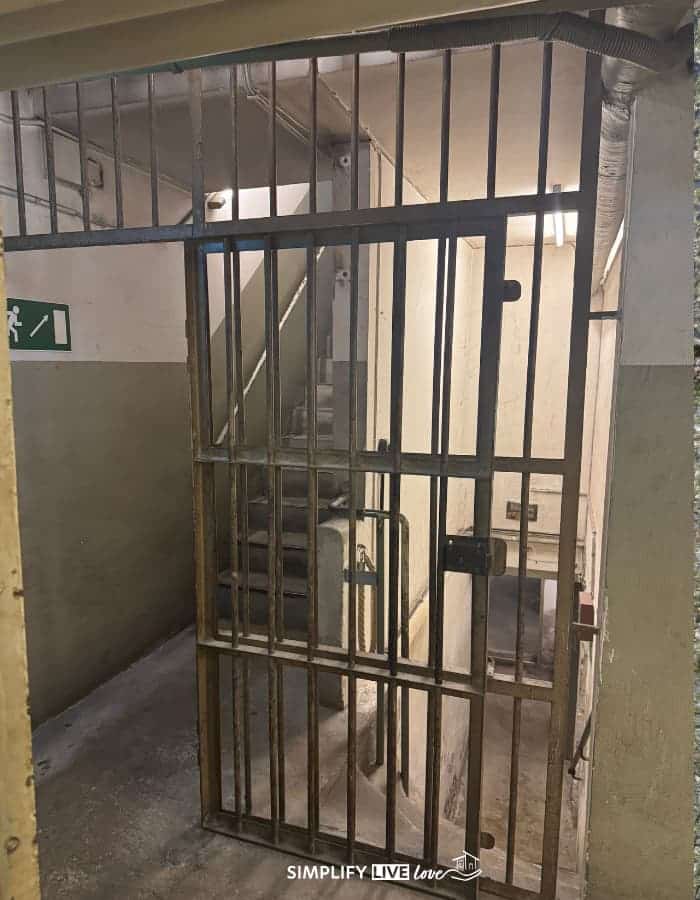
That silence broke in the late 1970s when local activists rediscovered the hidden prison cells in the basement. What they found was horrofying: more than 1,800 handwritten messages and drawings scratched into the cell walls—final words, prayers, and desperate notes left by prisoners facing uncertain fates. The discovery sparked public outrage and a movement to preserve the site as a memorial rather than erase it through renovation.
In 1981, the former prison opened to the public. By 1988, it had evolved into a full museum and research center, officially named the NS-Documentation Center of the City of Cologne, with a mission to remember victims of Nazi terror, research local history, and promote democracy and tolerance.
Visiting the NS-Documentation Center: What to Expect
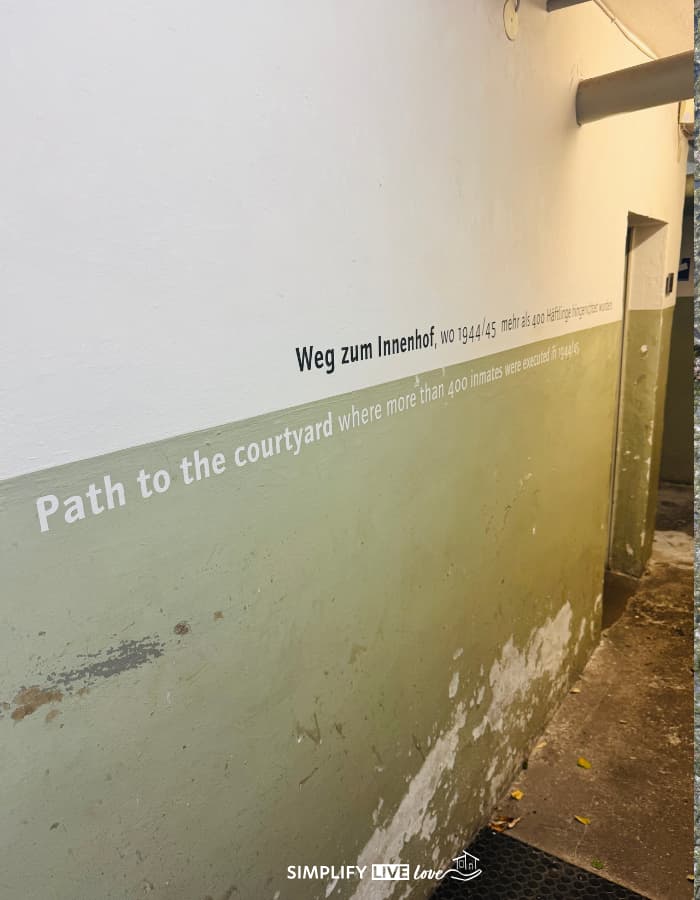
Planning Your Visit to Cologne’s Holocaust Memorial Museum
We spent about two and a half hours at the museum, and I’d recommend planning at least two hours to fully absorb the experience.
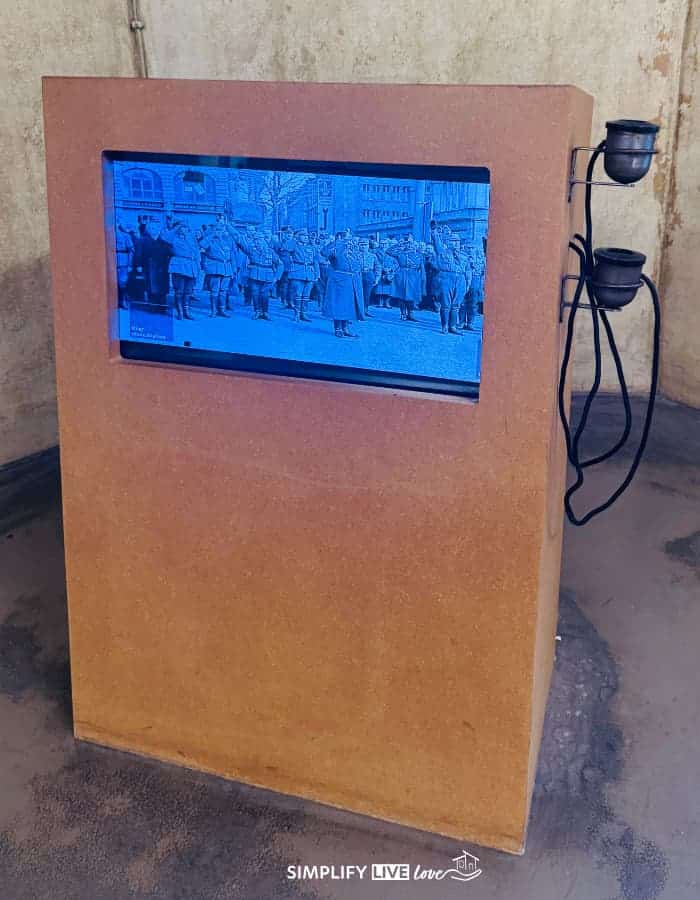
When you visit, I recommend starting on the upper floor with the permanent exhibition, which uses photographs, documents, and personal stories to show how the Nazi regime took over everyday life in Cologne. Using pictures from schools and workplaces to neighborhoods and families, it’s a powerful exhibit.
Sarah, whose own grandparents lived through this period, explained some of the German-only placards that I had a hard time understanding, adding layers of family history that made the exhibits even more personal.
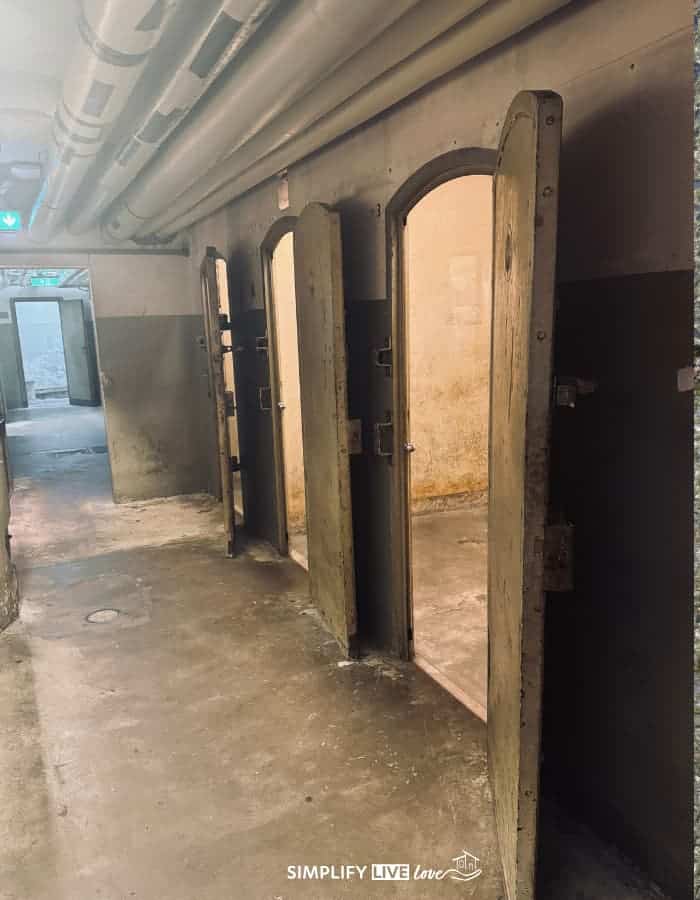
Inside the Gestapo Prison Cells at the NS-Dok Museum
We ended in the basement, where the preserved prison cells remain almost exactly as they were in 1945. Standing in those cramped spaces, reading the prisoners’ messages scratched into the walls, created an unforgettable connection to the human cost of dictatorship. Some were defiant. Others were simply names and dates—people desperate to leave proof they’d existed.
Audio guides are available in multiple languages, and English signage is there, but hit and miss due to the nature of some of the exhibits.
The location couldn’t be more convenient. After visiting the cathedral, simply walk five minutes south through the city center and you’ll find it.
Admission costs only a few euros (teens and students often enter free), making this essential history accessible to everyone.
The experience is heavy. After visiting, we had a quick lunch before continuing on to Amsterdam. The museum sparked a lot of conversation for the rest of our drive.
Pin this now to find it later
Pin It
Why Visit the NS-Dok Museum: Connecting Holocaust History Across Europe
This visit was one of several meaningful experiences I had that fall exploring how different places remember difficult histories. A few days later in Amsterdam, we visited the Anne Frank House, another profound reminder of the Holocaust’s human toll.
And this trip taught me something important: these museums aren’t just about Germany’s or the Netherlands’ past. They’re about the importance of memory, truth, and civic courage in every generation and every country.
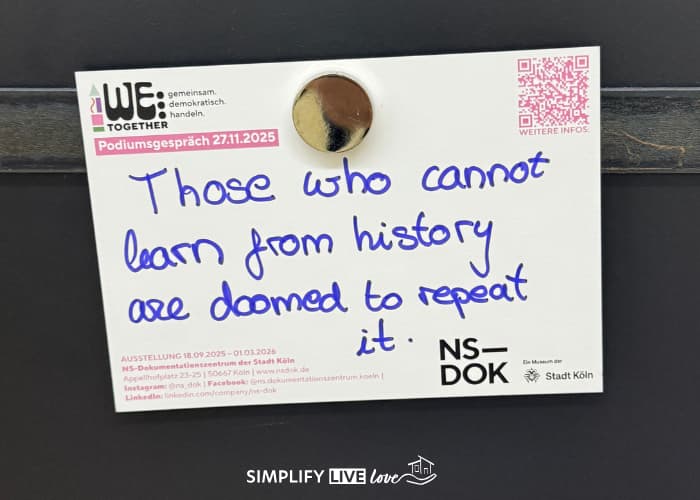
Educational Value of the NS-Dok Museum for Families and Students
The NS-Dok Museum would be valuable for families traveling with older children or teens. It can spark meaningful conversations about freedom, propaganda, and the danger of remaining silent in the face of injustice—lessons that transcend any single nation’s history.
Ready to travel? Use these helpful links to book your stay!
- Book your plane ticket with Expedia or Kayak
- Find a reasonably priced rental car or an RVShare rental for the perfect road trip
- Get your Harvest Hosts membership so you can camp at farms, wineries, breweries and more!
- We love using Hotels.com or Vrbo for the perfect home away from home
- Save on tickets to attractions, sightseeing tours, and more with TripAdvisor, CityPASS, Big Bus Tours, and Viator
- Don’t leave home without travel insurance to protect your trip!
- Check out our favorite 21 Time and Money Saving Travel Apps
- Get a National Park Pass to keep or gift
Location and Practical Information: NS-Documentation Center Near Cologne Cathedral
After Cologne, we continued to Amsterdam, and then I headed back to Germany by train before traveling solo to France for a Loire Valley river cruise with the Society of American Travel Writers.
Looking back on that entire journey, the NS-Documentation Center stands out as one of the most important stops because of its difficulty.
How to Get to the NS-Doc Museum from Cologne Cathedral
The NS-Dok Museum Cologne is an easy walk from Cologne Cathedral. From the Dom, head south through the city center toward Appellhofplatz. The walk takes about five minutes.
There’s no need for public transportation if you’re already visiting the cathedral. The museum’s central location makes it simple to add to a one-day Cologne itinerary, and its proximity reinforces how closely this darker history sits alongside the city’s most famous symbol.
If you’re already in Cologne to see the cathedral, set aside two hours for the NS-Dok Museum Cologne. It turns a quick sightseeing stop into something deeper and more lasting. Some museums entertain. This one forces you to pause, reflect, and reckon with the past—and that’s exactly why it belongs on your itinerary.
For current hours, ticket details, and special exhibits, visit the official NS-Documentation Center website.
If you’re looking for more ways to explore Germany, check out these posts:
12 Things You Need to Know About Driving in Germany