Driving in the Dominican Republic: Everything You Need to Know to Stay Safe

on Apr 05, 2026, Updated Jun 17, 2026
This post may contain affiliate links. Please read our disclosure policy.
Planning a trip to the DR? If you intend to rent a car, here’s everything you need to know about driving in the Dominican Republic to keep your family safe and accident free.
What do you need to know before driving in the Dominican Republic?
- 1. Traffic laws seem to exist but enforcement is rare — expect motorcycles, pedestrians, livestock, and vehicles from every direction.
- 2. Never drive at night if you can avoid it — poor lighting and unmarked hazards make it dangerous.
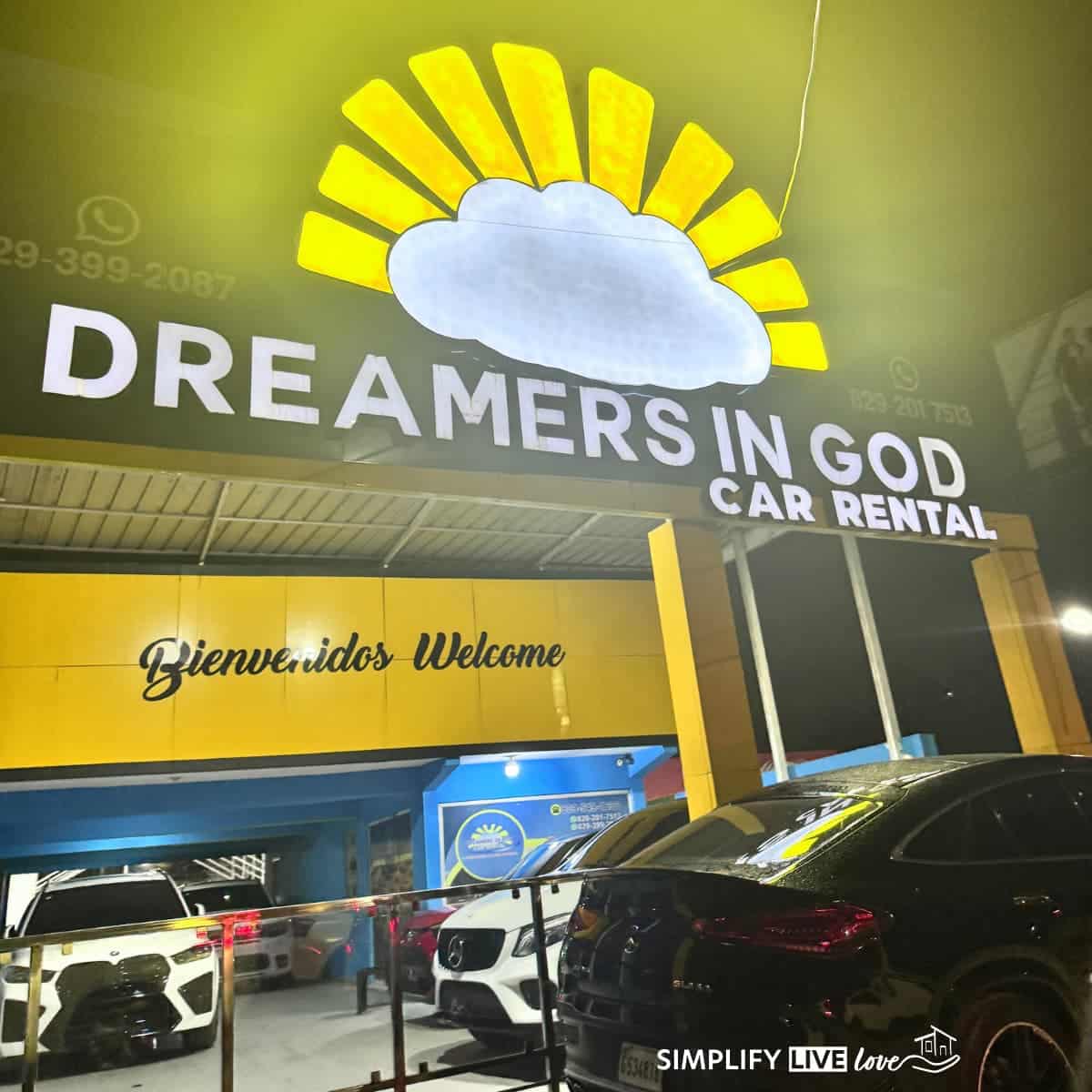
- 3. Photograph (and video) your rental car thoroughly before leaving the lot and buy the extra insurance.
- 4. Download offline maps before you go — do not rely on a cell signal in rural areas.
- 5. Honking is communication — use it.
- 6. Watch for unmarked speed bumps on highways.
- 7. Hiring a local driver is a legitimate and smart alternative for many families.
- 8. Have Dominican Republic Pesos ready for tolls.
Driving in the Dominican Republic is not for the faint of heart. We know this firsthand because we rented a car and drove across the country, 150 miles from Santo Domingo to Puerto Plata without realizing that that 150 miles would take all of 4-5 hours.
Originally, we planned to do the drive at night, but luckily, we changed our mind at the last minute and decided to stay the night in Santo Domingo and drive during the daylight instead. If you’ve been following this series, you know how we ended up on a Dominican Republic Family Vacation.
If you’re planning to rent a car in the DR, this article is the one you need to read before you do.
Table of Contents
- What do you need to know before driving in the Dominican Republic?
- Forget What You Know About Traffic Laws
- What Happened to Us (So It Doesn’t Happen to You)
- Practical Tips for Driving in the Dominican Republic
- What to Know Before You Rent a Car
- Ready to travel? Use these helpful links to book your stay!
- The Alternative: Skip Driving Altogether
- The Bottom Line
- Get all the deets about the Dominican Republic? Read these posts!
We’re not going to sugarcoat it. Driving in the Dominican Republic is challenging, and it is unlike anything most American drivers have experienced. But it is doable with the right mindset, the right preparation, and a firm grip on the wheel.
Forget What You Know About Traffic Laws
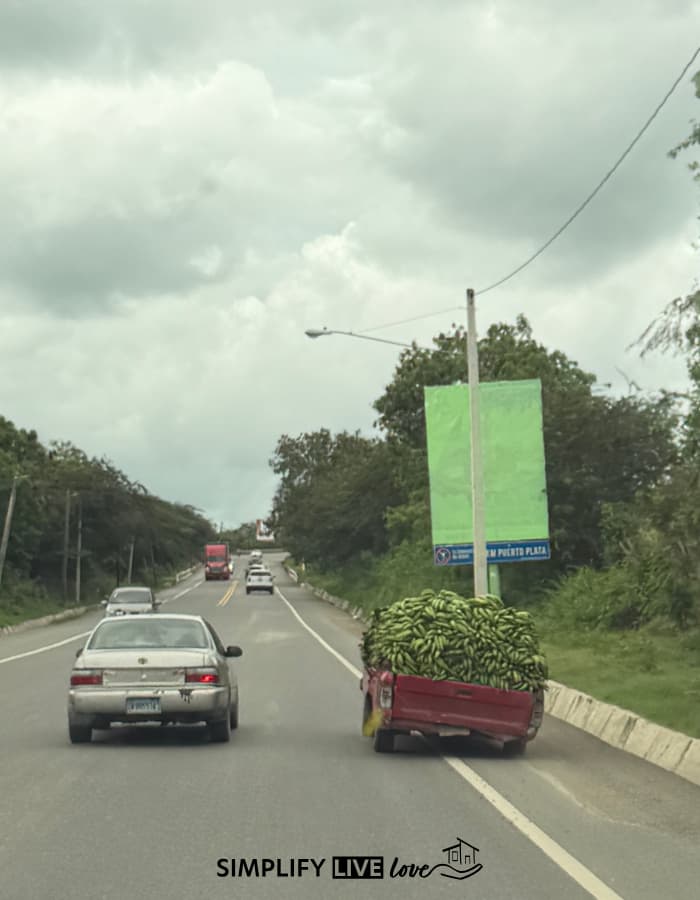
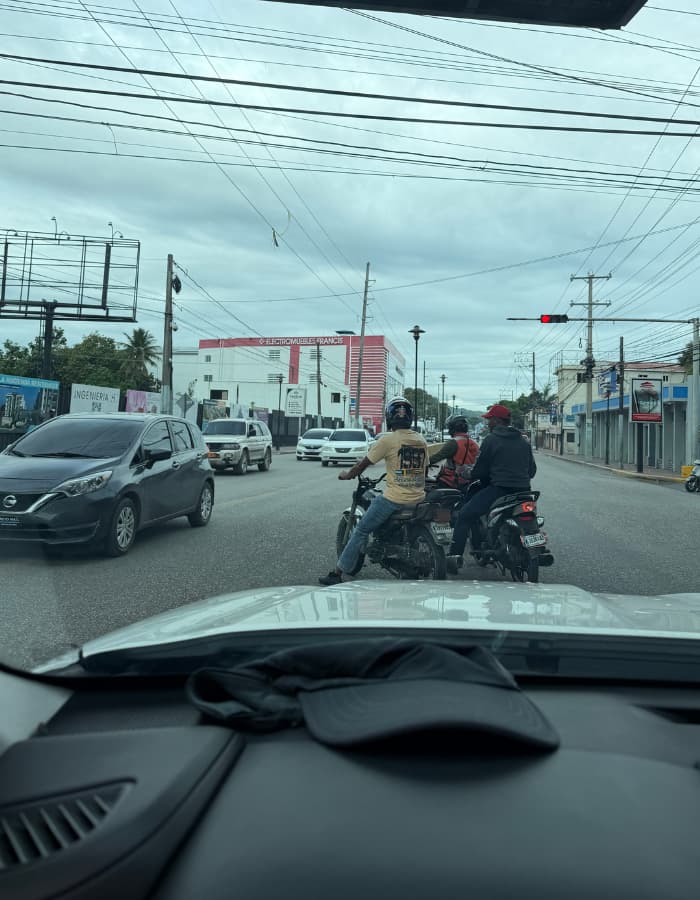
Traffic laws in the Dominican Republic exist in theory. In practice, the road operates on an entirely different system. Driving seems to be built on boldness, honking, and a collective agreement to somehow not destroy each other. Seriously. Somehow it all seems to work out, but we’re still not sure how.
Lane lines are suggestions. Traffic signals are loosely observed. The concept of right-of-way is more of a negotiation than a rule.
Other things you’ll notice about driving in the DR:
- motorcycles weaving at speed between lanes and AGAINST traffic
- pedestrians crossing highways without warning
- bicycles with no lights at night,
- horses, livestock, dogs and cats all over
- dump trucks that do not slow down
The first time you experience an intersection in a busy Dominican city, it will feel like chaos. By day three, you will start to understand the rhythm and a bit of organization. Mostly.
Pin this now to find it later
Pin ItWhat Happened to Us (So It Doesn’t Happen to You)
We nearly got hit by a dump truck. It came from a direction we weren’t watching, moving faster than the surroundings suggested was possible, and our margin for error was smaller than any of us would have liked. A motorcycle clipped our car, not a collision, but contact, in the moment that happens so fast you’re not even sure it occurred until someone says something.
These weren’t the result of recklessness on our part. They were the result of driving in an environment where the rules of engagement are different from what we were trained for. Knowing that going in makes a real difference.
Practical Tips for Driving in the Dominican Republic
Do not drive at night if you can avoid it.
We had no choice. Our flight arrived after dark and we needed to get to our airbnb. But night driving in the DR adds significant risk. Road lighting is inconsistent, cyclists and pedestrians are nearly invisible, and the potholes that are merely inconvenient in daylight are hazards in the dark. If your arrival is delayed into the evening, seriously consider spending the night near the airport and driving longer distances in the morning.
Never stop for unofficial roadblocks or strangers flagging you down.
Legitimate police checkpoints exist and are generally straightforward. Unofficial stops are a different matter. If something feels wrong, keep moving to a populated, well-lit area before stopping.
Don’t give anyone your license or passport. You can show it to them, but don’t let them take it.
Have money available for bribes. We didn’t experience this, but were told by Dominicans that a $20 bill would go a long way if we did get stopped.
Use Google or Apple Maps, but verify the route.
Navigation apps work reasonably well in the DR, but road conditions on the ground don’t always match what the app expects. Download offline maps before you go so you’re not dependent on a data signal in rural areas.
Honk liberally and intentionally.
In the Dominican Republic, honking is communication, not aggression. A short beep signals your presence at a blind corner. A quick tap tells a motorcycle you’re passing. It feels rude at first if you’re American. It’s actually the safe and expected thing to do. You’ll learn quickly to tell a difference between the different types of honking you’ll hear in the DR.
Give motorcycles serious respect.
Motorcycles are everywhere and they move unpredictably. They will pass you on the left, on the right, and occasionally it will feel like they have emerged from a parallel dimension.
Leave more space than you think you need, check mirrors constantly, and never assume a motorcycle is where you last saw it.
Watch for speed bumps.
Speed bumps are everywhere, including on highways, and they are often unmarked or poorly marked. Local drivers know where they are. We did not. Approach every unfamiliar stretch of road with that in mind.
Fuel up whenever you have the chance.
Gas stations are not as frequent outside urban areas as you may be used to. Don’t let the tank get low on a long drive. Be prepared for an attendant to fuel for you. Gas stations are full service in the Dominican Republic. They’ll air up your tires too.
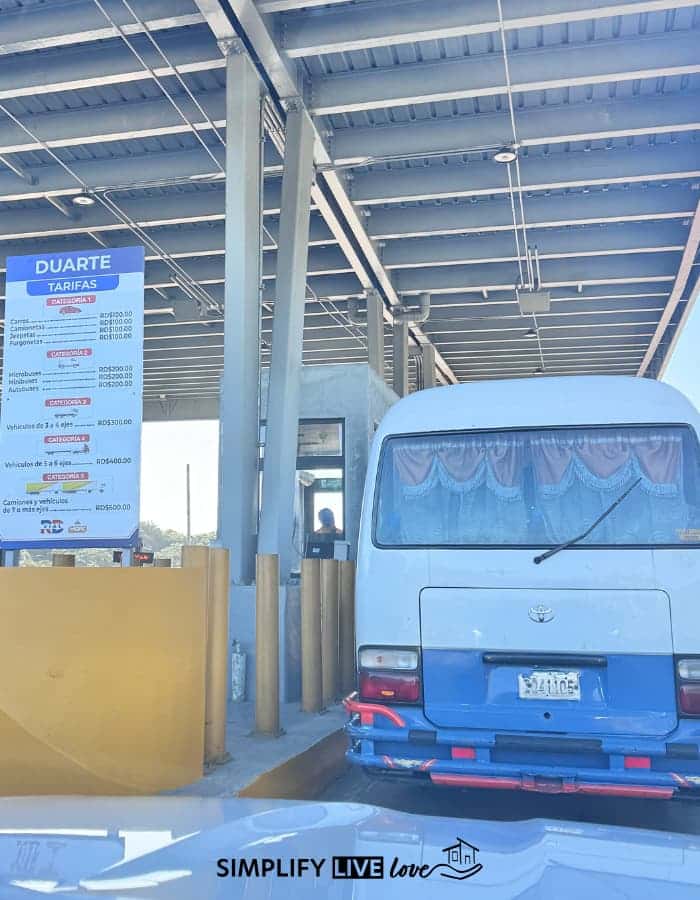
Have cash for tolls.
Make sure you have enough Dominican Republic Pesos to make pay your tolls. On the drive to and from Puerto Plata we needed about 600-700 Pesos oneway for various tollways. Don’t forget your cash. We got some money before we left airport and it’s a good thing we did.
What to Know Before You Rent a Car
Book in advance. Rental car availability at Dominican airports can be limited, particularly during peak season. We were able to get a car on arrival, but it was not a given. Book ahead to guarantee both availability and a better rate.
Photograph the car thoroughly before you drive off. Every scratch, every dent, every scuff — document all of it with timestamped photos before you leave the lot. Rental car disputes are not uncommon, and your photos are your protection. Video evidence might even be better than photos.
Understand your insurance coverage before you go. Check whether your personal auto insurance or travel credit card covers rental cars internationally. Some do, some don’t, and the DR is not the place to find out you’re underinsured. Given our motorcycle encounter, we are particularly passionate about this point.
Consider a higher clearance vehicle. Roads outside major cities can be rough. An SUV or crossover handles the conditions more comfortably than a compact sedan, particularly if you’re venturing into rural areas.
Ready to travel? Use these helpful links to book your stay!
- Book your plane ticket with Expedia or Kayak
- Find a reasonably priced rental car or an RVShare rental for the perfect road trip
- Get your Harvest Hosts membership so you can camp at farms, wineries, breweries and more!
- We love using Hotels.com or Vrbo for the perfect home away from home
- Save on tickets to attractions, sightseeing tours, and more with TripAdvisor, CityPASS, Big Bus Tours, and Viator
- Don’t leave home without travel insurance to protect your trip!
- Check out our favorite 21 Time and Money Saving Travel Apps
- Get a National Park Pass to keep or gift
The Alternative: Skip Driving Altogether
If everything you’ve read above has you reconsidering, that is a completely reasonable response. Hiring a local driver is affordable by American standards, widely available, and might be the safer option for many families.
A local driver knows the roads, knows the rhythms, and knows how to navigate situations that would leave a foreign driver bewildered. For airport transfers and day trips especially, it’s worth serious consideration.
Organized excursions through your resort or a reputable tour company are another solid option — transportation included, local knowledge built in, no white knuckles required. If you’re staying at an all-inclusive resort, this may already be your default mode, and honestly, for the Dominican Republic, it’s not a bad one.
The Bottom Line
We drove across the Dominican Republic at night with five people and missing luggage, after the travel day from a very special place. We made it. The country is navigable by car, and there is something deeply satisfying about having done it. But we went in without fully understanding what we were getting into, and that made it harder than it needed to be.
Go prepared, go alert, go in daylight whenever possible, and give yourself a lot more time than you think the drive will take. The roads will surprise you. So will your own capacity to adapt.
Get all the deets about the Dominican Republic? Read these posts!
1 Blizzard, 2 Tornadoes + a Missed Flight = Dominican Republic Family Vacation
Is the Dominican Republic Safe for Families? What You Need to Know
All-Inclusive or Vacation Rental in the Dominican Republic: Why We Chose the Road Less Traveled
Things to do in Puerto Plata: A Guide from a Family Who Didn’t Plan to Be there