A French Jura Road Trip for Comté Cheese Lovers

on Oct 20, 2026
This post may contain affiliate links. Please read our disclosure policy.
Planning a French Jura road trip? Here’s a four day Comté cheese road trip itinerary, starting from Geneva: where to eat, what to do, and how best to immerse yourself in Comté cheese.
Before this trip, I could not have found the French Jura region on a map. Now I’d go back in a heartbeat. If you’re curious about the Jura, here’s the route we took through fortress cellars, an absinthe distillery, and villages with centuries of cheesemaking history.
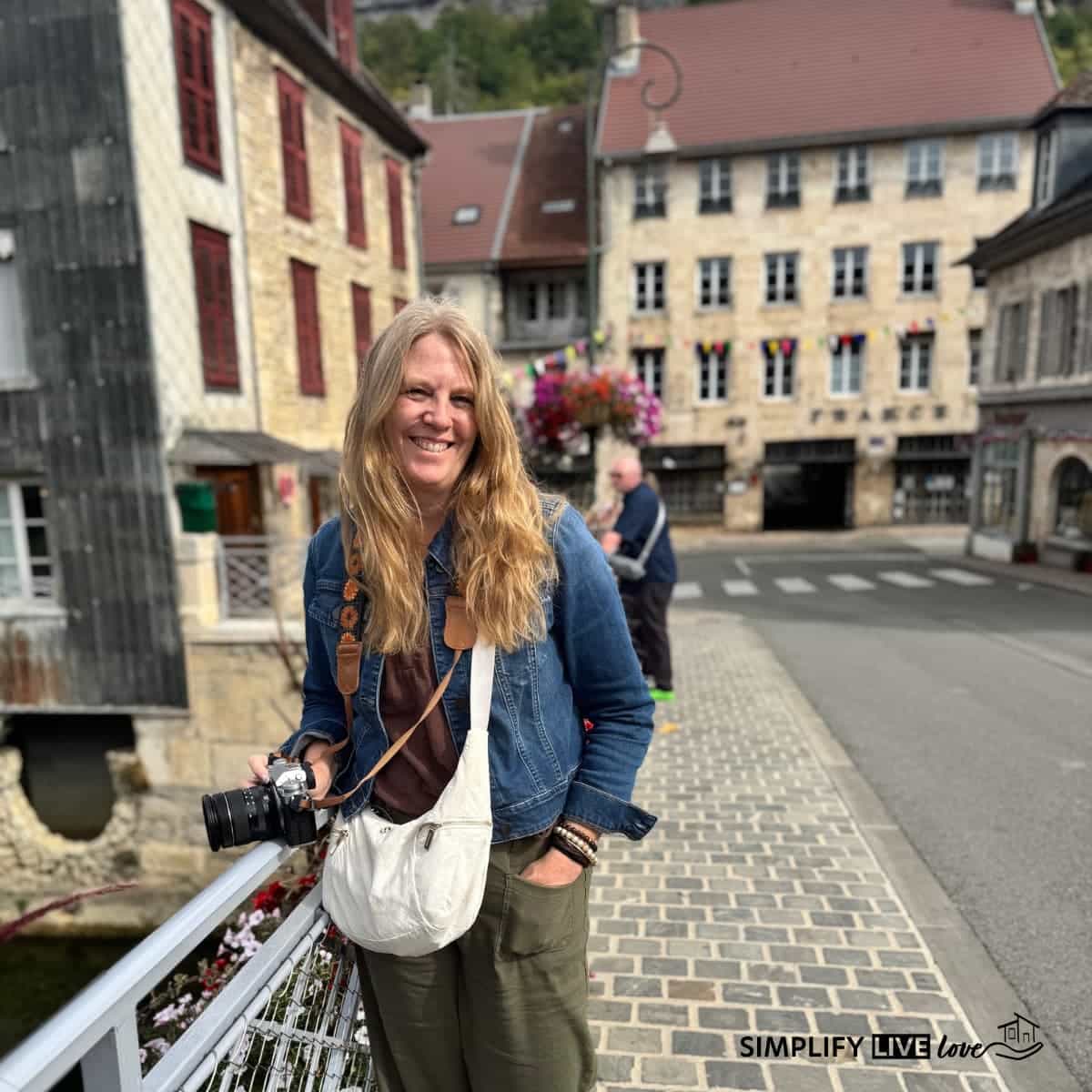
Disclosure: I traveled to the Jura on behalf of Comté cheese, and my meals, hotels, and visits were hosted. All opinions are mine.
French Jura Road Trip Quick Overview
- The Jura is a mountain region in eastern France, right next to the Swiss border and about two hours from Geneva by car.
- It’s Comté country: the cheese is made, aged, and sold in the villages along this route.
- A car is the easiest way to get around. Many of the best sights are not easily reachable by public transportation.
- Plan on 3 to 4 days for a Comté route, or longer if you add hiking, waterfalls, or skiing.
- I only did the cheese route, so I’ve put my own stops first and a separate section on what else the region offers.
Read my story – Comté Cheese: How a Co-op of Small Farms Makes a Great Cheese for a better understanding of the region.
Map of Our Comté Cheese Route.
Table of Contents
- French Jura Road Trip Quick Overview
- Map of Our Comté Cheese Route.
- French Jura Road Trip Itinerary at a Glance
- What to Book Ahead
- Where Is the Jura and How Do You Get There?
- When to Go to the Jura
- My 4-Day French Jura Road Trip Route
- Day 1: Geneva to Champagnole and Passenans
- Day 2: The Comté Museum, a Great Lunch, and a Dairy Farm Visit
- Day 3: Cheesemaking, Ornans, and Pontarlier
- Day 4: Fort Saint-Antoine, Fondue, and Souvenirs
- Where We Stayed on This Route
- More to Do in the French Jura
- How Many Days Do You Need?
- Practical Tips for Visiting the Jura
- Frequently Asked Questions about the Jura Region
- Ready to travel? Use these helpful links to book your stay!
- Related Reading
French Jura Road Trip Itinerary at a Glance
Here’s the whole route in one place. Driving times are approximate, so check them in Google Maps for your own start time and traffic.
| Day | Route | Where we slept | Highlights |
|---|---|---|---|
| 1 | Geneva to Champagnole to Passenans (about 2 hours 15 minutes of driving) | Domaine du Revermont, Passenans | Fromagerie Janin, cellar visit, and first tasting, Passenans village |
| 2 | Passenans to Poligny to Port Lesney to Vernierfontaine to Valdahon (about 1 hour 45 minutes) | Hôtel de la Promenade, Chevigney-lès-Vercel | Maison du Comté, lunch at Le Bistrot de Port Lesney, dairy farm visit |
| 3 | Vernierfontaine to Ornans to Pontarlier (about 1 hour 15 minutes) | Hôtel St Pierre, Pontarlier | Village cheesemaking, Ornans, Distillerie Guy, Brasserie de la Poste |
| 4 | Pontarlier to Fort Saint-Antoine to Malbuisson to Labergement-Sainte-Marie to Arbois to Geneva (about 3 hours) | Back to Geneva | Fort Saint-Antoine, fondue lunch, Fonderie Obertino |
What to Book Ahead
A few stops on this route need a reservation or have limited visits. Do these before you go:
- Fort Saint-Antoine: Visits need a reservation. Book through the fort’s page on the Montagnes du Jura site or the Haut-Doubs tourist offices.
- Le Bistrot de Port Lesney: It’s a small restaurant with an outdoor terrace, and it was my favorite meal of the trip. Reserve ahead, especially for lunch.
- Distillerie Guy: Visits and tastings are free but limited, and the schedule varies. Check before you go.
- Maison du Comté: Hours change by season, with shorter days and a few closures in late fall and January.
- Fonderie Obertino: Casting doesn’t happen every day, so check the schedule if you want to watch it.
- Hotels: The Jura is small, so book your nights early for late spring through early fall.
Where Is the Jura and How Do You Get There?
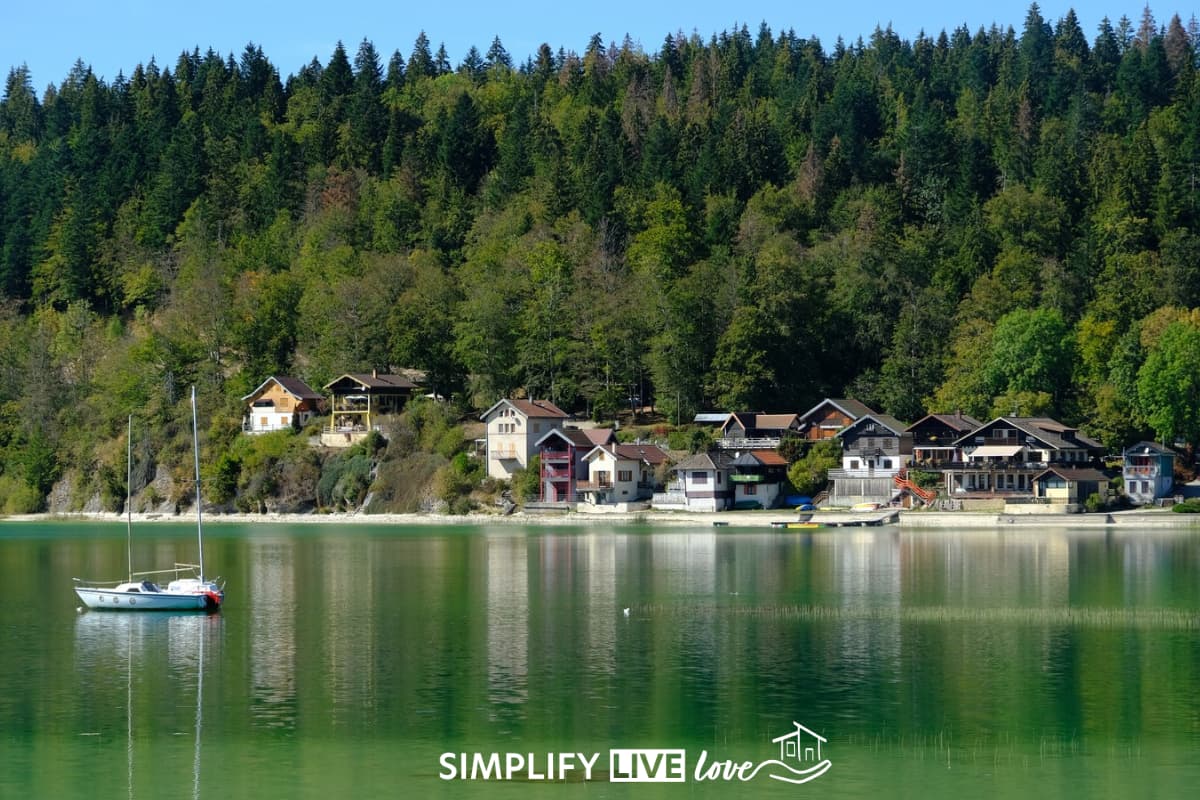
The French Jura sits between Burgundy and the Swiss border. It covers rolling pastures, forests, lakes, and limestone cliffs, and it’s the home of Comté cheese. For the cheese story behind this trip, read Comté Cheese: How a Co-op of Small Farms Makes a Great Cheese.
There are a few ways to get to the French Jura:
- From Geneva: This is how we did it. We picked up a car at the airport and drove to Champagnole, about 1 hour 45 minutes. The drive is scenic because this is the backroads path!
- From Paris: Take the TGV to Dijon in about two hours, then continue by train or rental car. You can also take a TGV to Dole or Mouchard, which puts you in the middle of Comté country. Regional trains connect towns like Poligny, Arbois, and Besançon, but service is limited.
- From Lyon: Another airport option, though the drive to the Jura is mostly highway.
One thing to know: Geneva’s airport has a Swiss side and a French side. If you’re picking up a rental car, make sure you pick it up on the side that fits your plans.
When to Go to the Jura
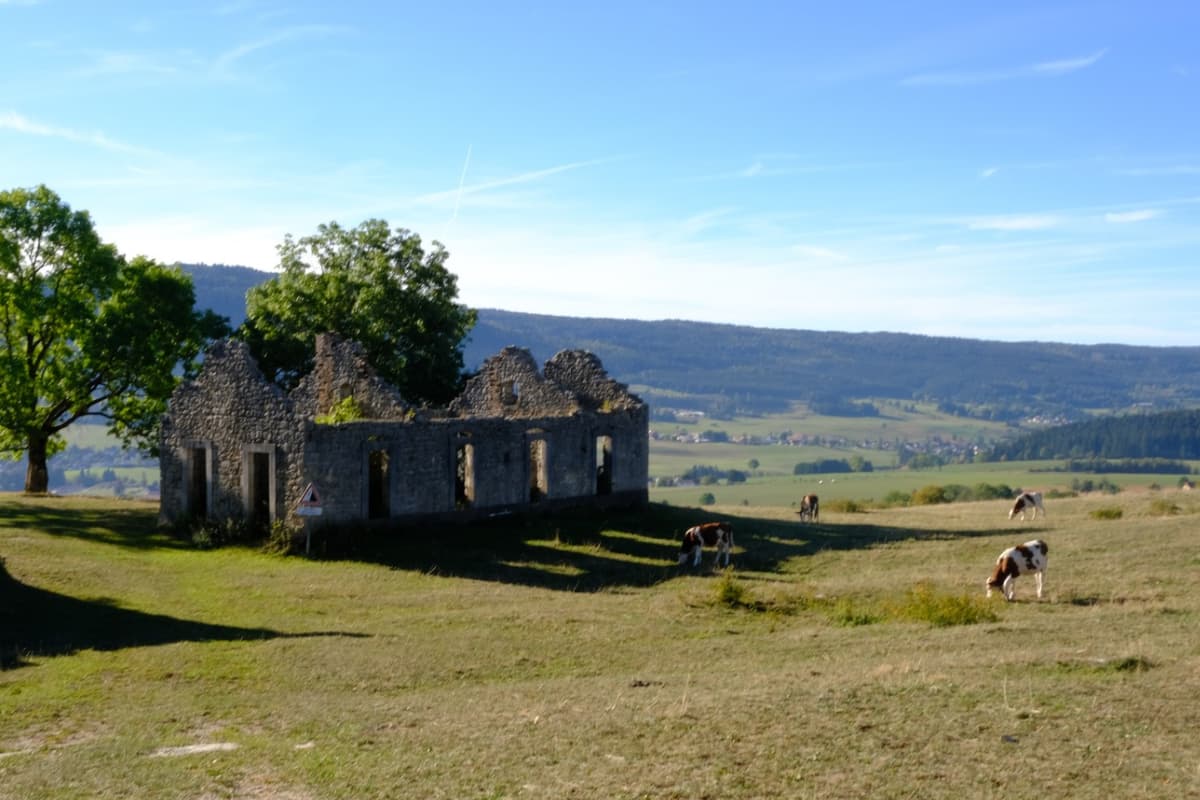
I went in late September, when the weather was warm, the pastures were still green, and the days were long enough for a full route. The Jura changes a lot by season, though.
- Late spring through early fall: Waterfalls, hiking, biking, lake swimming, and cheese visits.
- Winter: Cross-country skiing and snowshoeing. Skiing is best in January and February.
- Check hours before you go. Many places shorten their hours or close for a few weeks in the off-season. The Maison du Comté, for example, closes for a couple of weeks in late November and again in January.
My 4-Day French Jura Road Trip Route
This is the route I followed, with the stops you can book when you visit.
Day 1: Geneva to Champagnole and Passenans
- Driving today: About 2 hours 15 minutes in total. Geneva to Champagnole is about 1 hour 45 minutes, and Champagnole to Passenans is about 26 minutes.
Our group of seven flew into Geneva and started our road trip from the airport. We were in a rented van the entire trip.
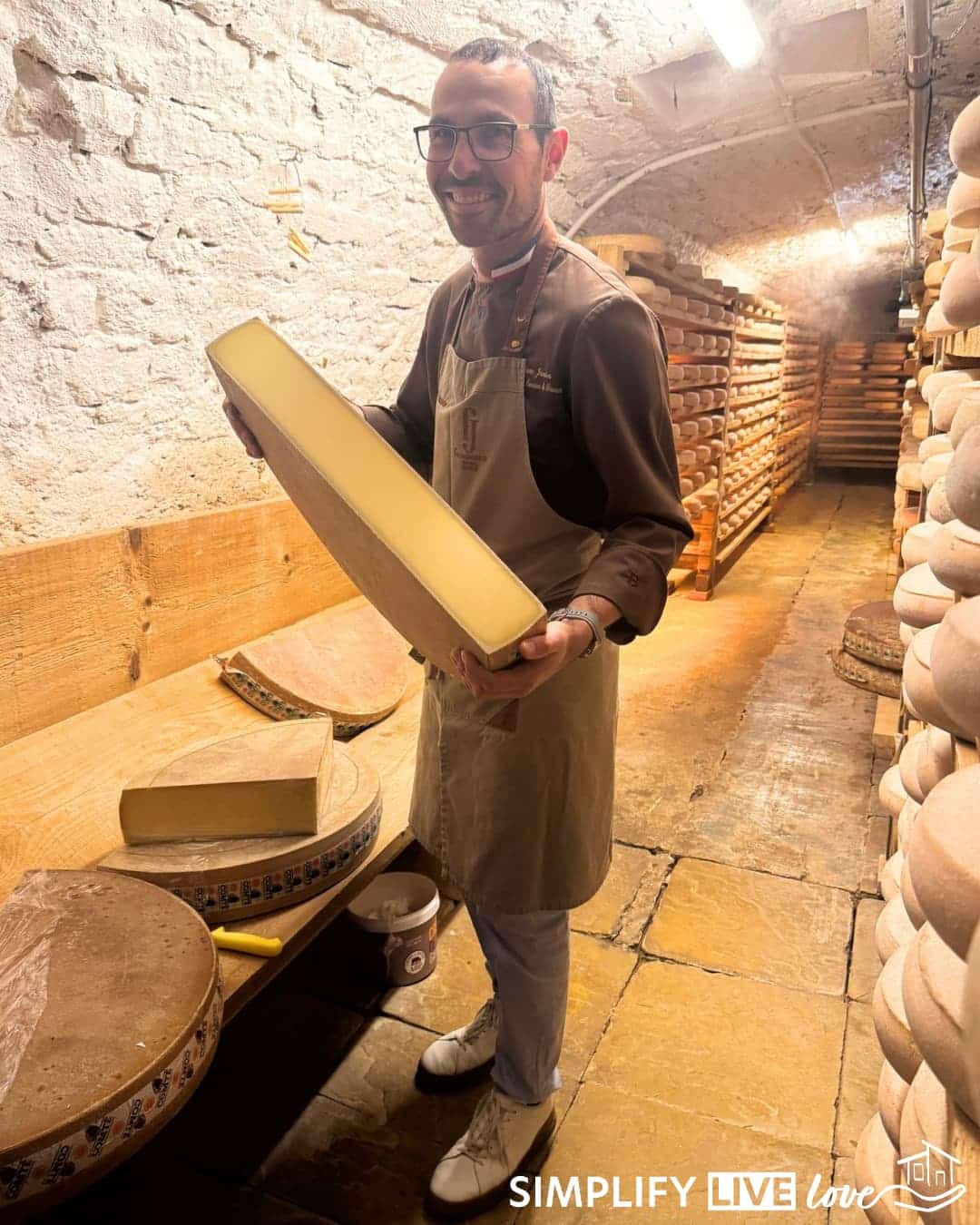
Fromagerie Janin in Champagnole
The first stop on our cheesy road trip through the French Jura was Fromagerie Janin, a cheese shop run by Marc Janin. This isn’t just any French cheese shop. We were told Janin is basically royalty in the French cheese world, and everyone seems to like him.
Why Janin is a big name
- MOF title: Janin is a Meilleur Ouvrier de France (MOF), a top honor for master craftspeople.
- All kinds of Comté: He sells Comté from many aging cellars, not just one.
The shop
- The feel: It’s cute, light, airy, and busy. Customers popped in the entire time we were there, which is a good sign for a cheese shop.
- Beyond cheese: The refrigerator case has local butter and yogurt, and the shelves hold wine, honey, and jams.
The cheese cellar
- What it’s like: Cool, a little musty, and hazy from the water vapor spritzing around the wheels. It felt like stepping into the middle of a cloud made of cheese.
- Why it stuck with me: It was my first look at a room full of Comté. I thought there was a lot of cheese here, but Fort Saint-Antoine blew me away later in the trip.
The tasting
- Comté: We tried three different Comtés as well as two other regional cheeses: A gooey Mont d’Or, which wasn’t for me, and an ashy Morbier, which was pretty good.
- Shoppers joined in: Customers who came in while we were tasting got to sample too. Everyone who wanted a taste got at least one.
- Always wine time: Whenever we tried Comté, no matter the time of day, a bottle of Jura white appeared too. This one was a crisp Chardonnay-Savagnin, and it was a great match. I realized quite quickly I was also happy to sample cheese and wine.
Dinner and overnight at Domaine du Revermont in Passenans
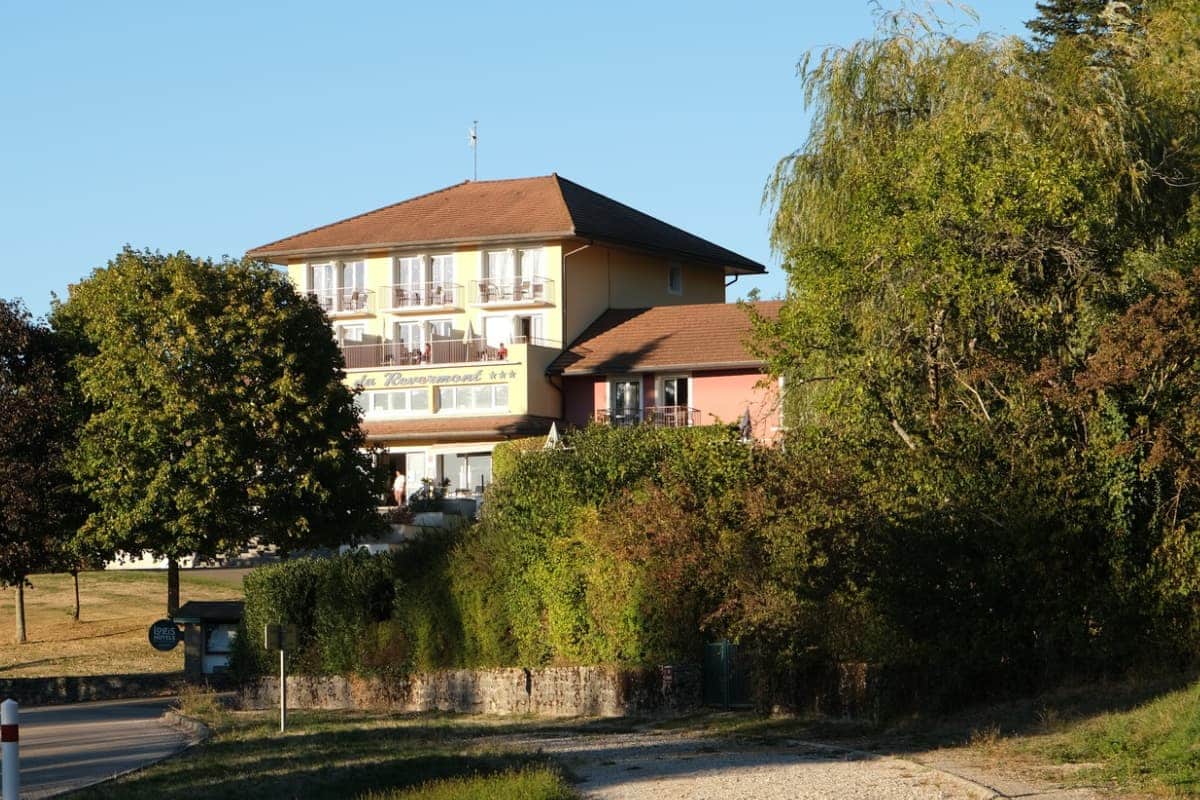
Our first night was at Domaine du Revermont, a handy base for Jura wine country that’s surrounded by vineyards.
In the Passenans area:
- Château-Chalon is about 4 miles away.
- Arbois is about 12 miles away.
- The hotel’s website lists hiking, mountain biking, and canoeing close by.
On the hotel property
- The main hotel and restaurant
- A nice looking pool
- Les Lodges du Revermont: free-standing wooden lodges with a kitchenette, a private terrace, and room for up to five people. They look great for families or groups of friends.
We also ate a four-course dinner in the hotel’s dining room, a delicious mix of modern French cooking and Jura ingredients like Morteau sausage, vin jaune (Jura wine), and Comté cheese – of course!
The nice thing about French meals is that the portions are on the small side, so eating four courses is totally doable without needing stretchy pants!
The Village of Passenans
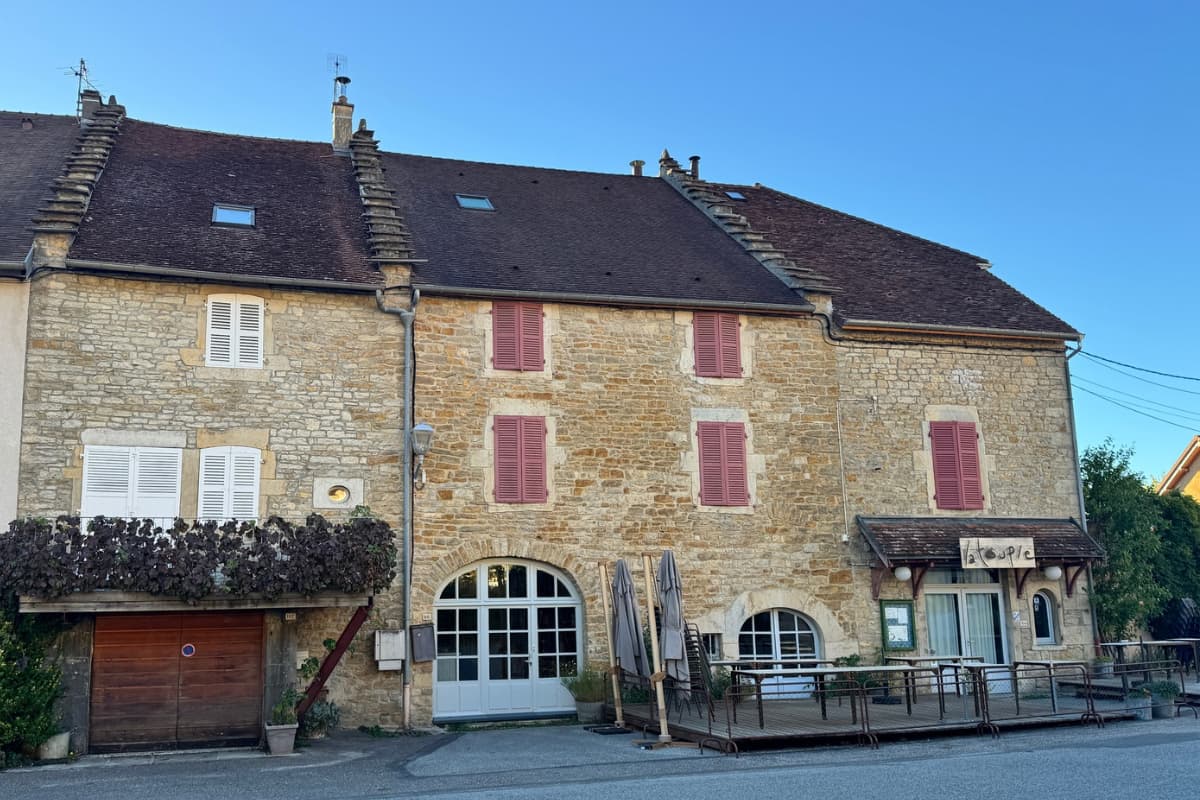
Passenans, the village where the hotel is located, is tiny, with about 335 residents. But it’s a cute little village to walk through! Many of the old stone houses have “sparrow steps” (à pas de moineaux), stepped stones along the rooflines that date to the Middle Ages, according to the Jura tourism office. I only took a stroll through town, but here’s what I’d put on the list next time.
What to see and do
- Vineyards: The village was once tied to the Abbey of Château-Chalon, and it has about 150 acres of vines, including Poulsard, a red grape from the Jura.
- La Toupie: A bistro and wine bar with a big terrace and a list of local Jura wines. Check its hours before you go.
- Walking loop: A marked 5.8 km (3.6 mile) walk through the vineyards, with views of the hotel and nearby châteaux. It’s billed as a moderate hike, with about 390 feet of climbing.
Next time, I’d walk the hike and then sit outside at La Toupie with a glass of wine.
Day 2: The Comté Museum, a Great Lunch, and a Dairy Farm Visit
Driving today: About 1 hour 45 minutes in total.
- Passenans to Poligny is about 10 minutes
- Poligny to Port Lesney about 20 minutes
- Port Lesney to Vernierfontaine about 50 minutes
- Vernierfontaine to Valdahon about 20 minutes
Maison du Comté in Poligny
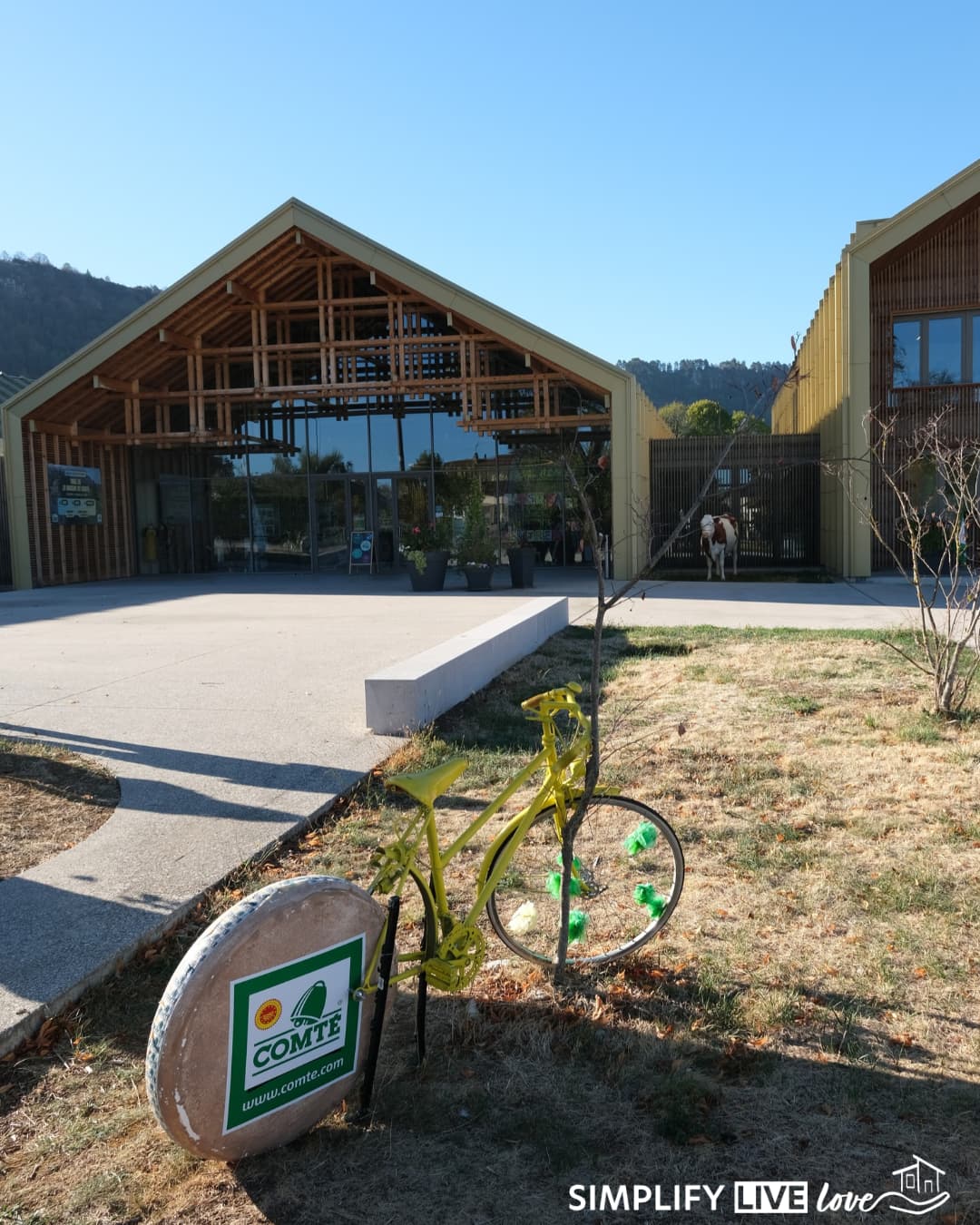
Our second day started at the Maison du Comté in Poligny. This is the best first stop for anyone who wants to understand Comté, and I really enjoyed it. It’s a self-guided museum that walks you through Comté from start to finish.
The exhibits are interactive, the guides are fun, and everything is written in both English and French, so you don’t need to speak French to follow along.
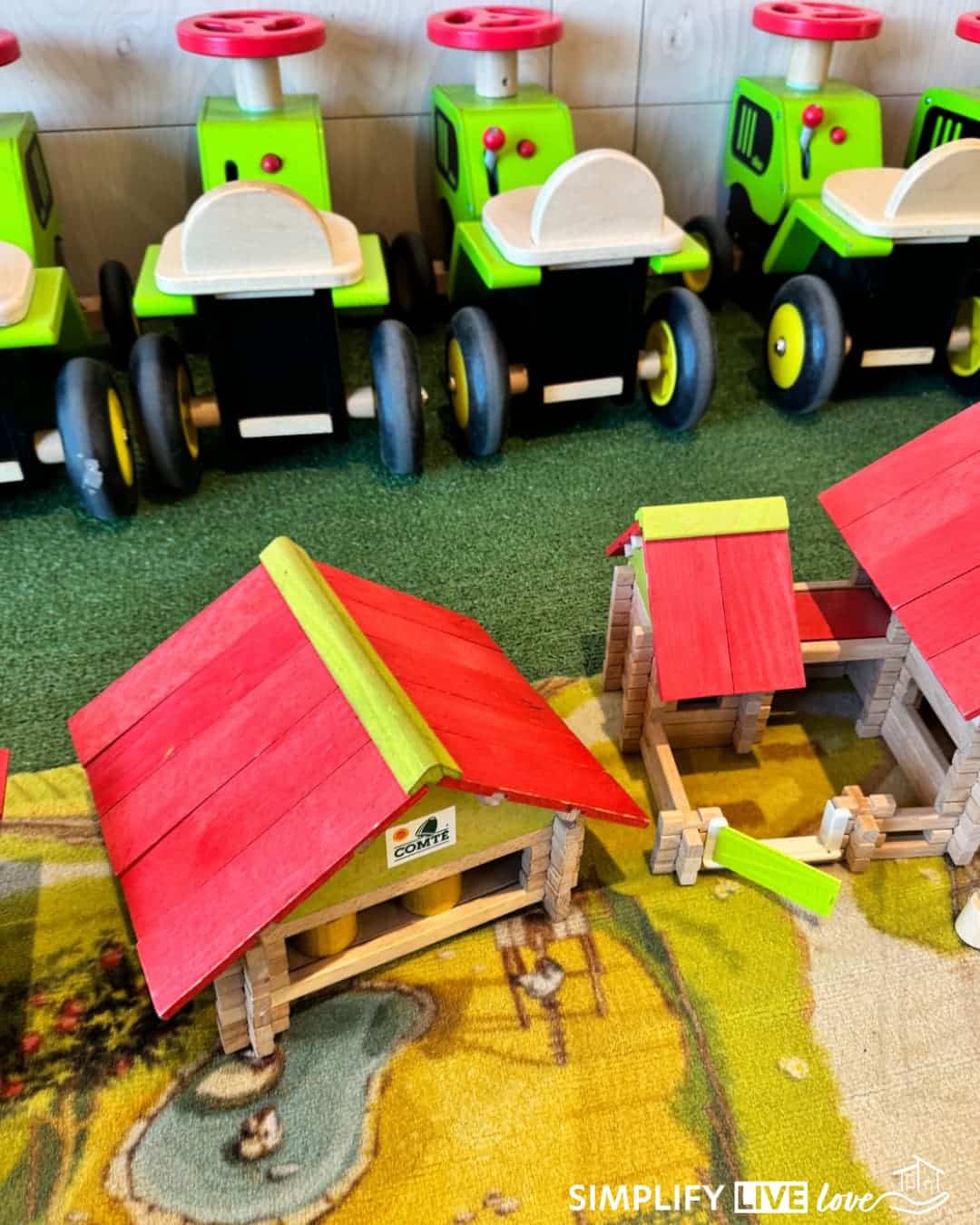
Plan your visit:
- Time: Allow about 90 minutes.
- Tickets: Adult tickets run about 9 euros.
- Hours: It’s open daily in September, with shorter hours and a few closures in late fall and January.
- Tasting: End your visit with an add-on tasting of two different Comtés.
Don’t skip the gift shop
- It has really cute Comté swag, including aprons, stickers, and fondue spoons.
- I came home with an apron, a fondue spoon, a Jura travel guide, and a few other things thanks to the generosity of Comté.
Things to see in Poligny
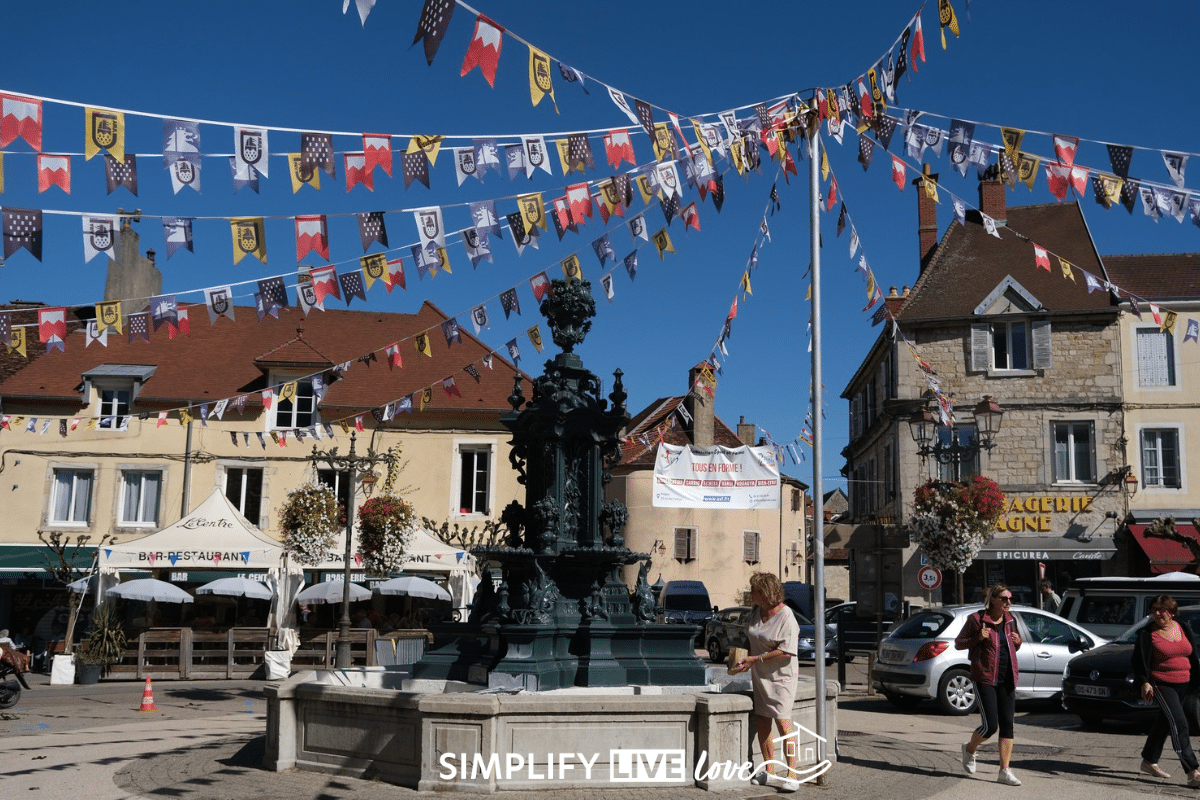
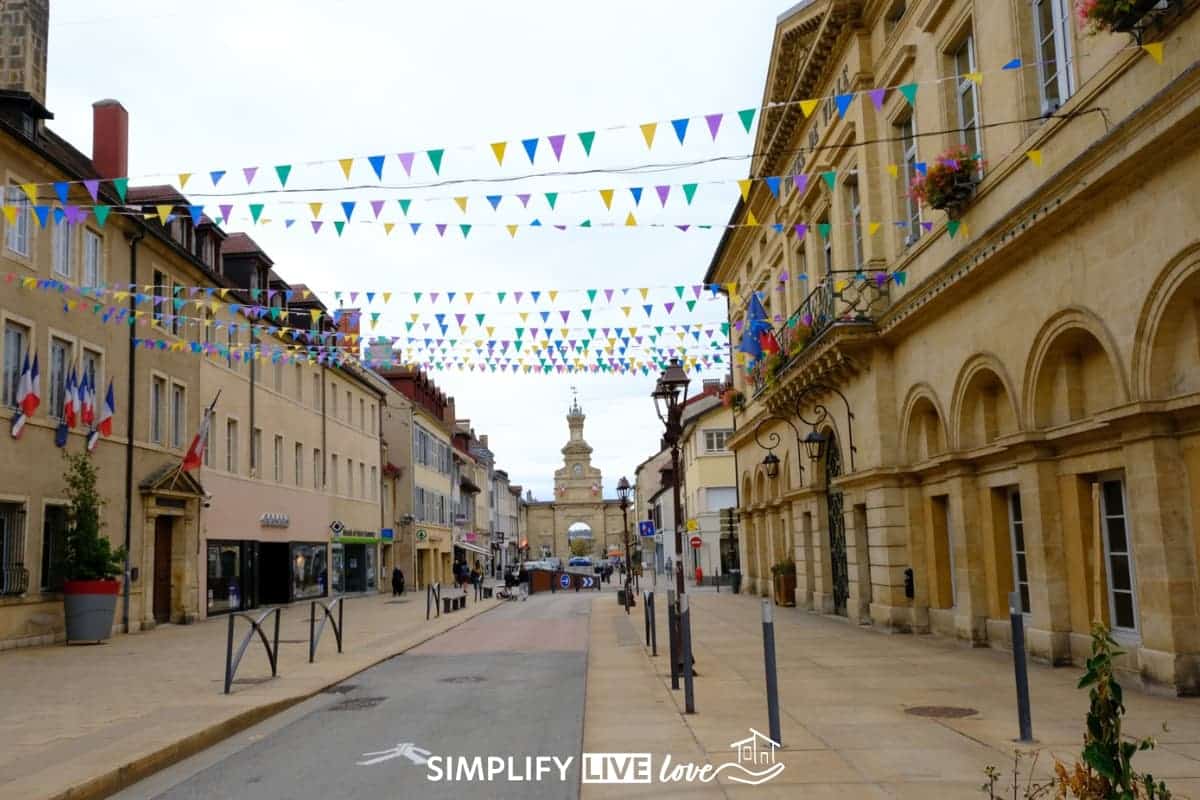
We pulled over in town because we saw the colorful bunting and wanted to snap a few pictures. Poligny is known as the capital of Comté, and it’s a small town of under 4,000 people, so it’s easy to explore on foot.
Why it’s worth a stop:
- Cheese shops: There are five dedicated cheese shops in town, so it’s a fun place to browse for cheese to bring home. Fromagerie Badoz, with the cow statue out front, is one of them.
- Comté headquarters: The Comté trade organization is based here, which is why the Maison du Comté is in town.
- A cheese school: Poligny has had a dairy trades school since 1889. It’s now called ENILEA, and it trains cheesemakers and cheese technicians.
- Photo stops: The colorful bunting and the fountain in the square make for easy, pretty pictures.
Lunch at Le Bistrot de Port Lesney
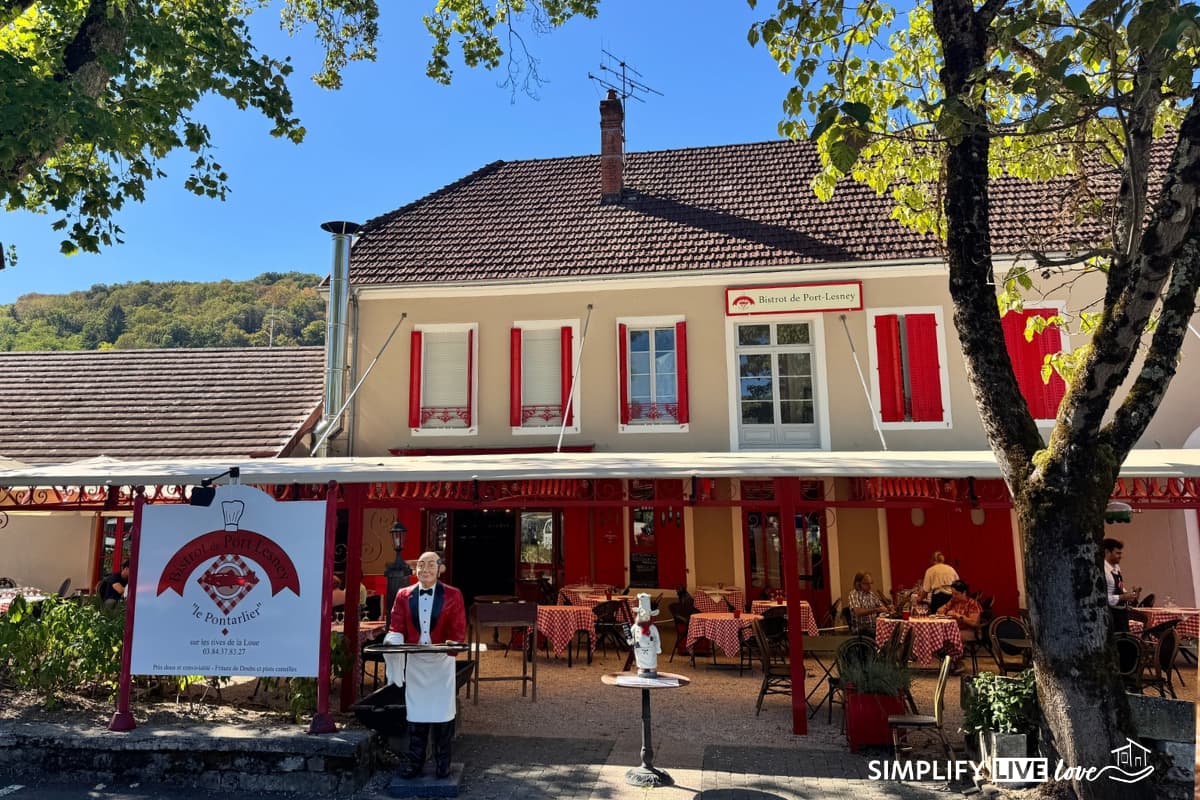
We ate outdoors at tables with red-and-white checkered cloths in a beautiful spot! You want to put this restaurant on your list!
About the restaurant:
- The town: Port Lesney is a small town on the Loue river, known for fishing, with a chateau hotel.
- Michelin: Le Bistrot is listed in the Michelin Guide, the famous red guide.
- Watch the chef: The chef made beef tartare outside while we ate, and we got to watch!
The food
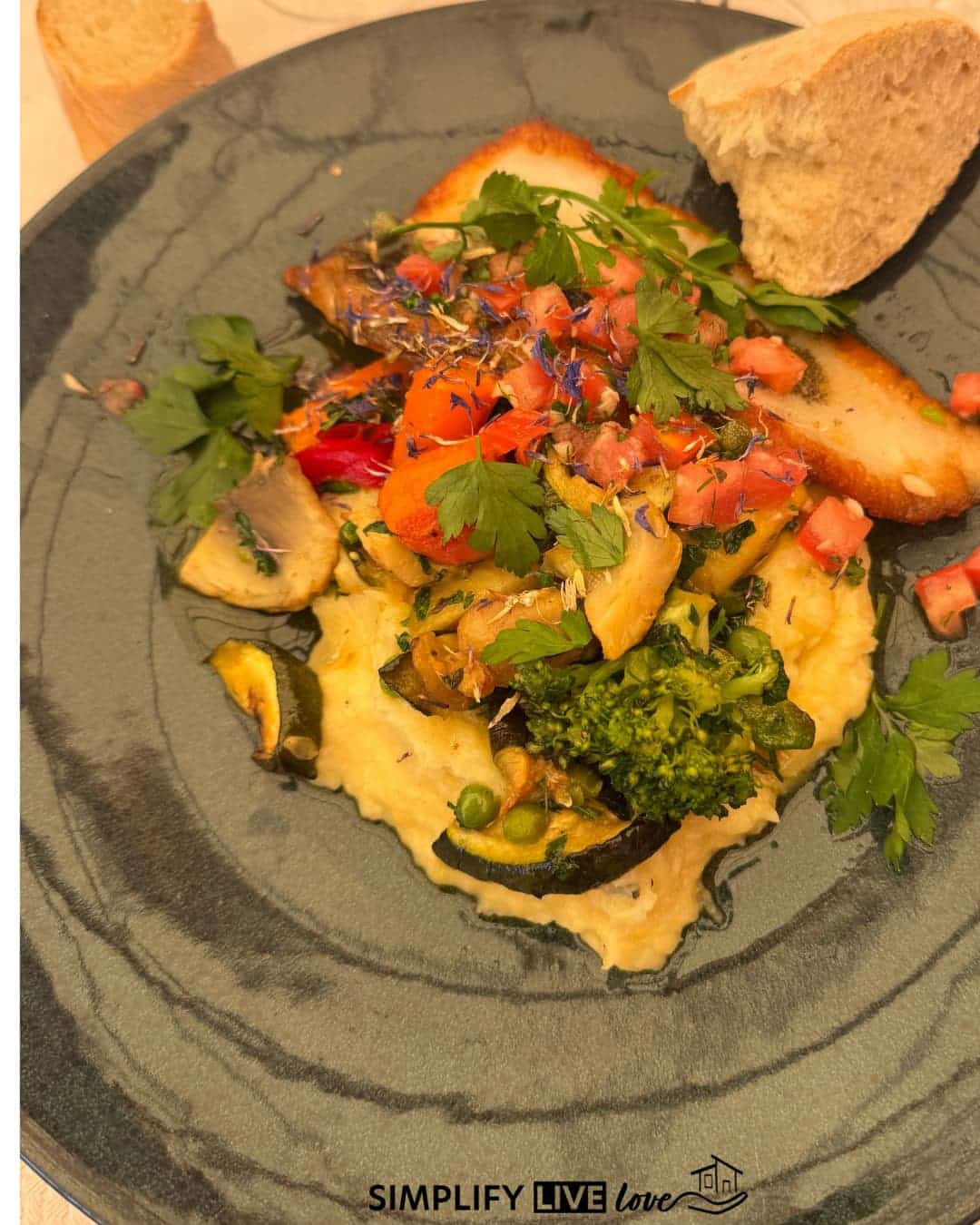
- Style: The cooking is bistro food with a polished, restaurant-quality touch. Think traditional Franche-Comté dishes made with fresh, seasonal, local ingredients.
- The menu: The daily set menu is worth a look! We ordered à la carte because of time constraints, but French daily menus always look delicious and their price is pretty reasonable.
- My meal: I had the filet de turbot with crushed garlic potatoes, and it was amazing! The desserts were fantastic, and my moelleux au chocolat with caramel, vanilla ice cream, and pecans was chef’s kiss.
A Farm Visit in Vernierfontaine
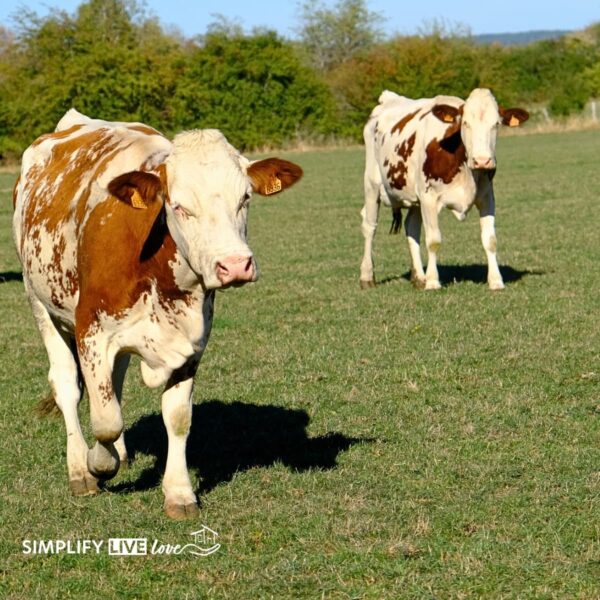
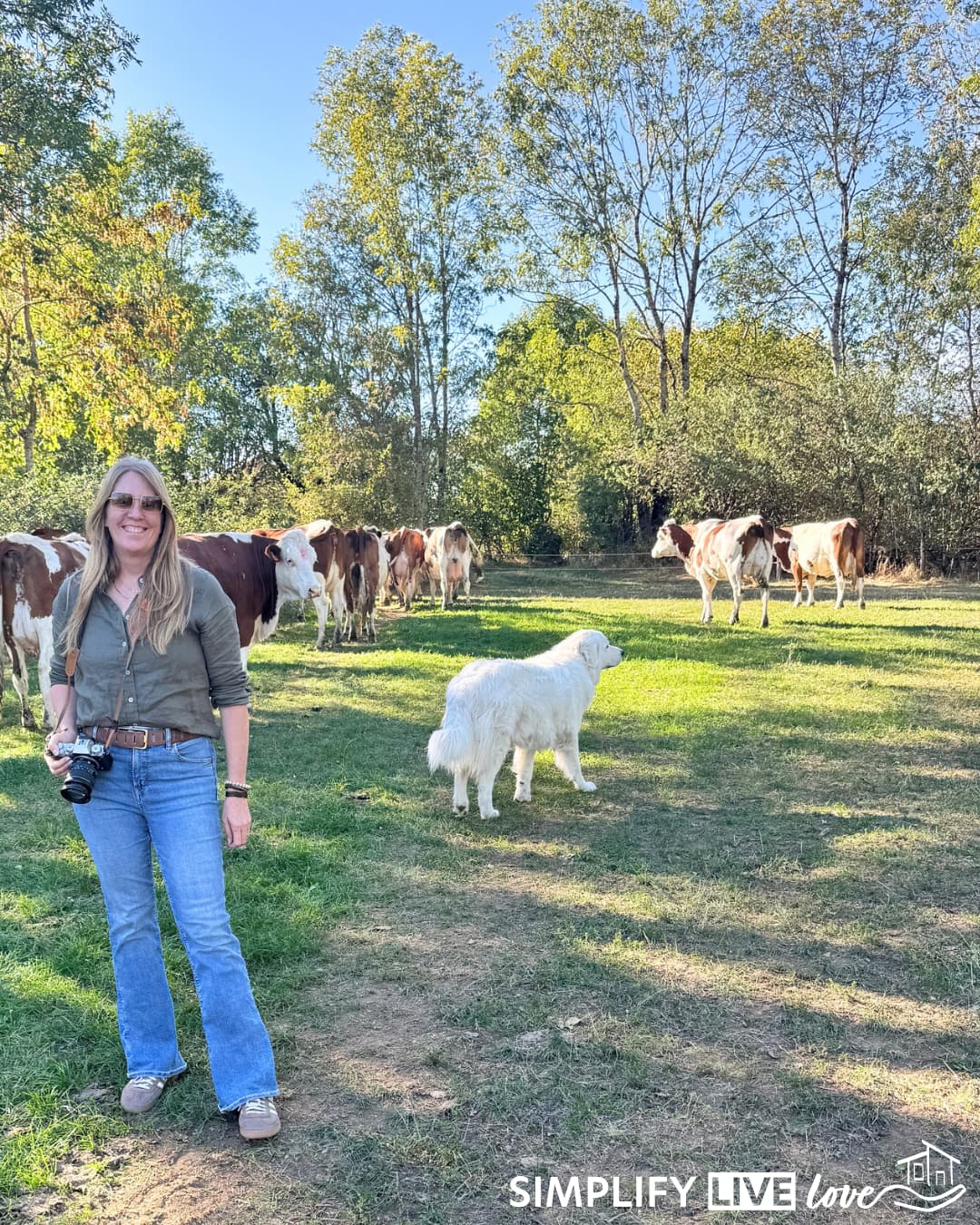
Another highlight of my trip was visiting a working dairy farm. Our host farmers were Nicolas and Juliette, who run a small farm with about 30 Montbéliarde cows. The milk they produce becomes Comté cheese.
I can’t send you to this exact farm, but local tourism offices can point you to farm and dairy visits in the area.
What I loved about the Farm Visit
- Walking the cows home: We followed the herd from the pasture to the milking barn. Each cow walked down the barn to her own spot, which amazed me.
- Fresh milk: We tried the milk straight from the farm, and it was so good!
- The dogs: Naso and Donut are working farm dogs, and I loved them.
Dinner and a Night near Valdahon
After the farm, we headed to Valdahon for the evening. We ate at Le Relais de Franche-Comté in Valdahon and slept at Hôtel de la Promenade in Chevigney-lès-Vercel. Both were fine for a practical end to the day.
- Dinner: Le Relais serves traditional Franche-Comté cooking, with a terrace for sunny evenings. My filet de sandre (pike-perch) au vin jaune et morilles was good, but nothing noteworthy after that lunch.
- Hotel: A small, family-run hotel with private parking and breakfast for an extra fee. It was comfortable, with a French Hampton Inn vibe. The modern room was nice and clean, but it was lacking charm and it didn’t have an elevator either.
Day 3: Cheesemaking, Ornans, and Pontarlier
Driving today: About 1 hour 15 minutes in total.
- The hotel to the village dairy and on to Ornans is about 45 minutes
- Ornans to Pontarlier is about 33 minutes
Cheesemaking at the Village Dairy in Vernierfontaine
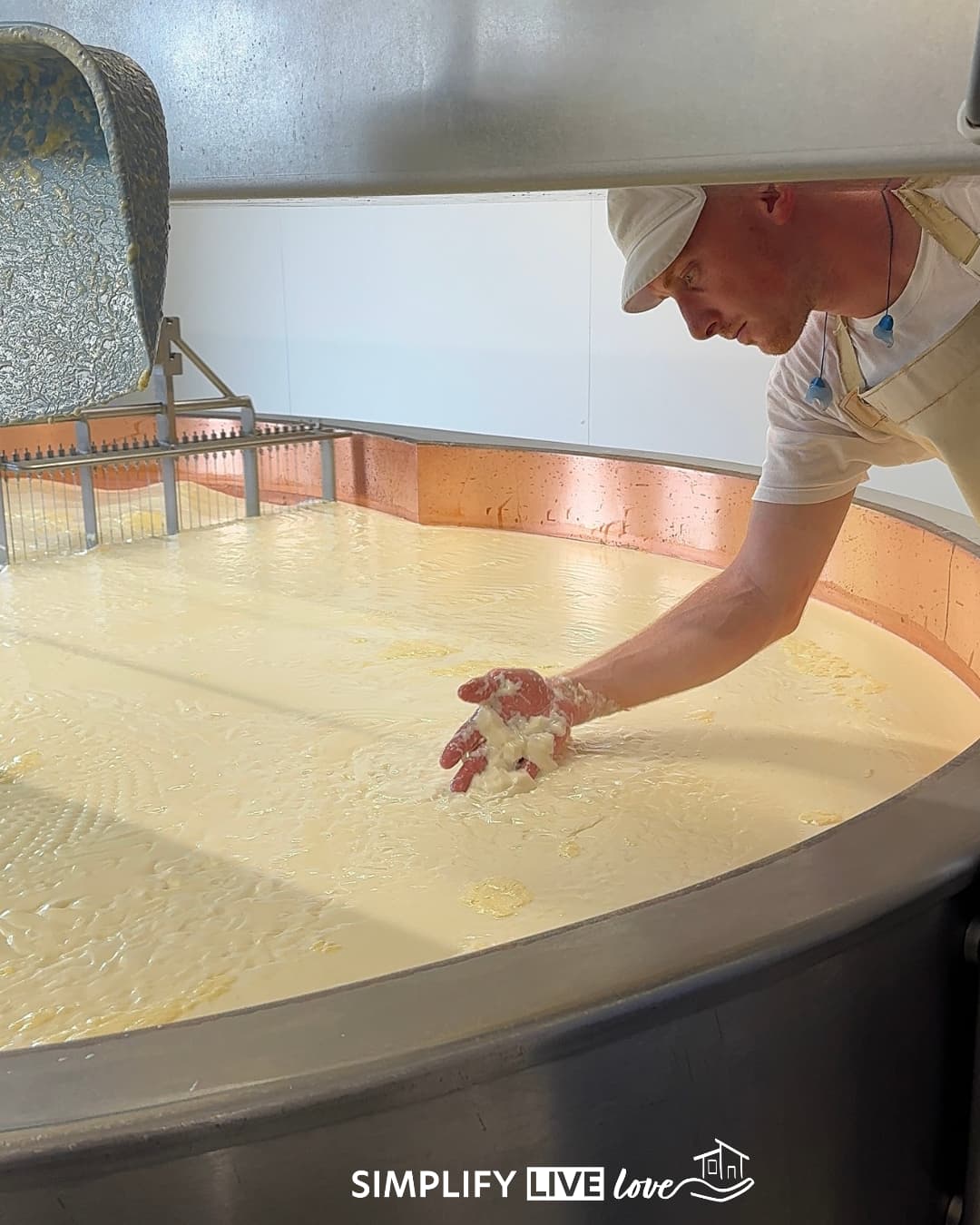
Watching Comté being made was fascinating. Every part of the fresh milk gets used, so nothing goes to waste. Afterward we sat down with Nicolas, the farmer, and Antoine Cattin, the cheesemaker, and they explained how closely connected every role in the process is.
How the system works
- One shared goal: Everyone wants the best price for the cheese, because everyone is rewarded when it sells well.
- Milk follows cheese: The price of the milk depends on the price of the cheese.
- Feedback loop: The cheesemonger gives suggestions based on how customers respond to the cheese.
- The Iowa comparison: As an Iowa girl, I found this a really interesting way to farm, especially next to the commodity nature of corn and soybeans that dominate in Iowa.
Tip: Look for village dairies, called fruitières, with a shop where you can buy the cheese and other products made there.
The Town of Ornans
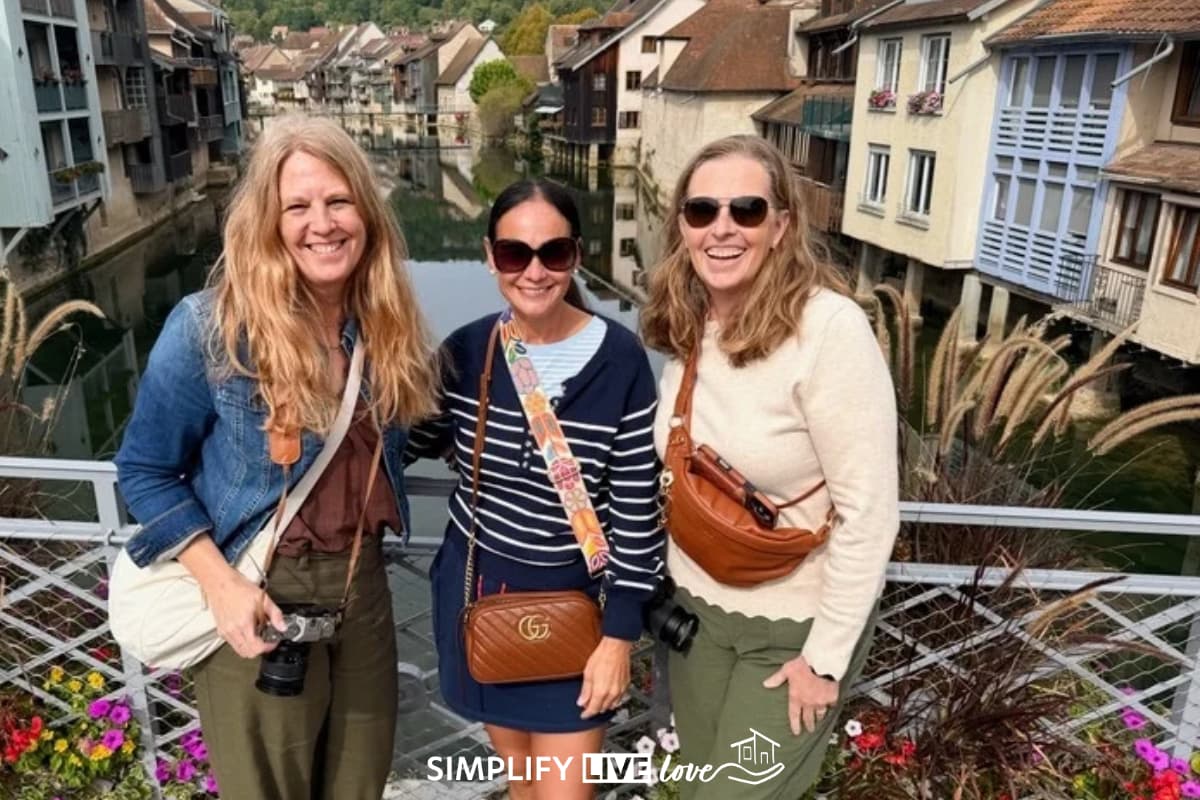
This pretty river town on the Loue is the birthplace of the painter Gustave Courbet. We walked around, shopped at a really cute chocolate store, and took lots of pictures of the scenery. We saw tour buses here, so Ornans is clearly more popular with visitors than the other small towns we stopped in.
A few facts about Ornans, population 4,400
- The setting: Old houses in ochre and blue hang over the Loue, with bridges crossing the river.
- Courbet: His painting Burial at Ornans shows real local people at a funeral. There’s a Courbet museum in town, but we didn’t have time to visit it.
- Another famous native: Pierre Vernier, the mathematician and instrument maker behind the vernier scale, was born here in 1580. The main street is named for him.
- Historic buildings: The town has homes, a town hall, a hospital, and a church from the 16th to 18th centuries.
Pontarlier: The Absinthe Capital of France
After lunch in Ornans, we headed to the next town on our list, Pontarlier, where we also spent the night. Pontarlier is the biggest town on this route, with around 20,000 people. It was once France’s absinthe capital, and had around 20 distilleries in the early 1900s.
We explored on foot, shopping and photographing, and it’s a cute town to wander. Look for the Porte Saint-Pierre, a triumphal arch built between 1771 and 1773. We stayed at Hôtel St Pierre, an old hotel with crooked floors and a nice breakfast.
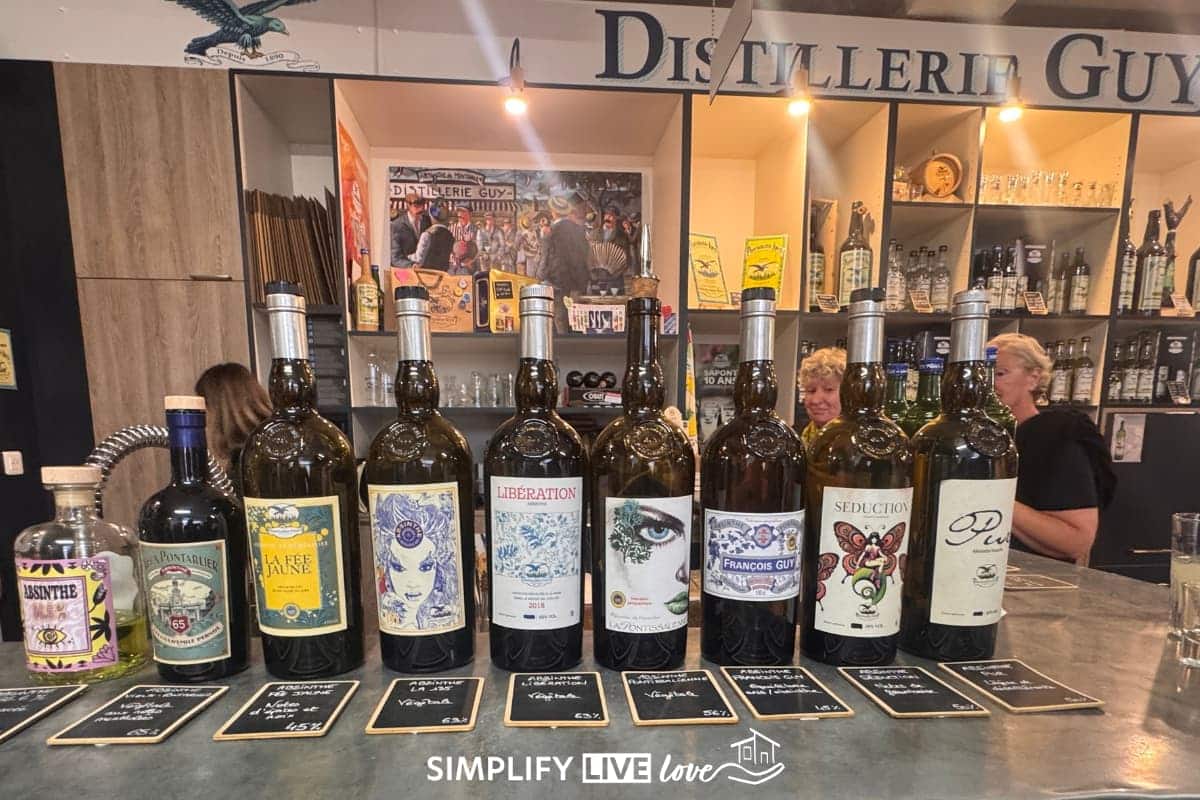
Distillerie Guy
Distillerie Guy in Pontarlier is the starting point for the Route de l’Absinthe. The Route de l’Absinthe is a 50 km trail that starts at Distillerie Guy and runs into Switzerland’s Val-de-Travers, the historic birthplace of Swiss absinthe. You can visit distilleries, museums, and an absinthe garden on foot or by bike.
The absinthe distillery was one of the most interesting stops of the Pontarlier. We learned how absinthe is distilled and how it became such a big deal in this area.
A little absinthe history
- The distillery: Armand Guy founded it in 1890, and it’s the last historic artisanal distillery in Pontarlier. It’s still run by the same family and still uses its original copper stills.
- The ban: Absinthe was hugely popular in the early 19th century, then blamed for driving people mad and banned in France in 1915. Production was allowed again in 2011.
- Today: Pontarlier absinthe earned a European geographical indication label in 2019.
- Tours and tasting: Visits are free and include a tasting, but they’re limited. Check the schedule and reserve ahead.
- The shop: At the end, we were allowed to try anything we wanted. Honestly, I thought most of it was pretty gross, but absinthe is a classic and worth trying once.
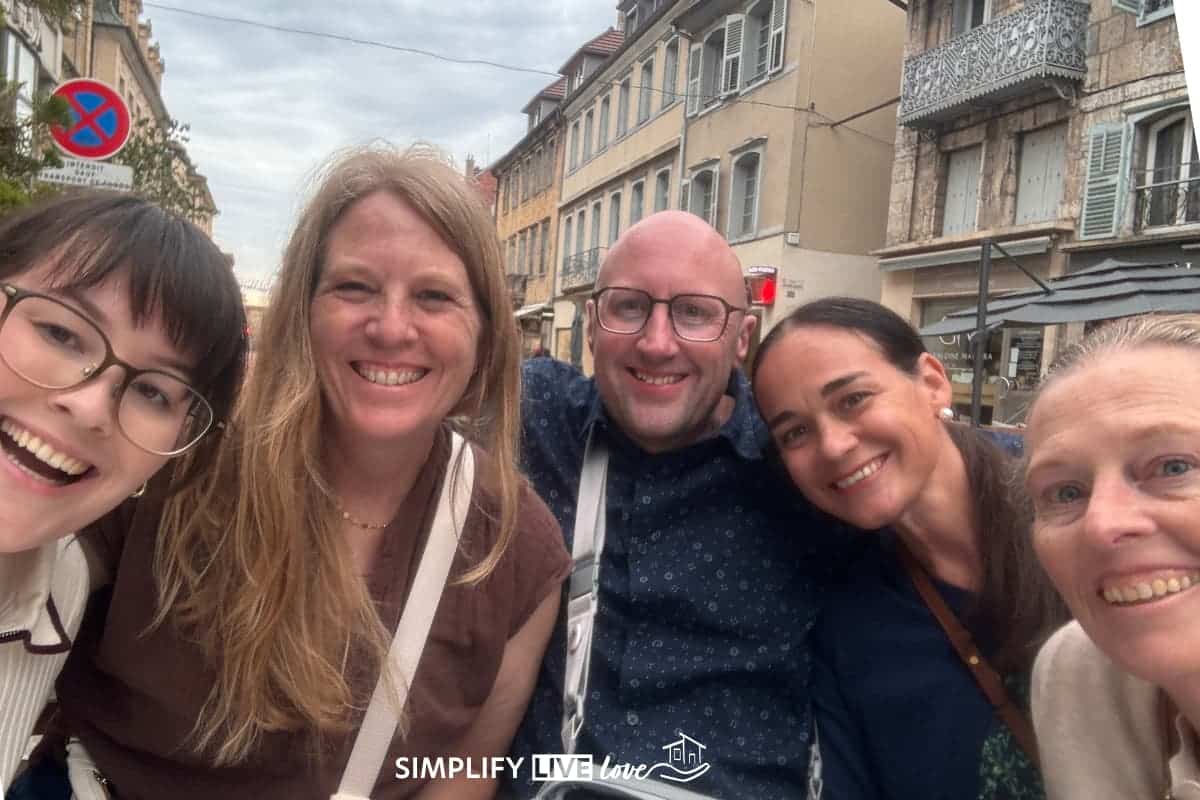
Dinner at Brasserie de la Poste
Our evening meal on Day 3 was at the Brasserie de la Poste in the town center. The meal was okay but not amazing. The building is the more interesting part. It has Art Deco architecture with a heritage designation for 20th-century buildings, and it was a filming location for two French films.
Day 4: Fort Saint-Antoine, Fondue, and Souvenirs
Driving today: About 3 hours in total.
- Pontarlier to Fort Saint-Antoine is about 20 minutes
- The fort to Malbuisson about 10 minutes
- Malbuisson to Labergement-Sainte-Marie about 5 minutes
- Labergement-Sainte-Marie to Arbois about 50 minutes
- Arbois to Geneva about 1 hour 40 minutes
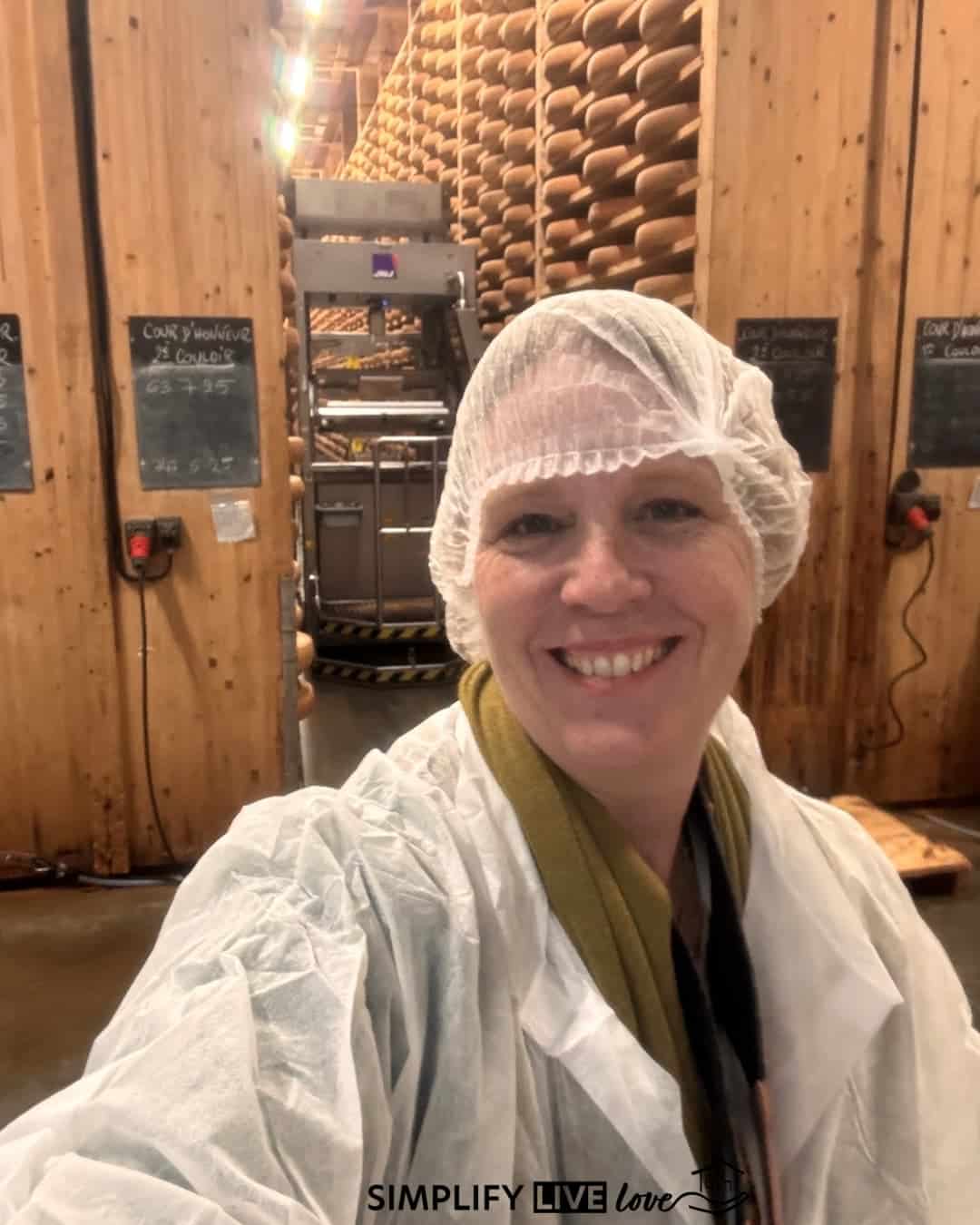
Saint-Antoine – “The Cathedral of Comté”
This fort is in the mountains between Lac de Saint-Point and the Métabief ski resort. The French military built it between 1879 and 1882 to guard the Swiss border, after the country’s defeat in the war of 1870.
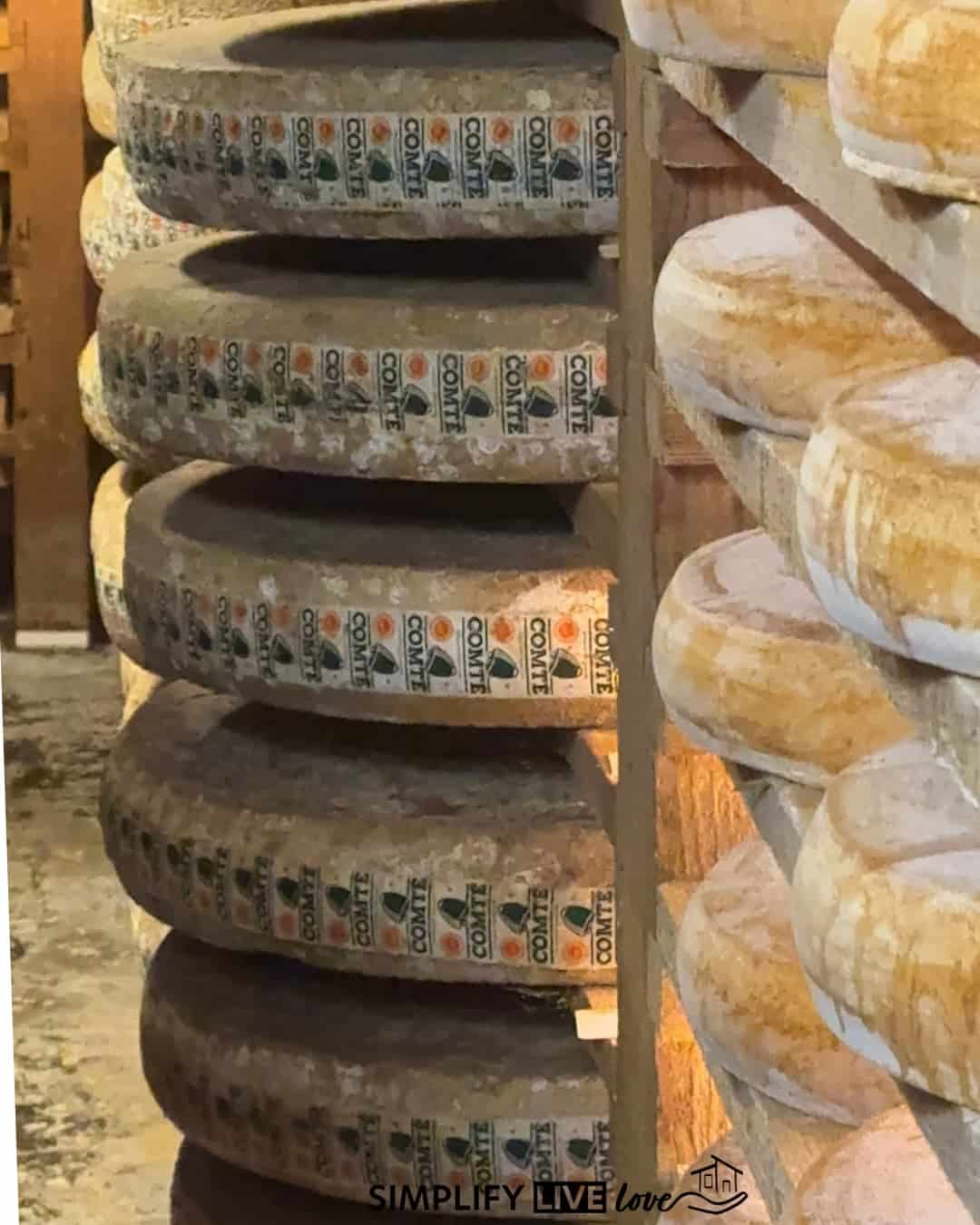
It was abandoned between the wars, and in 1966 it was converted into a cheese cellar. Today it ages around 100,000 wheels of Comté at any given time. The rolling green hills around it are beautiful, and the Montbéliarde cows grazing nearby with their tinkling bells are a fun bonus.
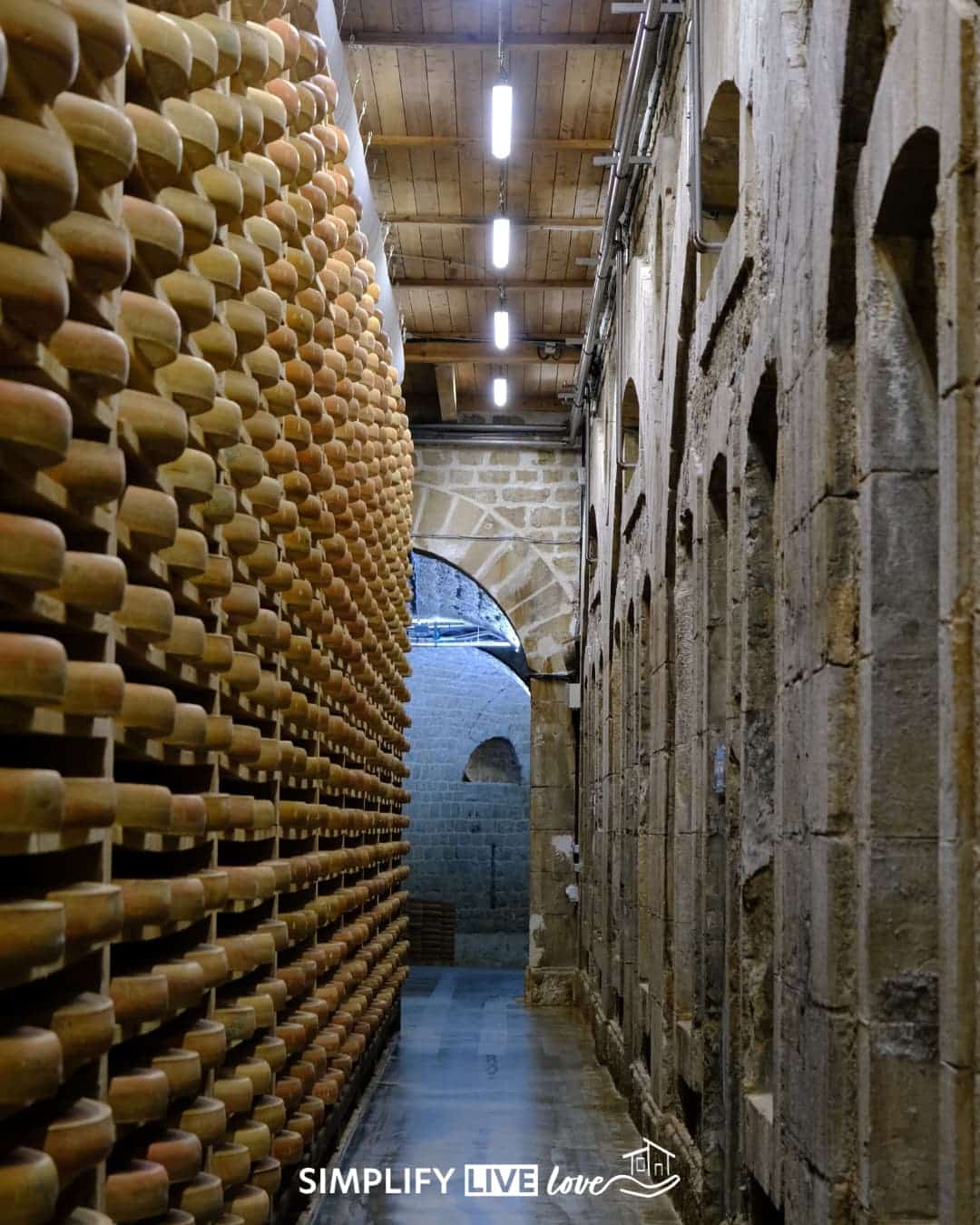
Why a fort makes a good cheese cellar
- Thick walls and tunnels: Together with the high elevation, they create the cool temperature and humidity Comté needs to age.
- Cold: It stays in the 40s F, so bring a jacket even in summer.
- The smell: It smells strongly of ammonia from the cheese aging process.
- The scale: After Janin’s cellar, this was my first look at how much Comté is actually made. Shelf after shelf of wheels stretched out in every direction.
Plan your visit: The guided tour takes about 90 minutes, and you need to reserve ahead. You can book through the fort website or the Haut-Doubs tourist offices, and wear warm clothes and closed shoes.
Comté Fondue in Malbuisson
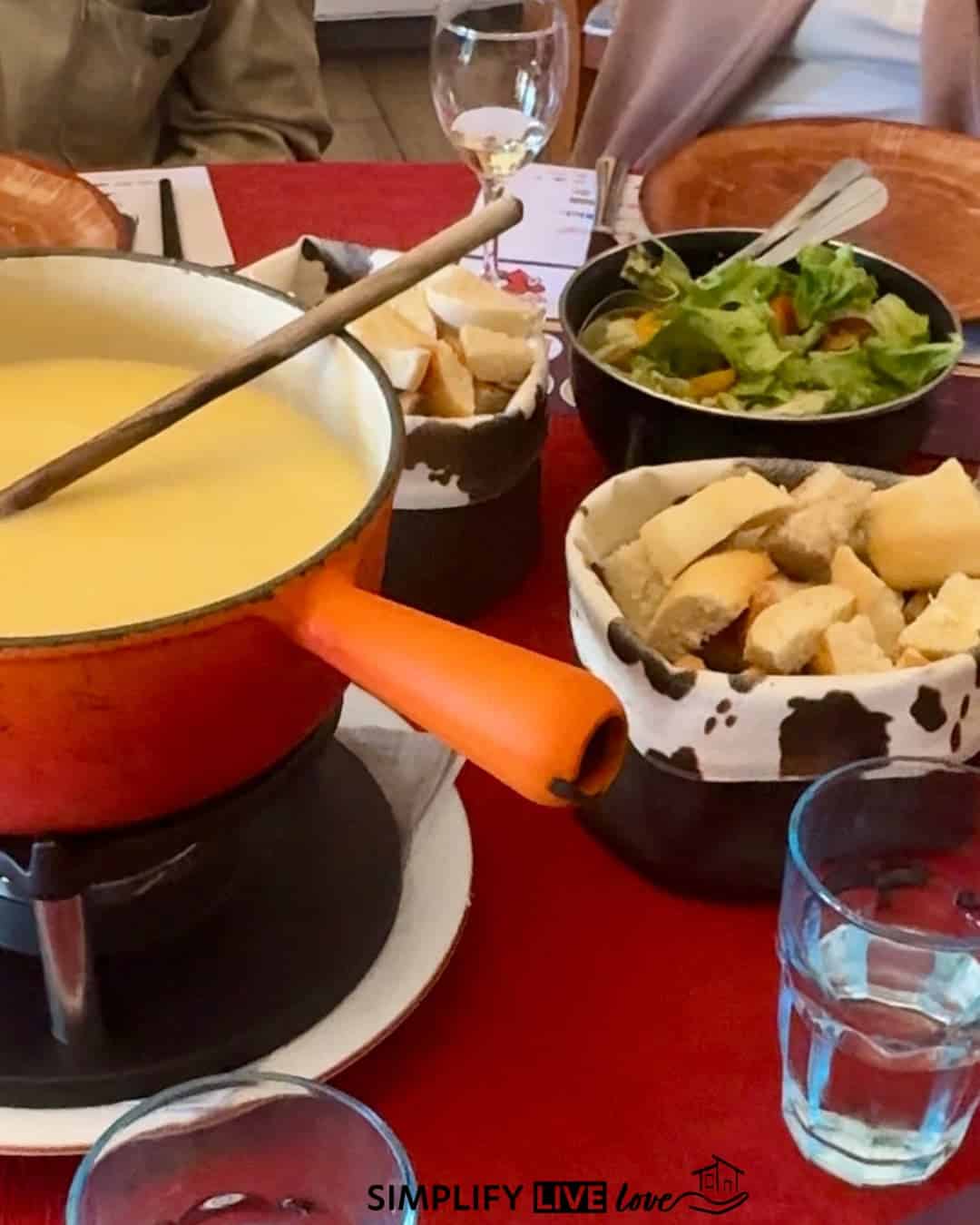
After touring the fort, we headed to Malbuisson for lunch at Restaurant A la Ferme, at the Hotel de la Poste. The fondue was my second favorite meal of the trip, right behind the lunch at Le Bistrot de Port Lesney. It comes in an orange cast-iron pot with bread cubes in cow-print bowls, a green salad, boiled potatoes, and a plate of charcuterie meat. It was a very fitting finish for our Comté themed French Jura road trip!
Fonderie Obertino Bell Foundry
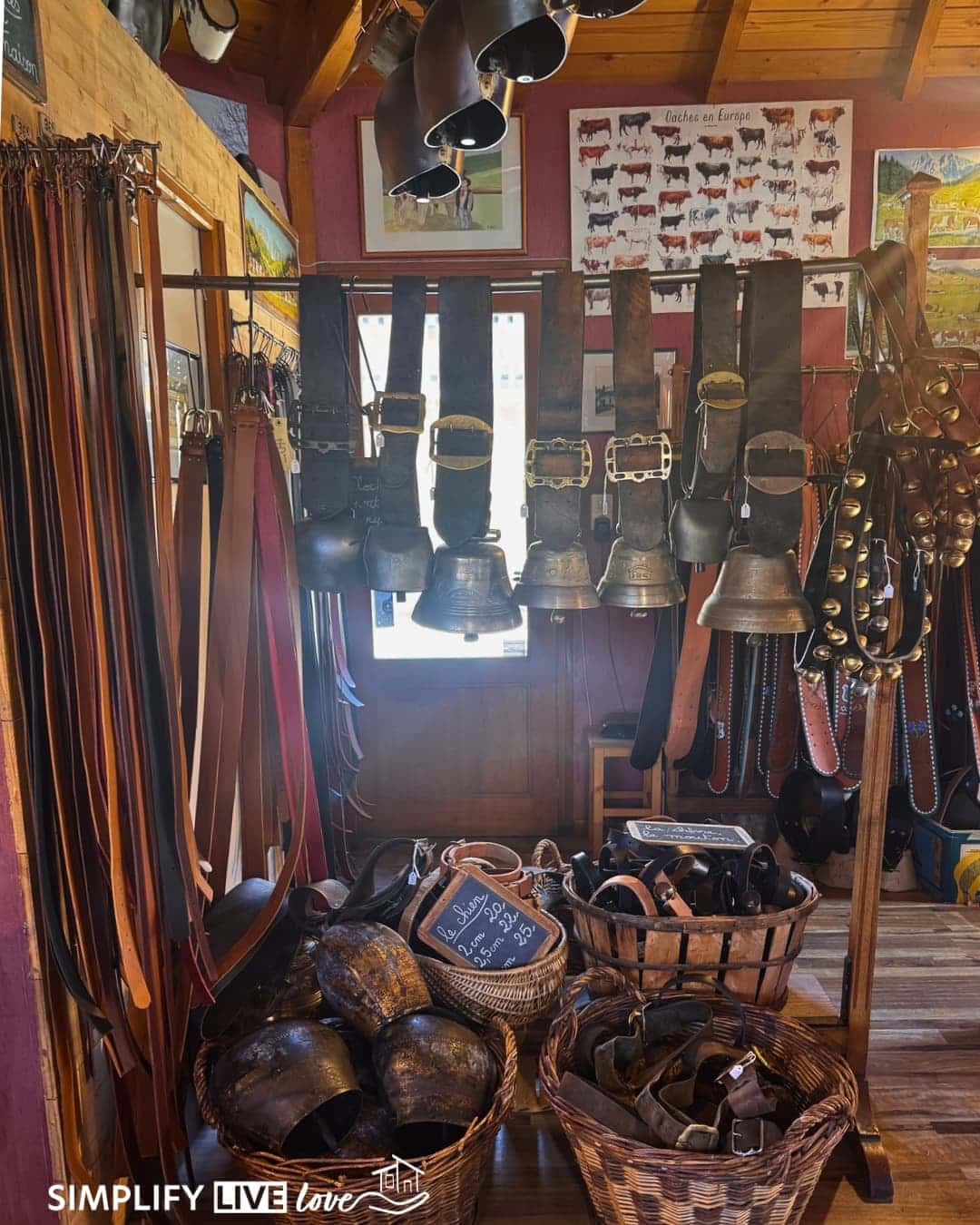
On the way back to Geneva, we stopped at a bell foundry in Labergement-Sainte-Marie. The bells the Montbeliarde cows wear are still made here in the traditional style and everyone in our group bought a few souvenirs.
About the foundry
- What it is: One of the last artisan bronze bell foundries in France.
- What they make: Bronze bells for cattle, plus call bells, table bells, and souvenirs. Cowbells can be personalized with an inscription for a birth, wedding, or anniversary.
- Watch the casting: Visitors can see molten metal poured into sand molds, but casting doesn’t happen every day. Check the foundry’s schedule first.
A Walk in Arbois
On the way back to Geneva, we stopped in Arbois to stretch our legs and walk around for a bit. It’s a handy break from the drive, and it’s the center of Jura wine country.
Dinner at Les Patriarches in Ferney-Voltaire
Our last dinner was really nice. After a few dinners that were just okay, it was a good way to end the trip. In all, our lunches were much better than our dinners.
Where We Stayed on This Route
Our hotels were hosted, and all opinions are mine. Here’s a quick verdict on each:
- Night 1, Domaine du Revermont in Passenans: A handy base for Jura wine country, surrounded by vineyards, with a pool and lodges for groups.
- Night 2, Hôtel de la Promenade in Chevigney-lès-Vercel: A small, family-run hotel near Valdahon with private parking. Comfortable but lacking charm, and it didn’t have an elevator.
- Night 3, Hôtel St Pierre in Pontarlier: An old hotel in the center of town with crooked floors and a nice breakfast.
- Night 4, Mercure Airport hotel in Geneva which makes for an easy morning flight.
More to Do in the French Jura
I only had four days, and I stuck to cheese. I didn’t get to the things below, but they’re what people consistently suggest for the region, and I want to go back for them. I’ve pulled the details from official tourism sources. Check hours and seasons before you go.
Pin this now to find it later
Pin ItWaterfalls
- Cascades du Hérisson: The best-known waterfalls in the Jura. The valley has dozens of falls, including a tall stepped one called the Éventail. You can do a short walk to the biggest falls or hike the full route in about three to four hours.
- Saut du Doubs: A 27-meter waterfall on the French-Swiss border, reached on foot or by boat.
- Cascade des Tufs near Arbois and the cliffs and caves at Baume-les-Messieurs: A good pair for a day trip.
Castles and Historic Sites
- Château de Joux, near Pontarlier: A fortress perched on a rocky spur. Confirm its current visiting status before you go.
- Royal Saltworks of Arc-et-Senans and the Great Saltworks of Salins-les-Bains: Both are UNESCO World Heritage Sites tied to the region’s salt history.
- Château-Chalon and the Arbois area: The Jura wine country, known for vin jaune and for Louis Pasteur’s hometown of Arbois.
Cross-Country Skiing
The Jura is known for Nordic skiing, with thousands of kilometers of groomed trails.
- Les Rousses: A good base for beginners, with trails, lessons, and other winter activities.
- The Haut-Doubs: More than 500 kilometers of groomed trails, many passing Comté farms.
- The Grande Traversée du Jura: The long-distance route that runs through the range, used for skiing, hiking, and biking. The famous Transjurassienne ski race runs each February.
Hiking and Biking
- The Grande Traversée du Jura is also a marked route for hikers and mountain bikers, and you can do short sections.
- Métabief turns its winter ski lifts into bike lifts in summer, and Les Rousses has trails for all levels.
- Another idea is the EuroVelo 6 cycling route along the Doubs.
How Many Days Do You Need?
- 3 to 4 days: A Comté cheese route like mine, plus one or two sights.
- 5 to 7 days: Add waterfalls, a castle, wine towns, and a lake day.
- Winter trip: Plan a week, split between skiing and cheese visits.
Practical Tips for Visiting the Jura
- Rent a car. The cheese sites, waterfalls, and lakes are spread out, and public transport doesn’t reach most of them.
- Reserve ahead for the fort, and call before you go if you’re traveling in the off-season.
- Check closing days. Many small shops, distilleries, and museums are closed on Sundays and Mondays.
- Bring layers. Cellars and fruitières are cool, and mountain weather changes fast.
- Buy cheese to take home. Ask for different ages, and eat a cut piece within five weeks.
Frequently Asked Questions about the Jura Region
It’s in eastern France along the Swiss border, between Burgundy and Geneva.
By car. Champagnole is about 1 hour 45 minutes from Geneva Airport.
You can reach towns like Poligny, Arbois, and Besançon by train, but most waterfalls, lakes, and dairies need a car.
Yes. The Maison du Comté in Poligny is open to the public, and you can book a guided tour of the aging fort at Saint-Antoine. Ask local tourism offices about village dairies and farm visits.
Late spring through early fall for hiking, waterfalls, and cheese visits, and January and February for cross-country skiing.
Ready to travel? Use these helpful links to book your stay!
- Book your plane ticket with Expedia or Kayak
- Find a reasonably priced rental car or an RVShare rental for the perfect road trip
- Get your Harvest Hosts membership so you can camp at farms, wineries, breweries and more!
- We love using Hotels.com or Vrbo for the perfect home away from home
- Save on tickets to attractions, sightseeing tours, and more with TripAdvisor, CityPASS, Big Bus Tours, and Viator
- Don’t leave home without travel insurance to protect your trip!
- Check out our favorite 21 Time and Money Saving Travel Apps
- Get a National Park Pass to keep or gift
Related Reading
If you want the story behind the cheese, read Comté Cheese: How a Co-op of Small Farms Makes a Great Cheese.