Why You Should Visit the Hollandsche Schouwburg in Amsterdam

on Aug 28, 2026
This post may contain affiliate links. Please read our disclosure policy.
Some visitors head to Amsterdam just for the Anne Frank House. The Hollandsche Schouwburg Theater, a theater the Nazis converted into a deportation center for Amsterdam’s Jews, is another moving National Holocaust Memorial to add to your list as well.
The Anne Frank House tells you what hiding looked like from the inside. The Schouwburg tells you what happened after Jewish people were found. I wouldn’t have known to go there, or understood what I was walking into, without having read a historical fiction book called the The Orphans of Amsterdam by Elle van Rijn before arriving.
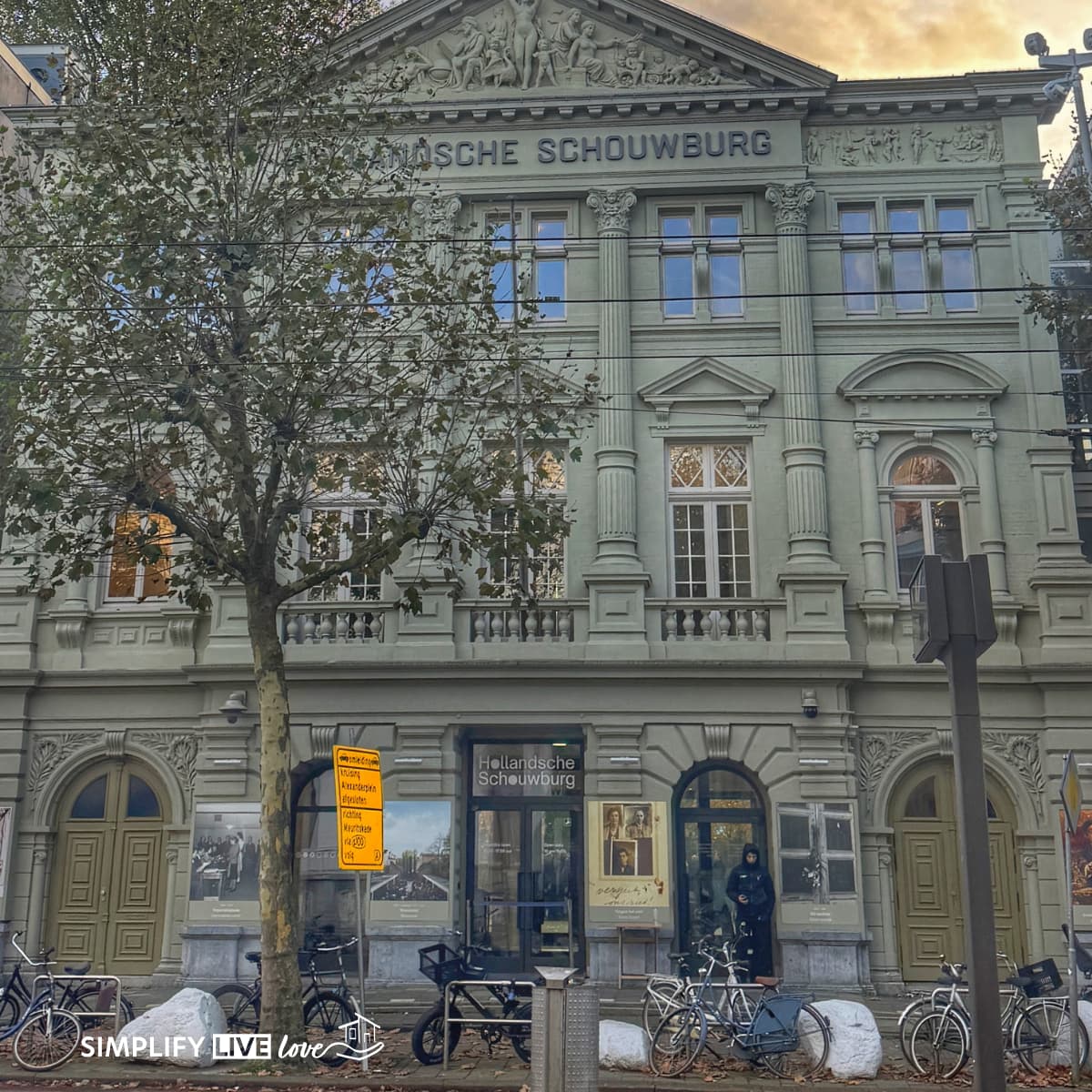
Table of Contents
Historical fiction, especially about WW2, is one of my favorite novel genres. My visit to the Schouwburg was the first time I accidentally ended up somewhere that I had previously read about.
I didn’t realize that the I could walk through the setting of this book. The Orphans of Amsterdam novel detailed how Jewish children were treated after being aphrehended by the Nazis. The book gives readers insight in the nursery school directly across the street from the Hollandsche Schouwburg and what happened inside both places.
I’d forgotten all about the book by the time I reached Amsterdam. But when a walking tour guide pointed out the Schouwburg, the book’s events came rushing back to me and I knew I wanted to go inside the Schouwburg to learn how reality compared to historical fiction.
Since that visit, I actively look for historical fiction books set in a place I plan to visit.
Hollandsche Schouwburg Amsterdam: Quick Overview
- Free to enter — no advance tickets required, unlike the Anne Frank House
- Walking tour groups may not be admitted. My group wasn’t. Come back on your own — it’s worth it
- Plan at least an hour. The space is not large but rewards unhurried time. A free audio tour is included with entry
- Reopened March 2024 after a three-year renovation — significantly updated from earlier visits
- Two WWII novels — The Orphans of Amsterdam and Girl in the Blue Coat — are both set here and worth reading before you go
- Combine with the Jewish Cultural Quarter for a full half-day: the National Holocaust Museum is directly across the street, with the Portuguese Synagogue and Jewish Historical Museum nearby
If you’re visiting Amsterdam, here’s my full guide to visiting the Anne Frank House and meaningful alternatives you can do if you can’t get tickets.
What Is the Hollandsche Schouwburg?
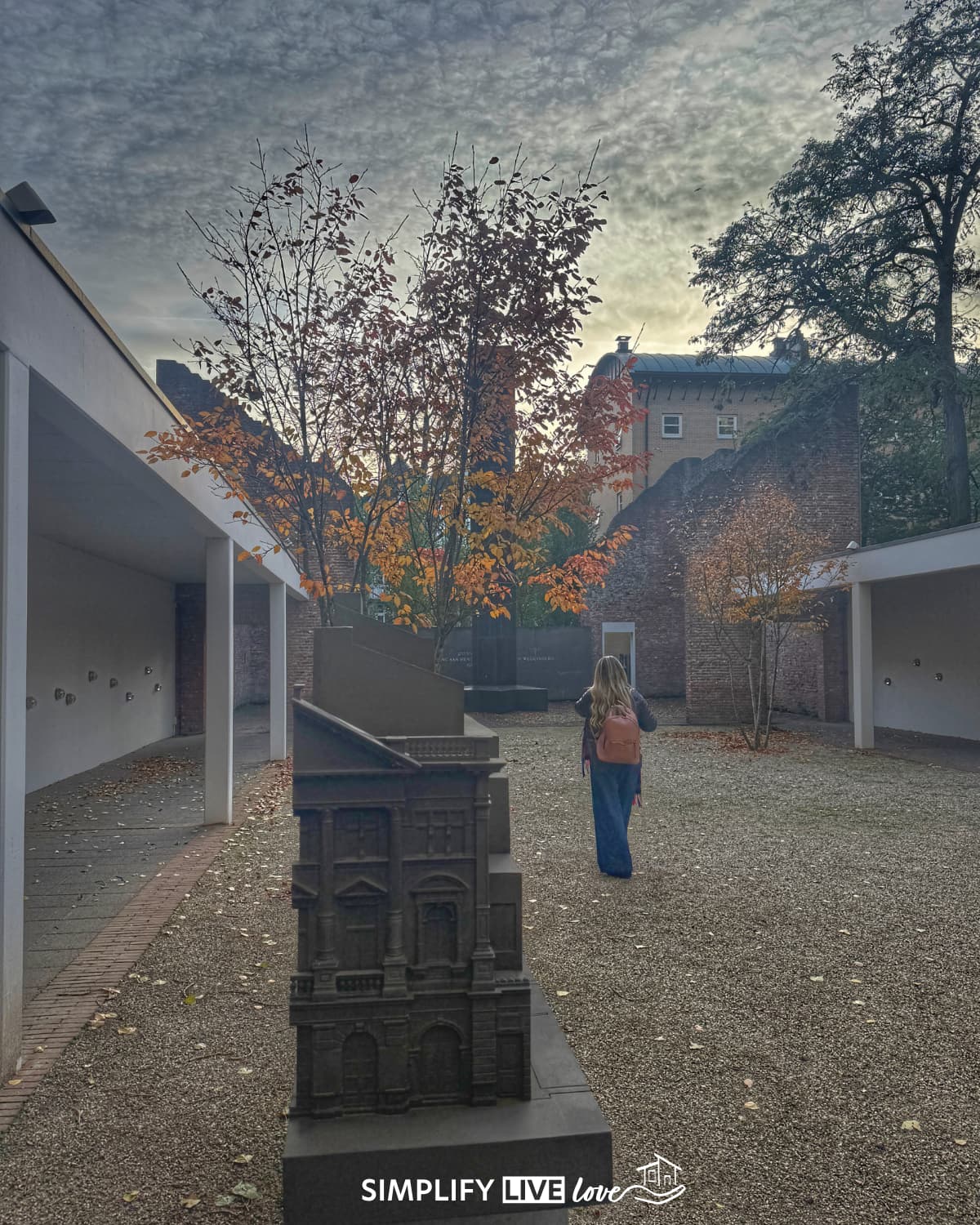
The Hollandsche Schouwburg, Dutch for “Dutch Theater,” was one of Amsterdam’s most prestigious cultural venues before the war, hosting opera, theater, and concerts. That changed in 1942, when the Nazis converted it into a deportation assembly point for Amsterdam’s Jewish community.
From 1942 to 1943, thousands of Jewish men, women, and children were held inside the theater at a time. They were kept there in terrible conditions before being transported east to Westerbork transit camp and then to the death camps. Between 60,000 and 80,000 people passed through its doors during that short period.
Pin this now to find it later
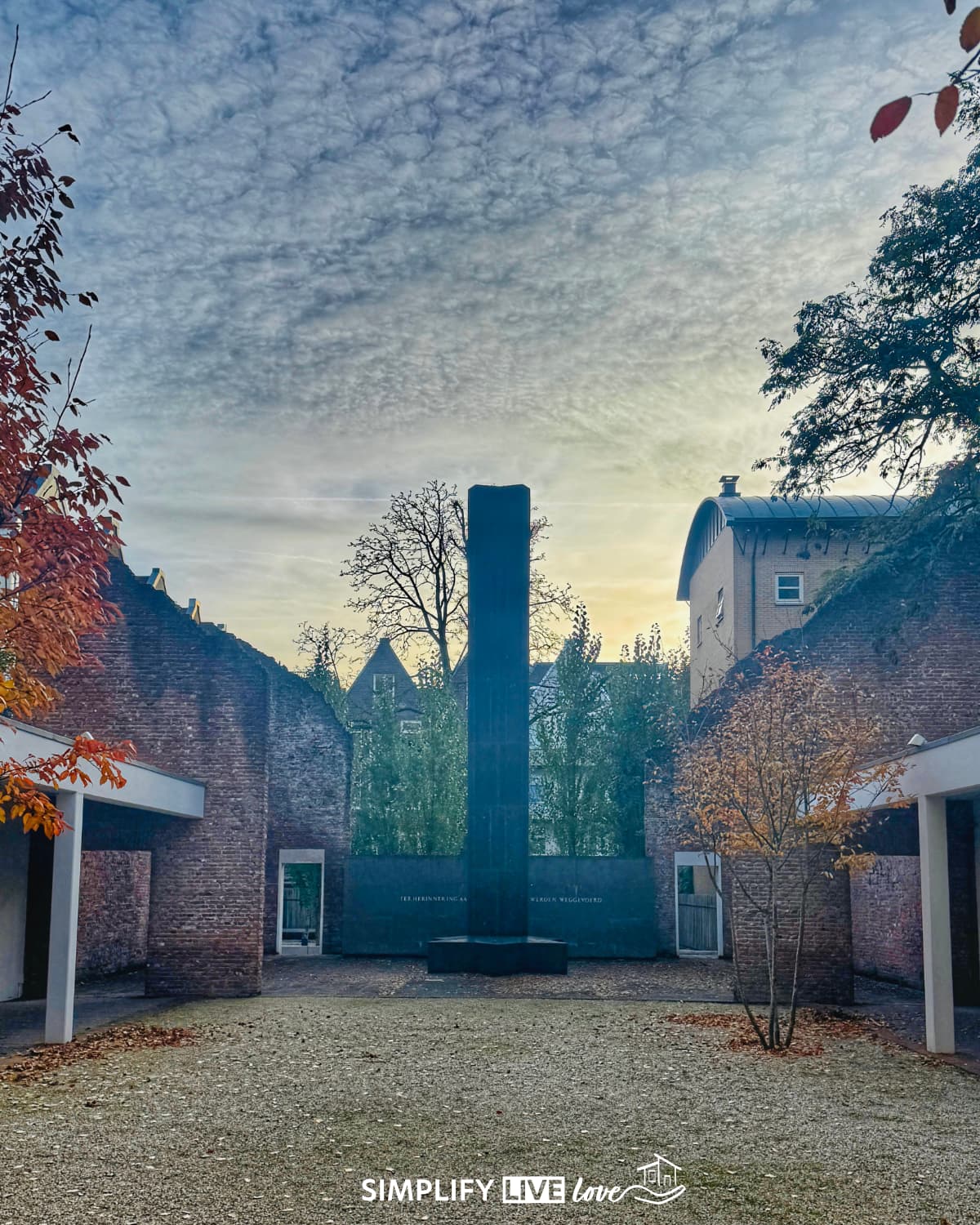
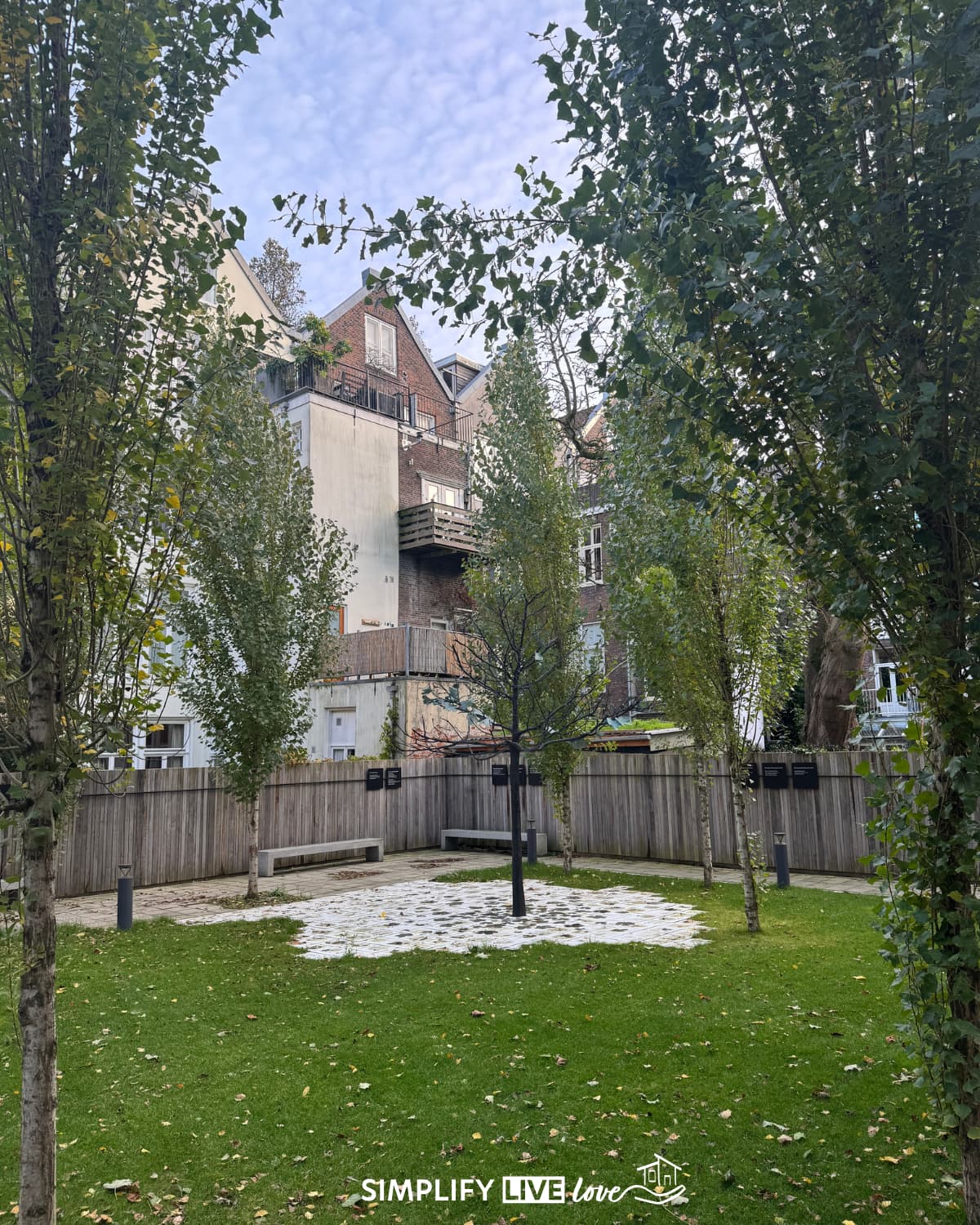
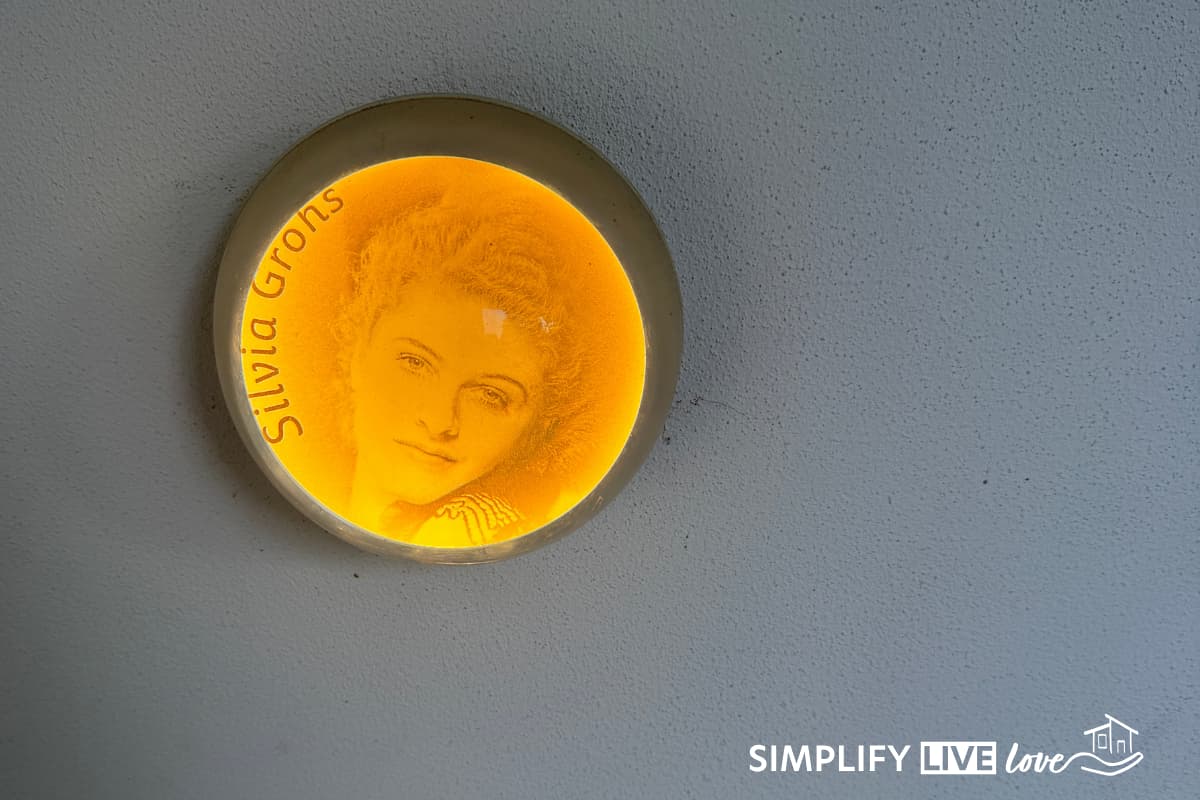
Pin ItToday the building is a museum and memorial. The auditorium that was once filled with audiences is now open to the sky. It’s a a roofless shell with a memorial obelisk at the center and audio stories of some of of 102,000 Dutch Holocaust victims you can listen to as you walk around outside.
Directly across the street stood a nursery school, the crèche, where Amsterdam Student Group resisters smuggled Jewish children out before they could be deported. That nursery is where The Orphans of Amsterdam is set, and understanding that geography before you arrive makes the visit considerably more powerful.
Visiting the Hollandsche Schouwburg
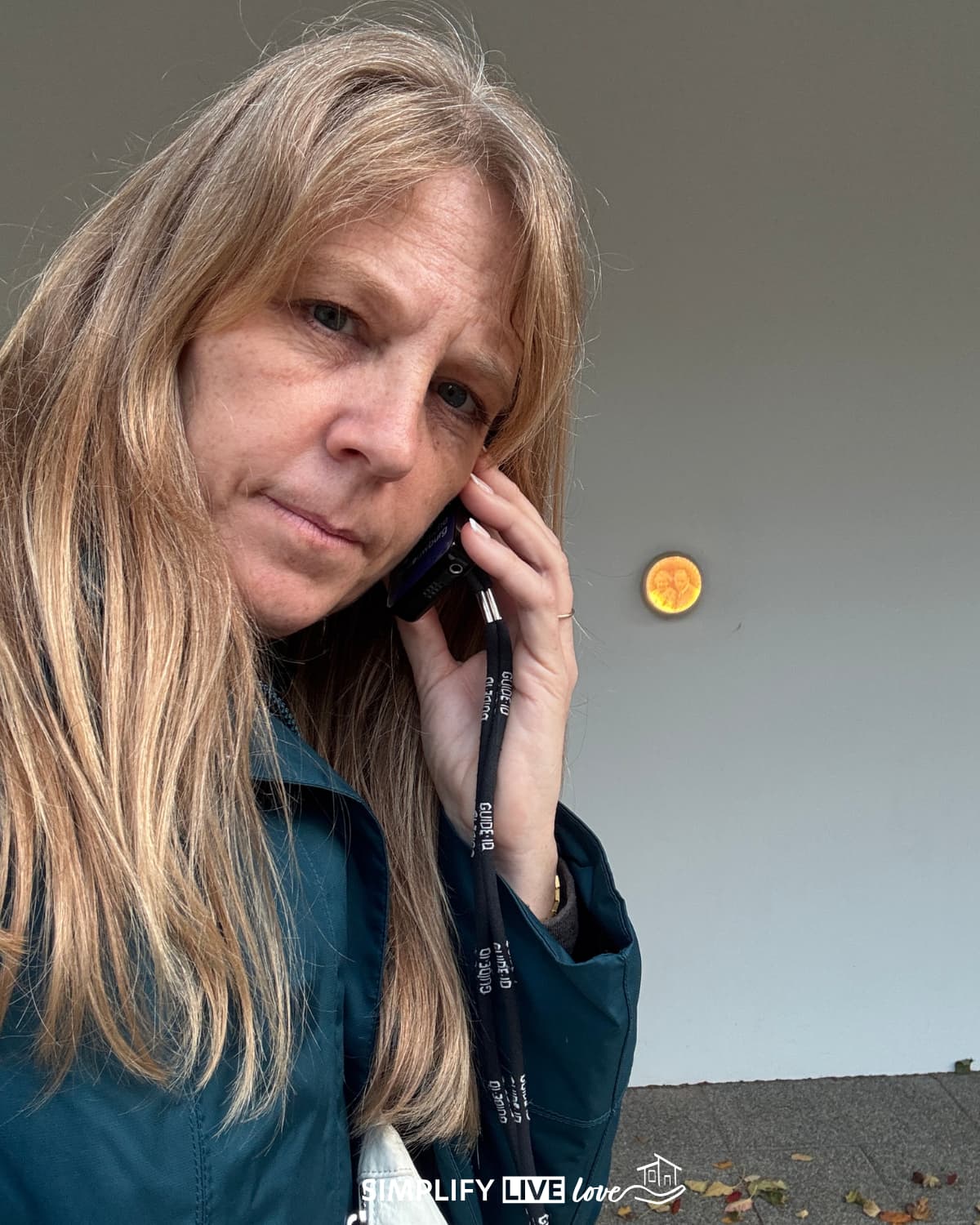
I came across it by accident. We were on a walking tour of Amsterdam’s Jewish Quarter when our guide pointed out the Schouwburg. The moment he did, The Orphans of Amsterdam came back to me. I told our guide I knew exactly what it was.
The guide confirmed that admission is free, but our tour group wasn’t permitted inside. I came back the next morning on my own and walked through it with my sister and my dearest friend who happens to be German.
I’m glad I did it that way. The Schouwburg is not a place that benefits from a group itinerary. It’s quiet, unhurried, and somber.
Standing in the roofless auditorium, looking at the names on the walls and the houses at the back, is a different experience than any conventional museum visit. There are no objects behind glass here. There is just the space, names, and stories you can listen to.
Practical information about Visiting the Hollandsche Schouwburg:
Admission. Free. No advance booking required. Walk in during opening hours.
Walking tour groups. Your group may not be admitted — mine wasn’t. Plan a solo return visit rather than counting on your tour to get you inside.
Hours. Open daily 10 a.m. to 5 p.m. Closed on Rosh Hashanah, Yom Kippur, and King’s Day (April 27). Check the official website around Jewish holidays.
Audio tour. A free audio tour is included with entry. Listen to the voices of survivors and those who were lost as you walk through the space. Don’t skip it.
The renovation. The Schouwburg reopened in March 2024 after a three-year renovation. If you visited before, go again.
Getting there. From Amsterdam Central Station, tram 14 to Artis is the most direct route. Tram lines 3, 10, and 17 also stop nearby.
Combined ticket. If you want to visit the surrounding Jewish Cultural Quarter sites — the National Holocaust Museum, Portuguese Synagogue, and Jewish Historical Museum — a combined ticket covers five locations for €17 adults, €8.50 students, €4.25 children.
Plan a half-day. The National Holocaust Museum is directly across the street. The Dutch Resistance Museum and the Auschwitz Monument in Wertheim Park are a short walk away. The whole neighborhood repays a slow half-day if WWII history is part of why you came to Amsterdam.
Photography. Flash photography is not appropriate in memorial areas.
Read these Books
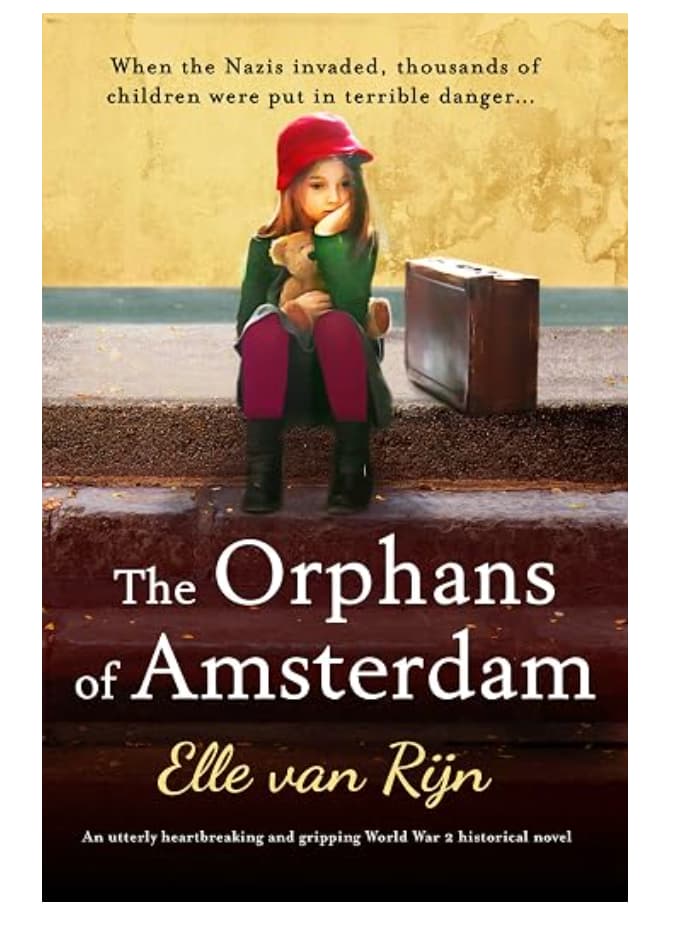
The Orphans of Amsterdam — Elle van Rijn
The Orphans of Amsterdam was originally published in Dutch as De crèche — meaning the nursery, which tells you exactly where the story is set. Betty Oudkerk is a young Jewish nursery teacher in Amsterdam in 1941. As the German occupation tightens, the nursery where she works is absorbed into the Hollandsche Schouwburg’s deportation operation. The children in her care are now held here before being sent to Westerbork and east to the camps. Betty and her colleagues begin smuggling children out, one by one, at enormous personal risk.
The book is based on a true story. Betty Oudkerk was a real person. The creche across the street from the Schouwburg was real, and the rescue operation carried out through it was real. Van Rijn’s version is what made the Schouwburg’s physical layout — the theater, the street, the nursery door across the road — make sense to me before I ever stood in front of it. It’s also, as I remembered it, more visceral than most books in this genre. The fear is specific. The squalor of the overcrowded theater is described without softening. It reads like testimony as much as fiction.
The English translation by Jai van Essen was longlisted for the Dublin Literary Award.
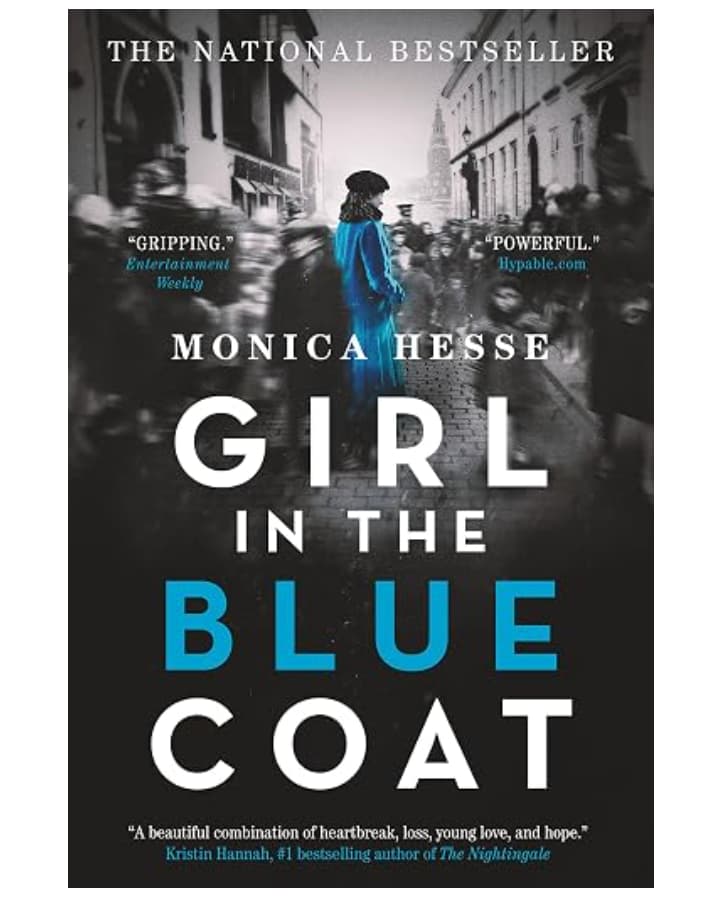
Girl in the Blue Coat — Monica Hesse
Girl in the Blue Coat by Monica Hesse was published in 2016 and won the Edgar Award for Best Young Adult Mystery. It’s set in Amsterdam in January 1943. The narrator is Hanneke Bakker, an eighteen-year-old running black market goods around the city who gets drawn into the resistance network — and into the orbit of the Schouwburg — when a client asks her to find a missing Jewish girl.
Hesse has said that with rare exception, everything in the book could have happened exactly as described, and that she wanted the historical detail to be unimpeachable. The characters are fictional. The world they move through is not.
The novel covers some of the same ground as The Orphans of Amsterdam: the Schouwburg, the nursery across the street, the Amsterdam Student Group smuggling children out. It’s written from the outside looking in, through a non-Jewish narrator who has to decide what she’s willing to risk. Where Orphans puts you inside the fear, Girl in the Blue Coat puts you on the street deciding whether to cross it.
What Both Books Get Right
The Hollandsche Schouwburg as a deportation center. The theater was converted by the Nazis into a deportation assembly point in 1942. At its peak, thousands of people were held there at a time in conditions the building was never designed for, before being transported to Westerbork and then to the death camps.
The nursery school across the street. This is where The Orphans of Amsterdam is primarily set. The real Amsterdam Student Group coordinated with the nursery to smuggle children out — passing them through a door in the back, hiding them in laundry baskets, walking them out in groups and deliberately miscounting. This happened.
The black market. Hanneke’s trade in Girl in the Blue Coat is grounded in real occupation economics. Food rationing was severe and an extensive black market operated throughout the Netherlands for the duration of the war.
The moral complexity. Both books show the Netherlands’ complicated record during the occupation. They share about Dutch citizens who helped, who collaborated, and who looked away. Neither book dilutes that history.
FAQ about the Hollandsche Schouwburg
Yes. It was a prominent Amsterdam theater before the war. From 1942 to 1943, the Nazis used it as a deportation assembly point for Amsterdam’s Jews. It is now a museum and memorial open to visitors.
Yes. The Amsterdam Student Group was a real Resistance network of young people who rescued Jewish children from the Schouwburg, smuggling them out through a nursery school across the street.
Is The Orphans of Amsterdam based on a true story?
Yes. Betty Oudkerk was a real person, and the rescue operation run through the nursery school across from the Schouwburg is documented history. The English translation was longlisted for the Dublin Literary Award.
Also, yes. The author wrote that with rare exception, everything in the novel could have happened exactly as described. The setting, the Schouwburg, the resistance methods, and the social dynamics of occupation-era Amsterdam are all grounded in documented history and oral histories.
No. The memorial is free and does not require advance tickets. The Anne Frank House, by contrast, requires timed-entry tickets booked well in advance — new dates open every Tuesday at 10:00 a.m. Amsterdam time, six weeks out, and sell out fast. For the full picture on planning both visits, see my Amsterdam guide here.
Ready to travel? Use these helpful links to book your stay!
- Book your plane ticket with Expedia or Kayak
- Find a reasonably priced rental car or an RVShare rental for the perfect road trip
- Get your Harvest Hosts membership so you can camp at farms, wineries, breweries and more!
- We love using Hotels.com or Vrbo for the perfect home away from home
- Save on tickets to attractions, sightseeing tours, and more with TripAdvisor, CityPASS, Big Bus Tours, and Viator
- Don’t leave home without travel insurance to protect your trip!
- Check out our favorite 21 Time and Money Saving Travel Apps
- Get a National Park Pass to keep or gift