The Best Seed Starting Supplies I Actually Use (Plus the Cheap Swaps That Work Just as Well)

on Feb 07, 2026
This post may contain affiliate links. Please read our disclosure policy.
Here are the best seed starting supplies for indoor gardening, plus budget-friendly alternatives that work – what you need to grow healthy seedlings.
You really don’t need some Pinterest-perfect seed starting station to grow your own seedlings. But you do need a few key basics—and knowing which corners you can cut without totally sabotaging your plants.

I’ve spent way too much money on fancy seed starting gear, and I’ve also MacGyvered entire setups from stuff I found around the house. Here’s what I’ve learned: both approaches can work, as long as you understand what actually matters.
This is my real-world guide to the best seed starting supplies, plus the budget-friendly and eco-friendly alternatives I’ve tested that actually get the job done.
Table of Contents
- Quick List of the Best Seed Starting Supplies
- What I Use for Seed Starting Containers
- The Seed Starting Soil Mix I Swear By
- Why I Always Use Grow Lights Now
- When I Use Heat Mats (and When I Don’t)
- My Bottom Watering Setup
- How I Water Young Seedlings
- Why I Label Everything (Even When I Think I’ll Remember)
- The Simple Fan Trick That Strengthens Seedlings
- My Seed Starting Shelving Setup
- Optional Supplies That I Actually Find Helpful
- What I’ve Learned About The Best Seed Starting Supplies
Quick List of the Best Seed Starting Supplies
If you don’t have time to read the whole article, here the 10 best seed starting supplies you’ll want to have on hand.
- Seed starting containers with drainage holes (or yogurt cups/produce containers)
- Seed starting mix – light and sterile, not regular potting soil
- Grow lights – LED shop lights work great and are affordable
- Bottom watering trays – prevents mold and overwatering
- Labels and waterproof markers – you will forget what’s what!
- Spray bottle for gentle watering
- Small fan for air circulation and stronger stems
- Heat mat (optional – only for warm-season crops)
- Shelving to keep everything organized
What I Use for Seed Starting Containers
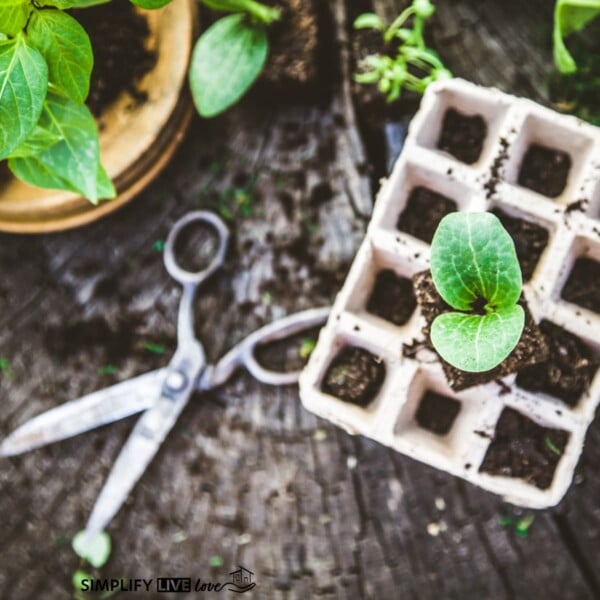
Your seed starting containers need to do three things: hold soil, manage moisture, and give roots room to grow. They don’t have to be expensive or Instagram-worthy, but they absolutely need drainage holes.
The Containers I Recommend
- Cell trays with drainage holes
- Reusable plastic seed trays
- Soil block trays (my favorite once you get the hang of them)
Budget-Friendly Container Swaps I’ve Used
- Yogurt cups with holes punched in the bottom (works great!)
- Clear plastic produce containers from the grocery store
- Toilet paper rolls (just know these break down fast—use them for quick crops)
Pro tip from my mistakes: Always clean and disinfect any container you’re reusing. I learned this the hard way when damping-off wiped out an entire tray of tomatoes.
Pin this now to find it later
Pin ItThe Seed Starting Soil Mix I Swear By
This is where I won’t compromise. The soil you use matters way more than the container it’s in. Regular garden soil or heavy potting mix will smother tiny roots and hold too much water.
Best Soil for Starting Seeds Indoors
I always use a light, fine-textured seed starting mix that’s:
- Sterile and well-draining
- Low or no added fertilizer (seedlings don’t need much at first)
- Fluffy enough for delicate roots to push through
My DIY Soil Mix Alternative
When I make my own, I combine these four ingredients:
- All purpose potting soil – choose a growing medium that doesn’t have synthetic fertilizers
- Perlite – nice and lightweight, it doesn’t break down, helps the soil have good drainage. That means helps your seedlings have room to grow deep roots
- Compost – for adding extra nutrition for your seedlings. Make sure that it is well-aged compost and very fine, so run it through a sieve need be.
- Worm Castings – a key ingredient in your homemade soil starter – it’s full of nutrients and minerals that will be easily absorbed and help make stronger seedlings.
Simply mix equal parts of these four ingredients. Using a 5 gallon bucket with a gamma lid works well. Before you add the mix to your free starter pots for seeds, make sure to wet it down well. 🙂
Learn how to get started worm composting to make your own worm castings!

Why I Always Use Grow Lights Now
Let me be blunt: light is non-negotiable. Most seed starting failures I see (including my own early disasters) come from weak or inconsistent lighting. Your windowsill probably isn’t enough.
My Grow Light Setup
- LED shop lights or actual grow lights
- Adjustable height (this is key as plants grow)
- A timer so I don’t have to remember to turn them on and off
The Budget Grow Light Option That Works
- Basic LED shop lights from any hardware store
- Clamp lights with daylight bulbs
I keep my lights 2–3 inches above my seedlings and run them 14–16 hours per day. This one change transformed my seed starting success rate.

When I Use Heat Mats (and When I Don’t)
Heat mats warm the soil to help certain seeds germinate faster. I don’t use them for everything, but they’ve been game-changers for some crops.
When Heat Mats Actually Help
- Starting seeds early in spring when my house is still cold
- Warm-season crops like tomatoes and peppers
- Growing in a cold basement or unheated space
When I Skip the Heat Mat
- Cool-season crops (they don’t need it)
- When I’m starting seeds in a warm room
Important: I always remove the heat mat once seeds sprout. Keeping it on too long can stress the seedlings.
My Bottom Watering Setup
Bottom watering has been a total game-changer for preventing mold, fungus gnats, and the overwatering that used to plague my seedlings.
What I Use for Bottom Watering
- Solid trays under my cell packs
- Shallow bins or even old baking trays
I just pour water into the tray and let the seedlings absorb what they need from below. It encourages stronger roots and keeps the soil surface drier.

How I Water Young Seedlings
Those first few weeks, seedlings are incredibly fragile. Watering from above can disturb the soil or knock over tiny plants.
What I Use for Gentle Watering
- A fine-mist spray bottle
- A small watering can with a narrow spout
Once my seedlings get bigger and stronger, I switch completely to bottom watering.
Why I Label Everything (Even When I Think I’ll Remember)
Seedlings all look the same at first. I promise you will forget what’s what, even if you’re absolutely certain you won’t. I’ve made this mistake too many times.
My Favorite Labeling Options
- Plastic plant labels (reusable year after year – if you can keep track of them)
- Wooden craft sticks (cheap and biodegradable)
- Waterproof markers (regular markers fade fast)
I avoid masking tape or paper labels—they fall apart or become unreadable way too quickly.
The Simple Fan Trick That Strengthens Seedlings
Running a small fan near my seedlings has made such a difference. Air movement strengthens stems and helps prevent disease.
How I Use a Fan for My Seedlings
- Set it on the lowest speed
- Run it a few hours per day
- Aim for gentle movement, not a windstorm
This one simple step helps prevent damping-off and those sad, leggy seedlings that fall over.
My Seed Starting Shelving Setup
When you’re starting lots of seeds (and let’s be honest, it’s easy to get carried away), organization really matters.

Shelving Setups I’ve Used
- Wire shelving units from the hardware store
- Repurposed bookshelves
- Folding racks positioned near outlets
The key is making sure the shelves can adjust so you can keep your lights close to the seedlings as they grow.

Optional Supplies That I Actually Find Helpful
These aren’t essential, but they’ve made my seed starting life easier.
Nice-to-Have Supplies Worth Considering
- Soil blocker (once you get the hang of it, it’s amazing)
- Moisture meter (takes the guesswork out)
- Seed trays with humidity domes (great for germination)
My advice? Skip the gimmicky stuff. Focus on getting good light, proper soil, and consistent watering down first. Everything else is just icing.
What I’ve Learned About The Best Seed Starting Supplies
Here’s the truth: you don’t need a perfect, expensive setup to start seeds indoors successfully. The best seed starting supplies provide good light, proper soil, drainage, and consistency. Everything else is surprisingly flexible.
If you’re just getting started, I’d recommend beginning with a simple, basic setup and upgrading over time as you figure out what works for your space. Many budget-friendly and reused supplies work just as well as the fancy store-bought options—I use a mix of both.
This guide pairs really well with my posts on how to start seeds indoors and the most common seed starting mistakes I see. Together, they’ll help you build a system that actually works for you.