Perennial Onions That Walk: Why & How to Grow Egyptian Walking Onions

on Jul 06, 2026
This post may contain affiliate links. Please read our disclosure policy.
If you aren’t growing this amazing garden perennial, you need to learn how to grow Egyptian walking onions. A zero effort and prolific onion!
If you want a vegetable garden staple that plants itself year after year, egyptian walking onions might be the answer. These quirky perennial onions grow topsets right at the top of the stalk, then bend over and “walk” to new locations in your garden bed. Once you plant them, you’ll harvest green onions, small bulbs, and tender greens for years without replanting.
My grandparents grew these in Arkansas and called them winter onions. They passed seeds to my parents’ garden in Missouri, and my parents gave me my own start for my garden in Iowa. Five years later, my patch has more than doubled in size. These plants spread fast, and I love sharing topsets with my friends so they can start their own onion patch too.
Quick Guide to Growing Egyptian Walking Onions
Egyptian walking onions are easy-to-grow perennial onions that produce topsets instead of seeds, letting them “walk” across your garden bed and multiply on their own.
- 🧅 What they are: A perennial allium (scientific name allium x proliferum) that’s part onion, part welsh onion, and part true shallots
- 🌱 How they spread: Topset onions form at the top of the plant, then the flower stalk bends and drops bulbils into new locations
- ☀️ Where they thrive: Full sun to partial shade, in well-drained soil or rich, loose soil
- 🍂 Best planting time: Early fall or early spring, though topsets can go in almost any time the ground isn’t frozen
- 🥗 What you can harvest: Green shoots and green onions in spring, mature bulbs in early summer, and topsets in late summer
- 🌨️ Why gardeners love them: They’re hardy plants that survive winter and come back stronger every following year
- 👯 Bonus: Share the extra topsets with friends and family, just like my grandparents did
Looking for walking onion bulbs to buy? Get them on Amazon or from Burpee.
Table of Contents
What Are Egyptian Walking Onions?
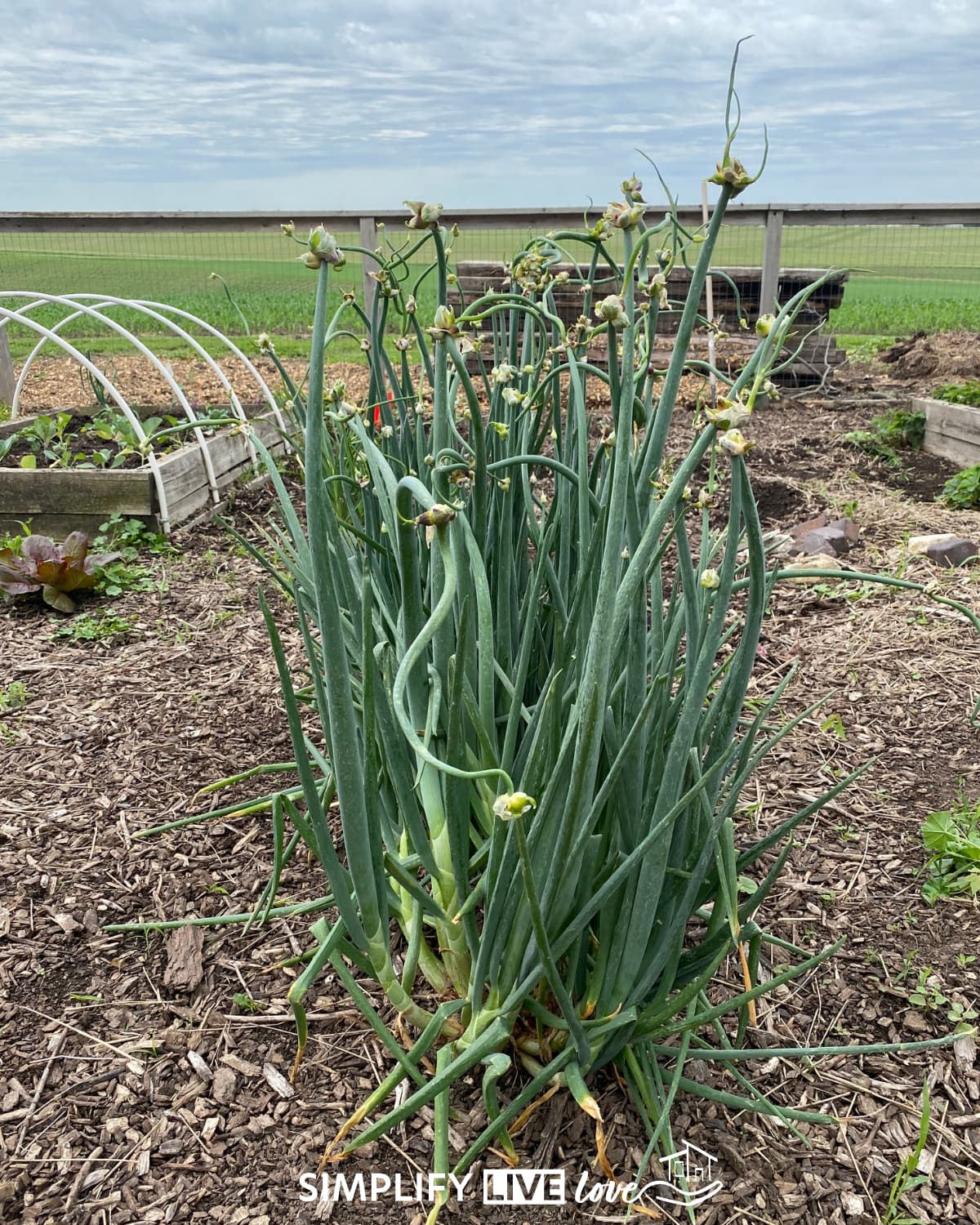
Egyptian walking onions (allium x proliferum) are a cross between the common onion (allium cepa) and the welsh onion. Gardeners also call them egyptian tree onions, top-setting onions, or top onions because of how they grow.
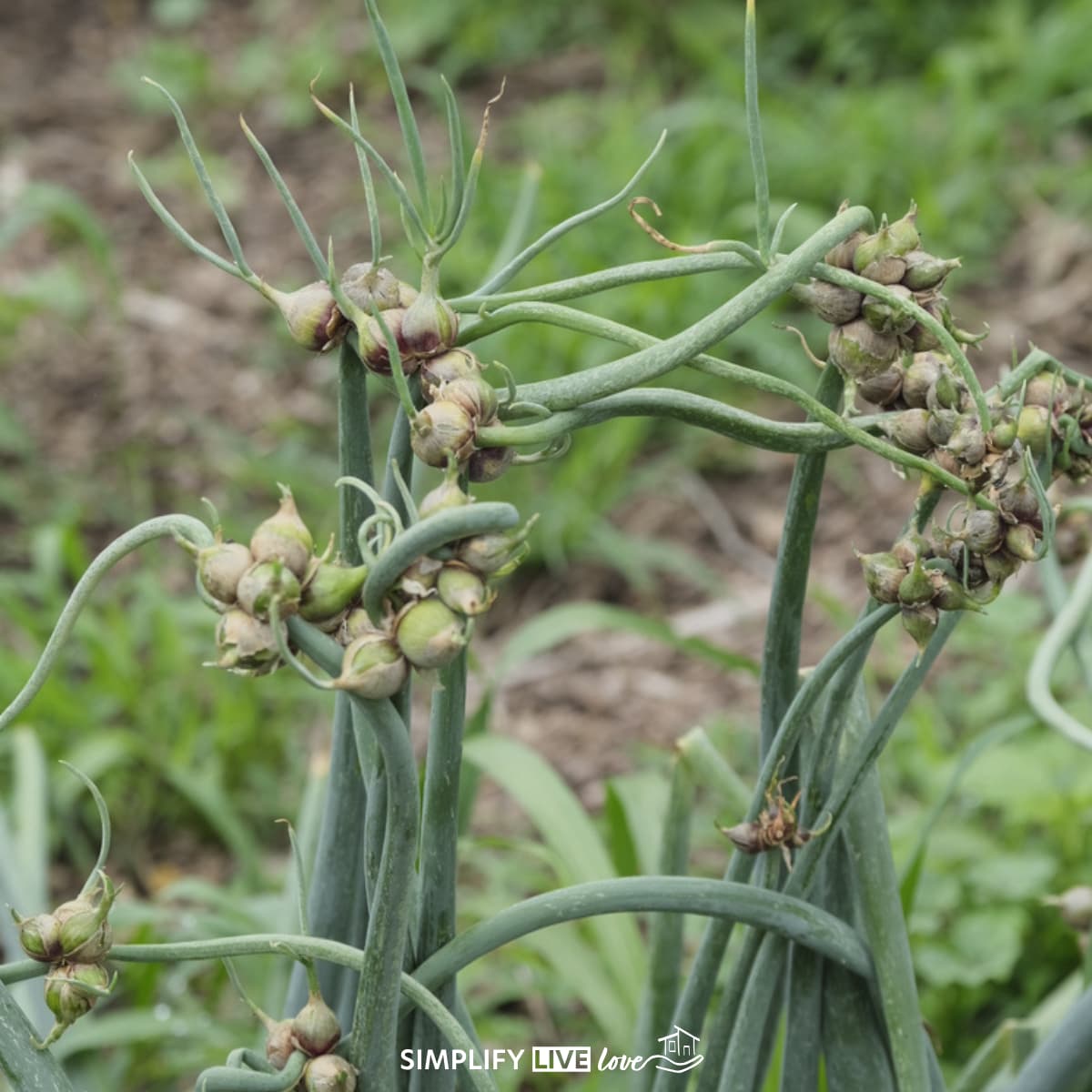
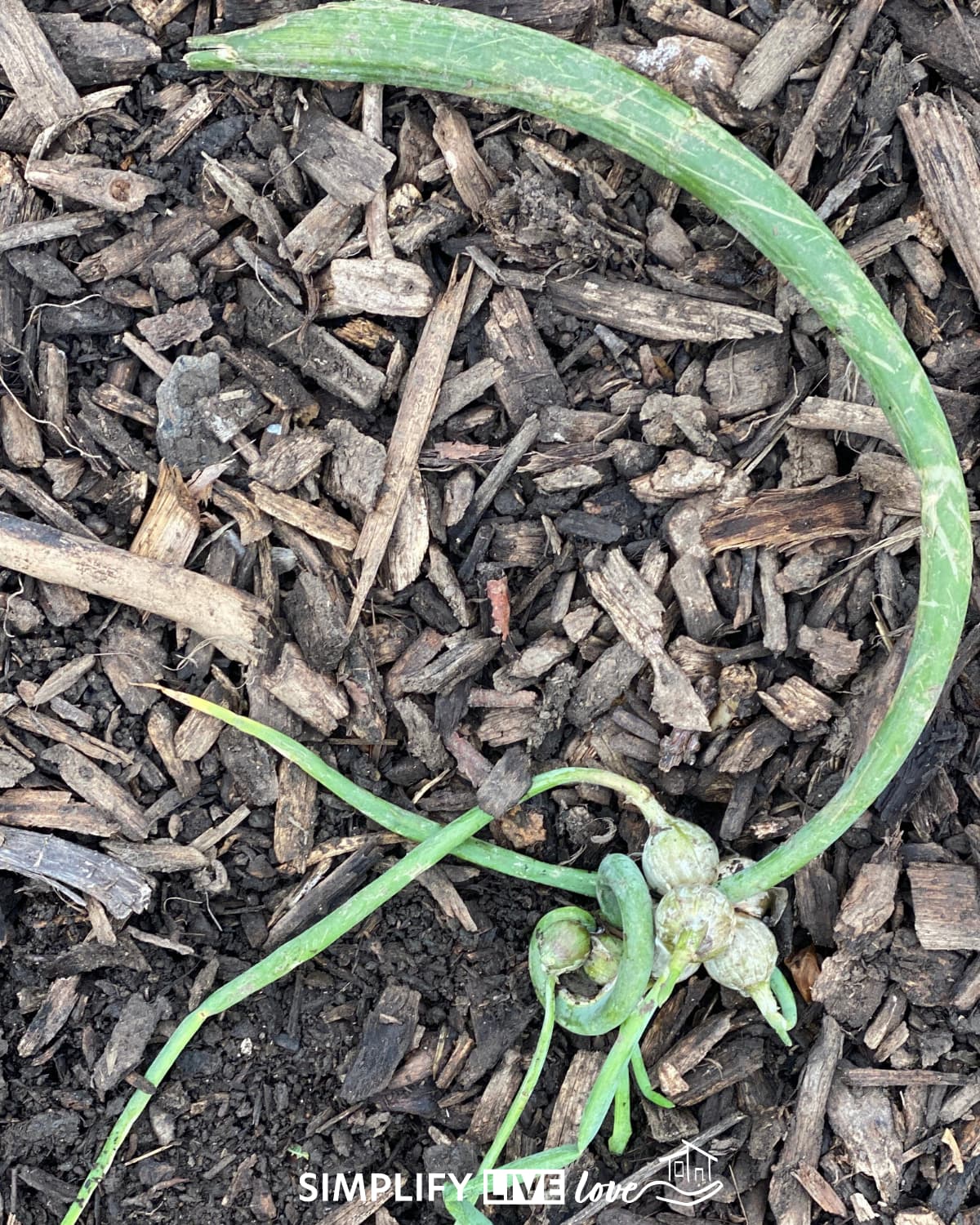
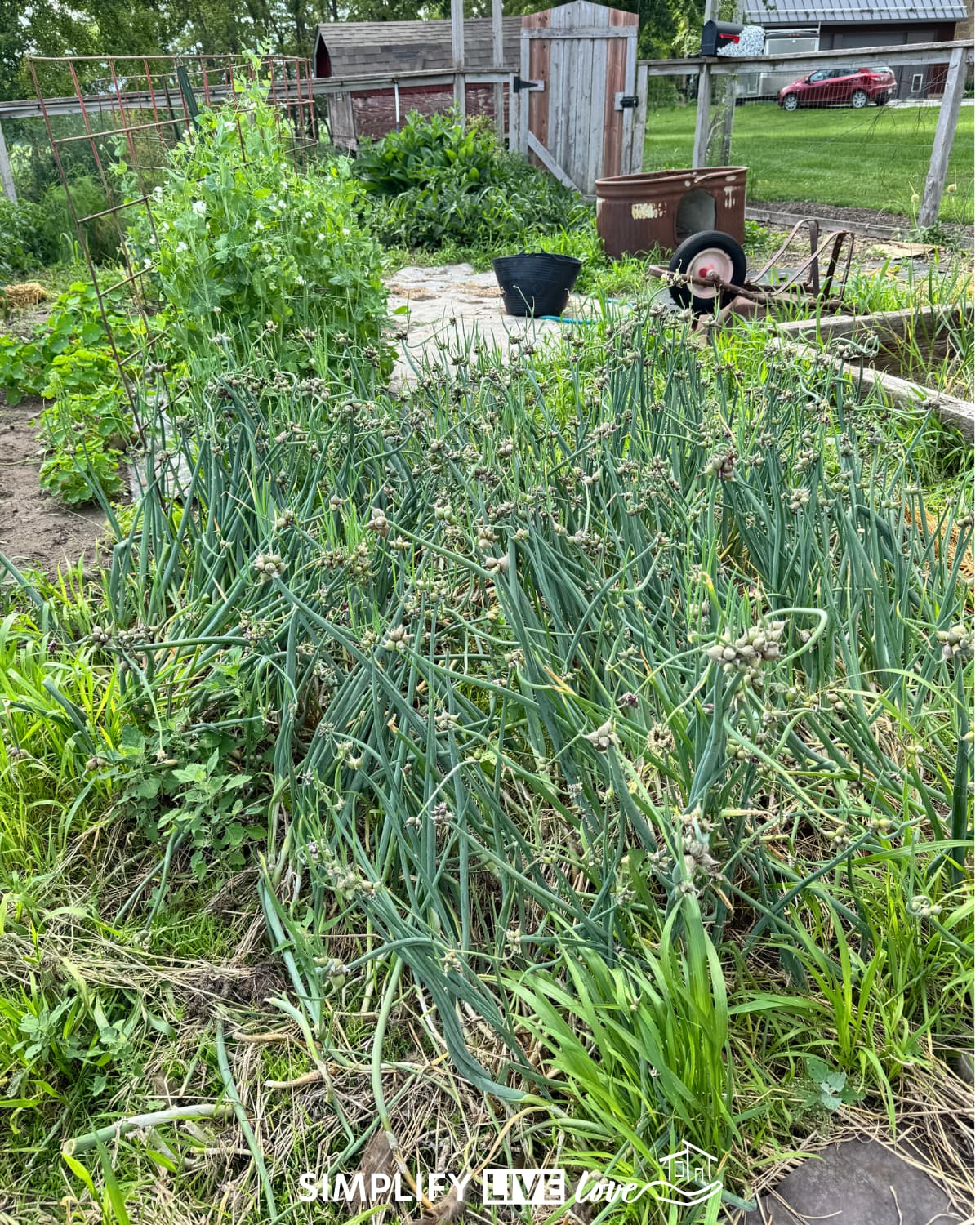
Instead of producing seeds, these perennial onions grow a cluster of bulbils at the top of the stem. As the topsets mature, the weight of the bulbils pulls the flower stalk down to the ground. Wherever the topsets land, they root and grow into new egyptian walking onion plants. That’s how they earned the nickname “walking” onions.
You’ll also hear them compared to potato onions and pearl onions, since all three are multiplier onions that produce small onions instead of relying on a single main bulb. Unlike an ordinary onion you’d buy at the store, this perennial vegetable keeps giving for multiple seasons, making it a valuable addition to any kitchen garden.
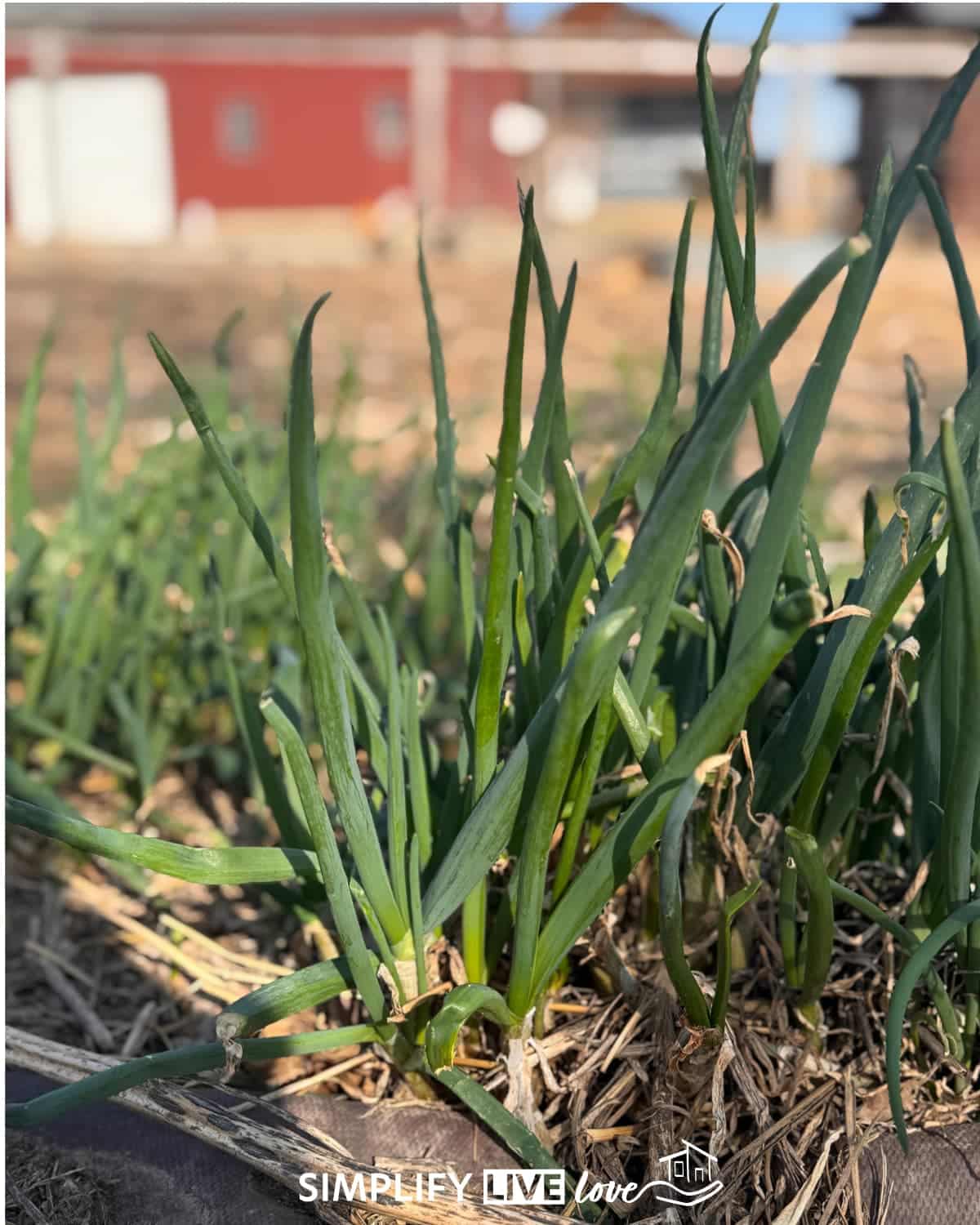
Why Grow Egyptian Walking Onions?
- You can share topsets with friends, neighbors, and family, keeping the tradition alive
- They’re one of the easiest perennial crops for a low-maintenance garden bed
- You get three harvests in one plant: green onions in spring, topsets throughout the summer, and bulbs in the fall after the plant has gone dormant
- They tolerate a wide range of soil conditions and mild climates
- Established plants are hardy plants that come back stronger every next growing season
How to Grow Egyptian Walking Onions
Choosing a Planting Site
Pick a spot with full sun for the biggest bulbs, though these onions also tolerate partial shade or light shade. Loose soils with good drainage help the underground bulbs form properly. If your garden bed has heavy clay, work in compost to loosen things up before planting.
Planting Your Onion Sets
The best time to plant egyptian walking onion topsets is early fall, giving the small bulbs time to root before winter. You can also plant in early spring if you missed the fall window.
- Dig a little depression about one inch deep
- Set the topset or bulb in with the pointed end facing up
- Space plants six to eight inches apart to give new plants room to grow
- Cover lightly with soil and water well
- Mulch in late fall to protect new stems through their first year of growth
Care and Maintenance
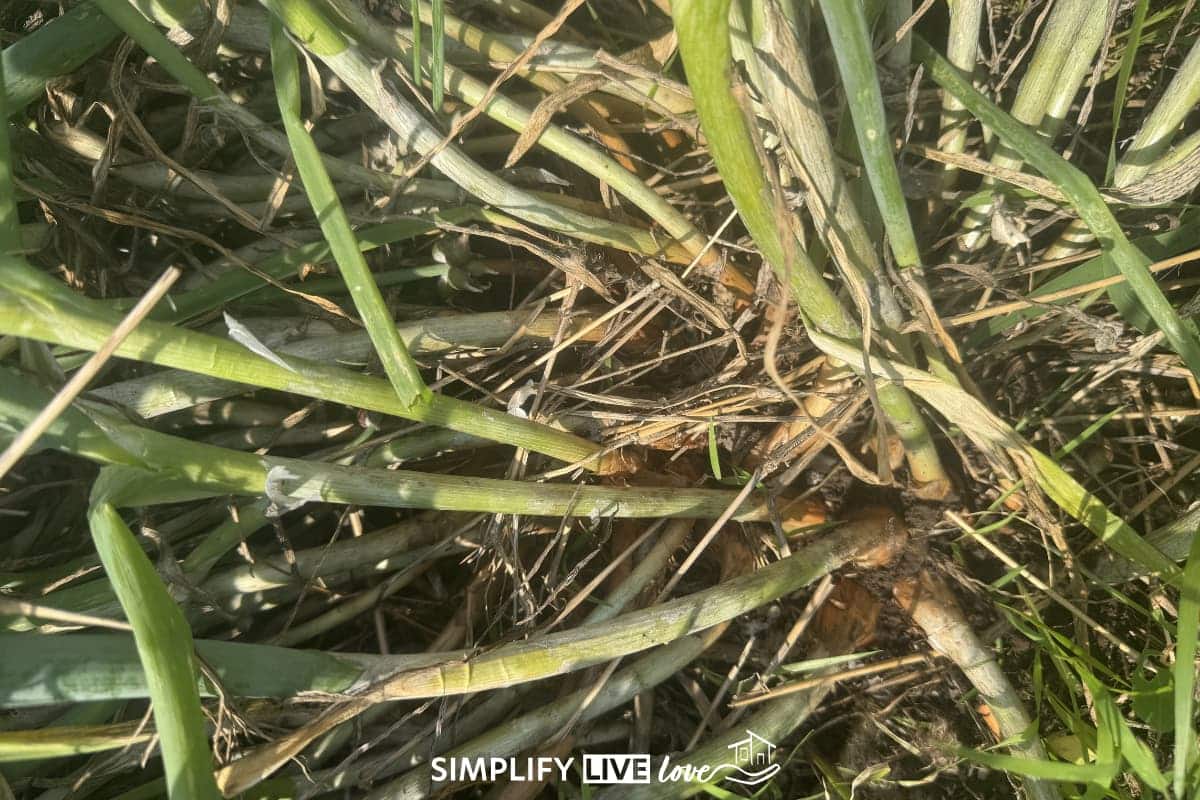
Once established, egyptian walking onions need very little care. Here’s what to keep on your checklist through the growing season:
- Remove any fallen topsets you don’t want sprouting in unwanted spots
- Water regularly during dry spells, especially while young plants are establishing
- Feed with compost or aged manure in early spring to support strong green leaves
- Divide clumps every few years if the onion patch gets too crowded
- Cut back flower stalks if you want bigger bulbs instead of topsets
- Mulch around the base of the plant to retain moisture and suppress weeds
- Watch for topsets forming in mid-to-late summer and stake tall stalks if they start to tip early
Harvesting Egyptian Walking Onions
You can harvest something from this plant almost all year long, which is part of what makes it such a great addition to the garden.
- Green onions: Snip green shoots and green stalks anytime in spring for a fresh, mild flavor
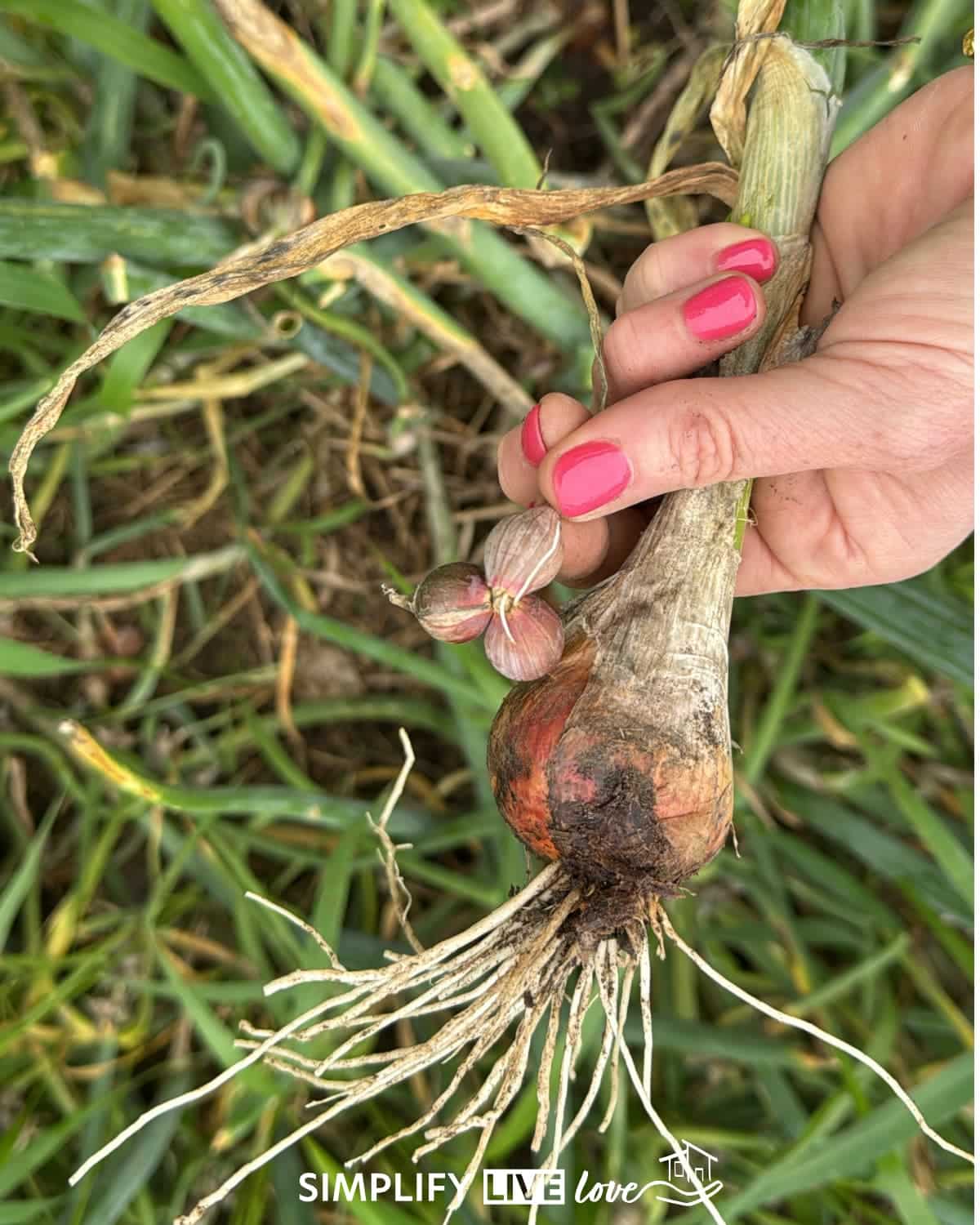
- Mature bulbs: Dig up underground bulbs in early summer once the tops start to yellow and flop over
- Topsets: Collect top sets in late summer once they turn papery and separate easily from the plant
- Replanting: Save some topsets to plant immediately for next year’s crop, and store the rest in a cool, dry spot
- Storage: Cure harvested bulbs in a shaded, airy spot for a week before storing, just like regular onions
Year-Round Growing Guide
Egyptian walking onions stay active through most of the year, which makes them one of the more rewarding perennial vegetables for a four-season garden.
- Late winter: New green shoots emerge from the base of the plant as soil starts to warm
- Early spring: Harvest tender greens, and this is also a good time to plant new topsets
- Late spring: The plant puts energy into growing taller flower stalks
- Throughout the summer: Topsets form at the top of the stalk and begin to mature
- Fall: Underground bulbs reach full size and are ready to dig after the plant goes dormant
- First frost: Foliage dies back, but the mother plant and any rooted topsets stay alive underground
- Following year: The whole cycle starts again, often with more plants than you started with
Common Problems and Solutions
Egyptian walking onions are tough, low-maintenance perennial onions, but a few issues can pop up.
- Problem: Plant takes over the garden bed — Solution: Harvest topsets before they fall, and pull unwanted new plants while they’re small
- Problem: Bulbs stay small — Solution: Cut off flower stalks early so the plant sends more energy into the main bulb instead of topsets
- Problem: Rot at the base of the plant — Solution: Improve drainage with loose soils and avoid overwatering in heavy, wet ground
- Problem: Weak growth in shade — Solution: Move new plants to a spot with more full sun; light shade is fine, but deep shade limits bulb size
- Problem: Topsets sprout in unwanted spots — Solution: Collect fallen topsets promptly each late summer and replant them exactly where you want new plants
A Family Tradition Worth Passing On
My grandparents grew these winter onions in Arkansas long before I knew what egyptian walking onions were. They passed a handful of topsets to my parents, who grew them in Missouri for years. When my parents gave me my own start for my garden in Iowa, I had no idea how much they’d spread. Five years later, my onion patch is thriving, and I’ve handed out topsets to more friends than I can count.
If you’re looking for a perennial vegetable that keeps giving, ask around. Chances are good someone in your life already grows egyptian walking onions and would love to share.
Frequently Asked Questions
Are egyptian walking onions the same as regular onions?
No. Regular onions (allium cepa) grow from seed and form one main bulb. Egyptian walking onions produce topsets instead of seeds and multiply on their own.
Can I eat every part of the plant?
Yes. You can eat the green shoots, the underground bulbs, and the topsets. Every part of the plant works well in cooking, similar to how you’d use spring onions or green onions.
Do egyptian walking onions come back every year?
Yes. They’re hardy plants and true perennial crops. Once established, they return every next season without replanting.
What’s the best way to stop them from spreading too much?
Harvest topsets before they touch the ground, and pull any new plants you don’t want each spring.
More Garden Posts You May Like
- Top Vegetables to Grow in Spring: Essential Guide for Early Season Gardening Success
- The Complete Companion Planting Guide: Best Plants to Grow Together in Your Vegetable Garden
- Gardening in High Heat: Save Your Plants with These Simple Tips
- The Pre-Planning Checklist: 8 Things to Know Before You Plan a Garden