The Complete Companion Planting Guide: Best Plants to Grow Together in Your Vegetable Garden

on May 01, 2026
This post may contain affiliate links. Please read our disclosure policy.
Growing an organic vegetable garden is so much easier when your plants are working together. Companion planting — the practice of strategically placing plants near each other for mutual benefit — is one of the most powerful tools in any organic gardener’s toolkit. This guide covers the best companion plants for vegetables, a quick-reference pairing chart, plants to keep apart, and real tips from years of gardening in Iowa.
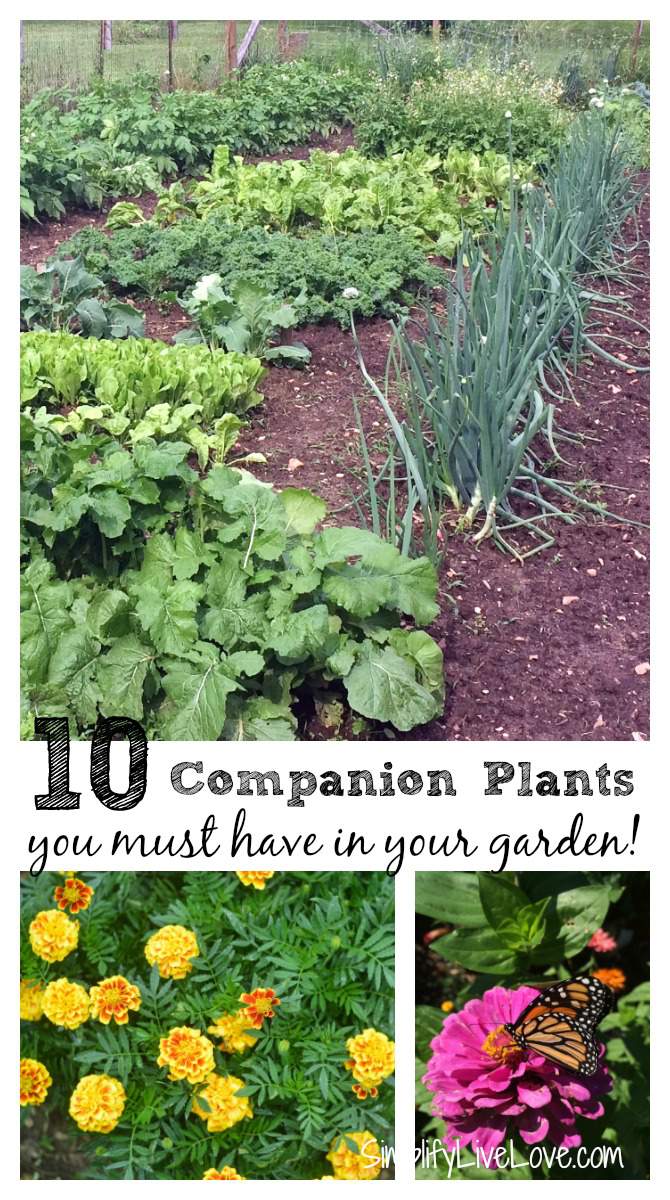
Table of Contents
- What Is Companion Planting (And Does It Actually Work)?
- Does the science always back up companion planting?
- Companion Planting Quick-Reference Chart
- Herb Companion Plants
- Flowers Companion Plants
- Vegetable Companion Plants
- Plants That Should NOT Grow Together
- How to Actually Use Companion Plants in Your Garden
- FAQs About Companion Planting
- Suggested External Resources
- Companion Planting Is Worth Every Seed
What Is Companion Planting (And Does It Actually Work)?
Companion planting is the intentional pairing of plants that benefit each other when grown in close proximity. Those benefits can take several forms:
- Flavor enhancement — some gardeners swear that planting basil near tomatoes improves the flavor of the fruit
- Pest deterrence — some plants repel specific insects through scent or chemical compounds in their roots or leaves
- Attracting beneficial insects — predatory wasps, lacewings, and pollinators that keep pest populations in check
- Improving soil health — certain plants (especially legumes) fix nitrogen, enriching the soil for their neighbors
- Weed suppression — low-growing plants shade the soil and crowd out weeds
Does the science always back up companion planting?
Sometimes yes, sometimes it’s more anecdotal — but after years of companion planting in my own 2,400-square-foot garden, I can tell you that the results are real enough that I wouldn’t garden any other way. The radish-cucumber combination alone has saved my cucumber crop more than once. (More on that below.)
If you’re new to planning your garden layout, grab my free garden planner printable — it’s a great place to map out your companion plant groupings before you put anything in the ground.
Companion Planting Quick-Reference Chart
Use this chart as a starting point. Full details on each plant are below.
| Vegetable | Good Companions | Avoid |
|---|---|---|
| Tomatoes | Basil, marigolds, carrots, parsley, zinnias | Fennel, brassicas, corn |
| Cucumbers | Radishes, nasturtiums, dill, sunflowers, marigolds | Sage, potatoes |
| Peppers | Basil, carrots, marigolds, parsley | Fennel, brassicas |
| Squash/Zucchini | Nasturtiums, marigolds, corn, beans (Three Sisters) | Potatoes |
| Cabbage & Brassicas | Dill, rosemary, sage, nasturtiums, thyme | Tomatoes, strawberries |
| Potatoes | Horseradish, beans, marigolds | Tomatoes, cucumbers, sunflowers |
| Onions & Garlic | Arugula, carrots, chamomile | Beans, peas |
| Beans | Marigolds, squash, corn, radishes | Onions, garlic, fennel |
| Corn | Sunflowers, beans, squash | Tomatoes |
| Carrots | Sage, rosemary, chives, leeks | Dill, fennel |
Herb Companion Plants
Herbs are the workhorses of the companion planting world. Even if you never cook with fresh herbs (though you really should — fresh dill pickles alone are worth it!), planting herbs throughout your vegetable garden delivers real pest-control benefits all season long.
Basil
Basil is one of the most popular companion plants for tomatoes, and for good reason. It’s known to repel thrips and tomato hornworms, and many gardeners — myself included — believe it enhances the flavor of nearby crops.
Best placed near: tomatoes, peppers
Tip: Don’t plant basil in the middle of your tomato patch — as the tomatoes grow, basil gets shaded out and crowded. Plant it along the edges of your tomato area where it gets full sun and stays accessible for harvest.
If tomato hornworms are already a problem for you, check out my guide on how to get rid of tomato hornworms naturally — companion planting helps prevent them, but you may need backup strategies mid-season.
Dill
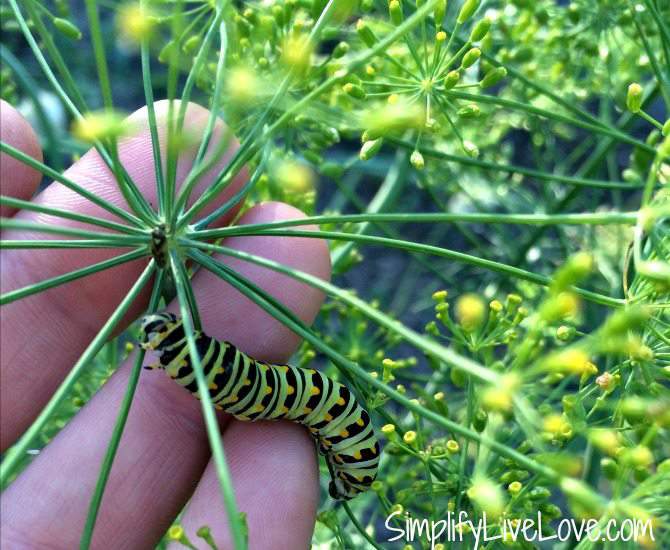
Dill is a powerhouse for attracting beneficial insects — parasitic wasps, praying mantises, spiders, and beautiful swallowtail butterflies all love it. Those parasitic wasps are particularly valuable because they prey on cabbage caterpillars and aphids. Dill also self-seeds freely, so once you plant it, it tends to come back year after year.
Best placed near: cabbage, cucumbers, onions
Avoid near: carrots and tomatoes (dill can stunt their growth once it goes to seed)
Rosemary
Rosemary is a strong-scented herb that confuses and deters cabbage moths, bean beetles, and carrot flies. It’s also a perennial in warmer climates (though I overwinter mine in a pot here in Iowa), so it’s a long-term garden investment.
Best placed near: cabbage, beans, carrots, sage
Note: If you’re in zone 5 like me, plan to buy rosemary plants each spring or overwinter them indoors.
Sage
Sage deters cabbage moths and carrot flies and is said to improve the health of nearby tomato plants. It also makes a gorgeous edible plant in its own right. I grow it in my cabbage area and along the border of my tomato beds.
Best placed near: cabbage, carrots, tomatoes
Avoid near: cucumbers and onions
Thyme
Thyme is an underrated companion plant that repels cabbage worms, whiteflies, and aphids. It also attracts beneficial insects and, as a low-growing plant, helps suppress weeds when planted as a border. Thyme is hardy and drought-tolerant, making it low-maintenance once established.
Best placed near: cabbage, broccoli, Brussels sprouts, roses
Bonus: Growing Brussels sprouts is a lot easier with thyme nearby to deter cabbage worms.
Chamomile
Chamomile is sometimes called “the plant doctor” because it’s believed to improve the health and flavor of plants growing nearby. It attracts beneficial wasps and hoverflies that prey on aphids, and it accumulates calcium, potassium, and sulfur in its leaves — releasing those nutrients back into the soil as it decomposes.
Best placed near: onions, brassicas, most vegetables in small amounts
Note: Don’t plant chamomile in large quantities throughout the garden — a little goes a long way.
Parsley
Parsley attracts predatory insects including beneficial wasps and hoverflies. It also attracts swallowtail butterfly caterpillars, so if you want those beautiful butterflies in your garden, let some parsley go to seed. Plant it near tomatoes and peppers.
Best placed near: tomatoes, peppers, asparagus
Avoid near: onions and garlic
Herbs make fabulous companion plants. Even if you don’t want to cook with fresh herbs (BUT WHY?!), I highly recommend that you plant them in your garden. Here are some of my favorites.
Basil – repels thrips and tomato hornworm. Enhances the flavor of post garden crops. I’ve always planted it near my tomatoes, but have noticed that it tends to get overshadowed and lost in the tomato growth as the season continues. I will plant basil on the outside of my tomato area, and not in the middle like I did last year. I’ll buy plants for these purposes, though I should start them myself!
Dill – attracts beneficial wasps to help control cabbage moths. Attracts butterflies, praying mantises, and spiders. Plus, I need dill to make my grandma’s famous dill pickles. I’m planting in my cabbage plot, mixed in with the cucumbers, and also mixed in with basil near the tomato area.
Rosemary – repels cabbage moths! I’m also planting rosemary in my cabbage area. I’ll buy rosemary plants as I didn’t start any.
Sage – deters cabbage moths and improves tomato plants. Sage will also go in my cabbage area and outside my tomato plot. I’ll buy sage plants too.
Flowers Companion Plants

Flowers don’t just make the garden prettier — they do serious work keeping pests in check and drawing in pollinators. I think of them as a low-effort, high-reward companion planting strategy. Scatter them throughout your garden beds rather than keeping them confined to a separate flower area.
Marigolds
Marigolds are probably the most well-known companion plant, and they absolutely earn that reputation. French marigolds in particular produce a substance from their roots that repels nematodes in the soil. Above ground, their strong scent deters aphids, bean beetles, squash bugs, and whiteflies. They also attract beneficial predatory insects.
Best placed near: tomatoes, peppers, cucumbers, potatoes, beans
Tip: For nematode control, you need to plant marigolds densely and let them grow for a full season — a few scattered plants won’t have the same effect. I start mine from seed indoors and transplant them around my potato and cucumber beds.
Nasturtiums
Nasturtiums are one of my absolute favorite companion plants. They act as a “trap crop” — aphids, cucumber beetles, and whiteflies are so attracted to nasturtiums that they flock to them and leave your vegetables alone. You can then remove and destroy the nasturtium plants (with the pests on them) before the infestation spreads.
They also repel squash bugs and cabbage moths and attract predatory insects that feed on pests.
Best placed near: cucumbers, tomatoes, squash, cabbage, pumpkins
Bonus: Nasturtium flowers and leaves are edible — peppery and delicious in salads!
If squash bugs are a persistent problem, nasturtiums help but you may also want to read my dedicated guide on preventing squash bugs naturally.
Zinnias
Zinnias attract predatory wasps that target tomato hornworms, and they’re well known for drawing hummingbirds and butterflies. They also reportedly deter cucumber beetles. Beyond their pest benefits, zinnias are one of the easiest flowers to grow from seed, and they bloom all summer long with very little attention.
Best placed near: cucumbers, tomatoes
Tip: Direct sow zinnia seeds after your last frost — they grow quickly and don’t love being transplanted.
Sunflowers
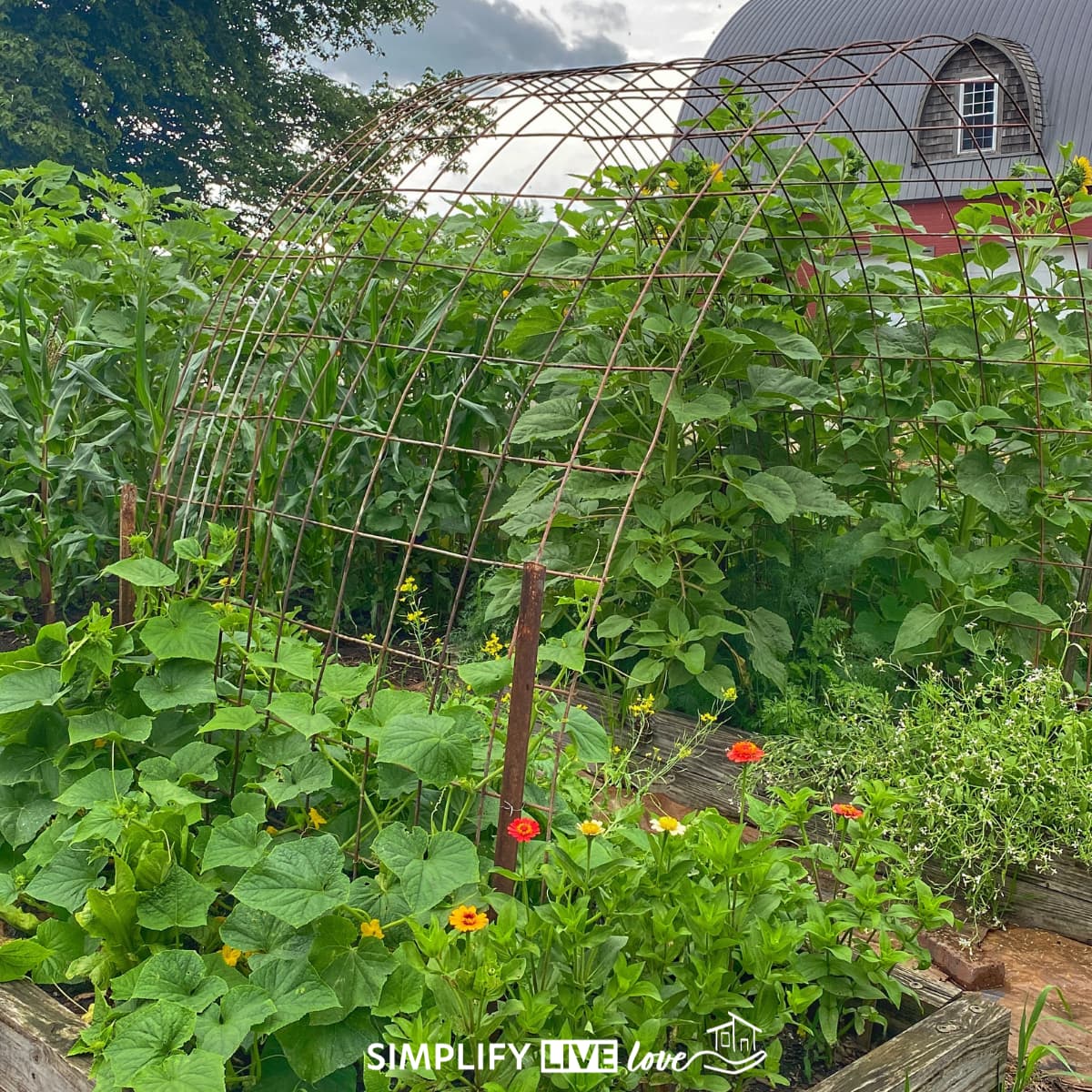
Sunflowers pull double duty as companion plants: they act as a natural trellis for cucumbers and pole beans to climb, and their blooms attract pollinators and beneficial insects. They also provide dappled shade for heat-sensitive crops during the hottest part of summer.
Best placed near: cucumbers, corn, beans
Note: There’s some debate about sunflowers near potatoes — some sources say they compete too much, others say filtered shade from the south side is beneficial. I’ve experimented both ways and lean toward keeping them away from potatoes.
Borage
Borage is an underused gem of a companion plant. It deters tomato hornworms and cabbage worms, attracts bumblebees, and is said to improve the growth and flavor of tomatoes and strawberries. Like nasturtiums, it’s edible — the star-shaped blue flowers are lovely in salads. Borage self-seeds aggressively once established, so plant it where you’re okay with it returning each year.
Best placed near: tomatoes, strawberries, squash
How to grow: Direct sow outdoors after the last frost date.
Lavender
Lavender’s intense fragrance repels fleas, moths, and mosquitoes, and it attracts pollinators from early summer through fall. It’s a perennial in most zones and looks beautiful as a garden border. In zone 5, protect it with winter mulch.
Best placed near: most vegetables, especially brassicas; also great as a border plant
Tip: Lavender prefers well-drained, slightly alkaline soil — avoid planting it in heavy clay.

Vegetable Companion Plants
Vegetables pair well with each other too, not just with flowers and herbs. Here are the most effective vegetable-to-vegetable companion combinations I use in my garden.
Radishes with Cucumbers
This is the companion planting combination that changed my gardening life. I lost my cucumber crop to cucumber beetles three years in a row before I tried planting radishes alongside them. Since I started interplanting radishes directly in my cucumber bed and letting them go to seed, cucumber beetle damage has dropped dramatically.
Plant radish seeds at the same time as cucumbers. Let the radishes go to seed rather than harvesting them — their flowers and seed heads continue working as deterrents.
Also pairs well with: squash, beans

Corn, Beans & Squash — The Three Sisters
The Three Sisters is the ultimate vegetable companion planting combination, developed by Indigenous farmers of North America centuries ago. Corn provides a trellis for beans to climb. Beans fix nitrogen in the soil, feeding the heavy-feeding corn and squash. Squash spreads along the ground, shading out weeds and retaining soil moisture.
Together they create a nearly self-sustaining system. I’ve written a full guide on how to grow a Three Sisters garden — complete with layout tips, planting timing, and what varieties work best.
Arugula with Onions
Planting arugula between onion rows shades the soil, which helps suppress weeds. If you’ve ever spent a summer afternoon hand-weeding between onion sets, you’ll appreciate this one deeply. The arugula grows quickly, stays low, and doesn’t compete significantly with onions for nutrients.
Tip: Arugula can bolt quickly in heat — plant it in spring while temperatures are still cool, or in late summer for a fall crop.
Carrots and Leeks (or Onions)
Carrots deter onion fly; leeks (and onions) deter carrot fly. Planting them together is a classic case of mutual protection. The interplanting confuses the pest insects who locate host plants primarily by scent — mixing the two makes it harder for each pest to find its preferred host.
Horseradish with Potatoes
Horseradish is said to improve the disease resistance of potatoes and may deter Colorado potato beetles. Plant it at the corners of your potato patch — it spreads aggressively so you don’t want it in the middle of the bed.
Related: See my no-dig potato growing guide for an easy method that works great with companion planting.
Beans with Potatoes
Beans deter the Mexican bean beetle when grown with potatoes, and potatoes deter Mexican bean beetles that would otherwise attack beans. Another mutual-protection pairing worth trying.
Pin this now to find it later
Pin ItPlants That Should NOT Grow Together
Companion planting isn’t just about what grows well together — it’s also about knowing what to keep apart. Some combinations actively inhibit growth, share diseases, or attract the same pests.
| Keep These Apart | Why |
|---|---|
| Tomatoes + fennel | Fennel is allelopathic — it releases chemicals that inhibit many plants, especially tomatoes |
| Tomatoes + brassicas | They compete heavily and share some pests |
| Onions/garlic + beans or peas | Alliums inhibit the growth of legumes |
| Cucumbers + sage | Sage is said to stunt cucumber growth |
| Dill (mature) + tomatoes | Young dill is fine near tomatoes; once it flowers and goes to seed, it can harm tomato plants |
| Potatoes + tomatoes | Both are nightshades and share diseases like blight — keep them separated |
| Potatoes + cucumbers | Competition for nutrients and water |
| Fennel + almost everything | Keep fennel in its own dedicated corner of the garden; it inhibits most vegetables |
| Sunflowers + potatoes | Sunflowers may compete too aggressively |
| Brassicas + strawberries | Both are susceptible to the same fungal diseases |
How to Actually Use Companion Plants in Your Garden
Knowing which plants pair well is only half the battle — here’s how to put it into practice:
1. Plan on paper first. Map out your vegetable beds and add companion plants at the edges, in between rows, or interspersed throughout. My free garden planner printable makes this easy.
2. Think in layers. Tall plants (sunflowers, corn) provide trellising and shade. Medium plants (tomatoes, squash) form the main crop. Low growers (marigolds, thyme, arugula) fill in gaps and suppress weeds.
3. Prioritize your biggest pest problems. If cucumber beetles devastated you last year, focus on radishes, nasturtiums, and marigolds around cucumbers. If hornworms were your nemesis, load up on basil, dill, and zinnias near tomatoes.
4. Start seeds for companion plants indoors. Marigolds, zinnias, and basil all benefit from an early start. See my guide to starting seeds indoors for timing and tips.
5. Let some plants go to seed. Radishes and dill are especially effective once they flower and go to seed. Resist the urge to pull them out.
For more organic pest strategies that work hand-in-hand with companion planting, read my roundup of the 10 most effective organic garden pest control methods.
FAQs About Companion Planting
Does companion planting actually work?
The evidence is a mix of solid science and strong anecdote. Marigolds’ effect on nematodes is well-documented. The Three Sisters system is proven over centuries of use. Other combinations like basil near tomatoes improving flavor are harder to prove scientifically but are consistently reported by gardeners. The bottom line: even where the science is limited, companion planting has no downside — at minimum, you’re adding biodiversity to your garden, which is always a good thing.
How many companion plants do I need?
More is generally better, especially for trap crops like nasturtiums. For marigolds and nematode control, a dense planting held for a full season is most effective. For scent-based deterrents like rosemary and sage, even a few plants near susceptible crops can help.
Can I do companion planting in raised beds?
Absolutely. In fact, raised beds are ideal for companion planting because you have total control over what goes where. The same principles apply — just scale down the spacing accordingly.
What’s the best companion plant for tomatoes?
Basil and marigolds are my two must-haves near tomatoes. Basil for hornworm deterrence, marigolds for aphids and whiteflies. Zinnias and parsley are great additions as well.
What should I not plant next to cucumbers?
Keep cucumbers away from sage (said to inhibit their growth) and potatoes (competition for water and nutrients). Cucumbers love radishes, nasturtiums, dill, and marigolds as neighbors.
What should I not plant next to tomatoes?
Fennel is the biggest one — keep it far away from tomatoes. Also avoid planting tomatoes next to brassicas (cabbage, broccoli, kale) or potatoes.
Suggested External Resources
These are current, reputable resources for going deeper on companion planting:
- Rodale Institute Companion Planting Guide — one of the foremost organic farming research organizations; their planting guides are research-backed
- Old Farmer’s Almanac Companion Planting Chart — a comprehensive, regularly updated pairing guide
- Cornell University’s Vegetable Growing Guides — university extension research on integrated pest management including companion planting
- National Gardening Association Plant Guide — great for looking up specific plant combinations and spacing
Companion Planting Is Worth Every Seed
Once you start thinking about your garden as a community of plants working together rather than isolated crops in rows, everything changes. You’ll use fewer pest controls, have more biodiversity, and — honestly — your garden will be much more beautiful.
My biggest suggestion: start with what intimidates you the most. If squash bugs have beaten you every year, surround your squash with nasturtiums and marigolds this season and see what happens. If cucumber beetles are your nemesis, try the radish trick. Small experiments lead to big results over time.
If you haven’t already, also take a look at my spring garden planning checklist — it walks through how I map out a 2,400-square-foot garden and is a great companion (pun intended) to this guide.
Happy planting! 🌿
Enjoyed this guide? Save it to Pinterest or share it with a gardening friend who could use a few less pests this summer.












Zinnias are my favorite flower companion plant!!! Nothing like a burst of color! I need to try the radish trick this year.
I love zinnias. My dad even grew them for my wedding flowers! 🙂
@pam, I plant zinnias under my bird bath. They both get watered every other day.
I have flirted with companion planting. We have marigolds, basil rosemary and nasturtiums in the greenhouse. Your ideas are germinating lots of new ways to companion plant out in the garden. Wait til my hubby finds out Arugula is a weed preventer in Onions! Happy days! Thanks so much for this valuable load of info. I love the idea of adding more life and color (that is not weeds) into our garden! And befitting it in so many ways!
I need to plant my arugula. Planted the onions a few days ago! 🙂
I need to grow a few marigolds to add to my garden this year. My mom and grandma always grew them in the garden but I’ve neglected to add them, but I’m going to change that this year.
Marigolds are so easy to grow and I love the color they add too!
Learning more and more about companion planting, this is a big help.
Good luck, Candy!! Happy gardening!!
I totally agree with ALL these – I love using flowers and herbs in with the veggies. 🙂
Oh I love this post – just told my husband about it and I’ll be reading and re-reading it. We are having a hellova time with the little caterpillars in our tomato plants and this advice of planting other awesome herbs and such to help is GREAT! Thank youuu!
You’re welcome! I hope it’s helpful to you!! Good luck with the tomatoes. <3
I am a huge fan of companion planting! I actually started doing it immediately when I was getting into vegetable gardening. I’m not one to use chemicals, and I can most definitely say this is a much better option! Every year, I plant basil, marigolds and chives with my tomatoes. It really has worked wonders! I’m always deadheading marigolds, so my hands constantly smell like them in the summer! I also feel like nasturtiums benefit literally EVERYTHING! What a miracle flower! I didn’t know about sunflowers keeping down bugs, I must give that a try! The arugula between onions is also a great tip! Never tried it before, it’s definitely a must now. 🙂 Thank you for sharing. I will be using this as a reference when I start up my summer garden this year!
This is so informative! Thanks for sharing it.
Great Share!
Companion plants really support the growth of your plant but on the other hand it consumes some of the nutrients of soil which affects the growth of other plants.
That was a great picture with the dill and the hornworm!!. I’ve got news for you. Hornworms can devour your entire tomatoe patch in a day. They start at night and in the morning, sticks. Good picture though.
Thanks! I like the picture too. It’s actually a swallowtail butterfly caterpillar, though. You can find lots of pictures of hornworms in this post: https://simplifylivelove.com/how-to-kill-tomato-hornworms/ 🙂