Sourdough Mischbrot: Freshly Milled Rye Bread Inspired by German Bakeries

on Aug 27, 2026
This post may contain affiliate links. Please read our disclosure policy.
This sourdough Mischbrot recipe uses freshly milled rye and an overnight cold ferment for incredible flavor inspired by real German bakeries. Tips, timelines, troubleshooting, and two tested baking methods included.
Everything You Need to Know About This Sourdough Mischbrot Recipe
- Mischbrot is a traditional German mixed bread — 50% freshly milled rye, 50% unbleached all-purpose flour
- Made with a sourdough starter, which is essential for rye bread to bake properly
- An overnight cold ferment (10–12 hours) develops deep, complex flavor and fits a real-life schedule
- Rye dough is stickier and ferments faster than wheat — timing and technique tips are included
- Two tested baking methods: Thermador steam oven and Le Creuset bread oven
- This recipe doubles beautifully — make four loaves and freeze the extras
- Best eaten toasted with good butter
Table of Contents
- Everything You Need to Know About This Sourdough Mischbrot Recipe
- What Is Mischbrot? German Mixed Rye Bread Explained
- Why Freshly Milled Rye Makes Better Mischbrot
- Don’t Have a Grain Mill? How to Use Store-Bought Rye Flour
- Sourdough Fermentation Tips for Rye Bread
- Tools and Supplies for Baking Sourdough Mischbrot
- Sourdough Mischbrot Baking Timelines
- How to Make Sourdough Mischbrot: Step by Step
- How to Shape Rye Dough and Cold Ferment Overnight
- How to Score Sourdough Mischbrot
- Three Ways to Bake Sourdough Mischbrot
- Sourdough Mischbrot Frequently Asked Questions
- Sourdough Mischbrot with Freshly Milled Rye Recipe
I grew up in Heidelberg, Germany from age six until I started high school. My dad worked as a civilian for the US Army. That meant we went to school on base but lived off base (“on the economy”) in a small German neighborhood. It was a great childhood!
Not only did I learn German from the neighbor kids, but we also shopped at German stores, including their amazing bakeries. My favorite bread was a German mischbrot, dense, dark, and chewy.
Even though we had easy access to delicious, fresh German bread, sometimes my mom would bring Wonder Bread home from the base commissary. Our German neighbor Freddie had a name for that kind of American bread: plastic bread.
45 years later, I still think Freddie was right. After many years of baking bread for my own family, I have mastered my own German Mischbrot.
What Is Mischbrot? German Mixed Rye Bread Explained
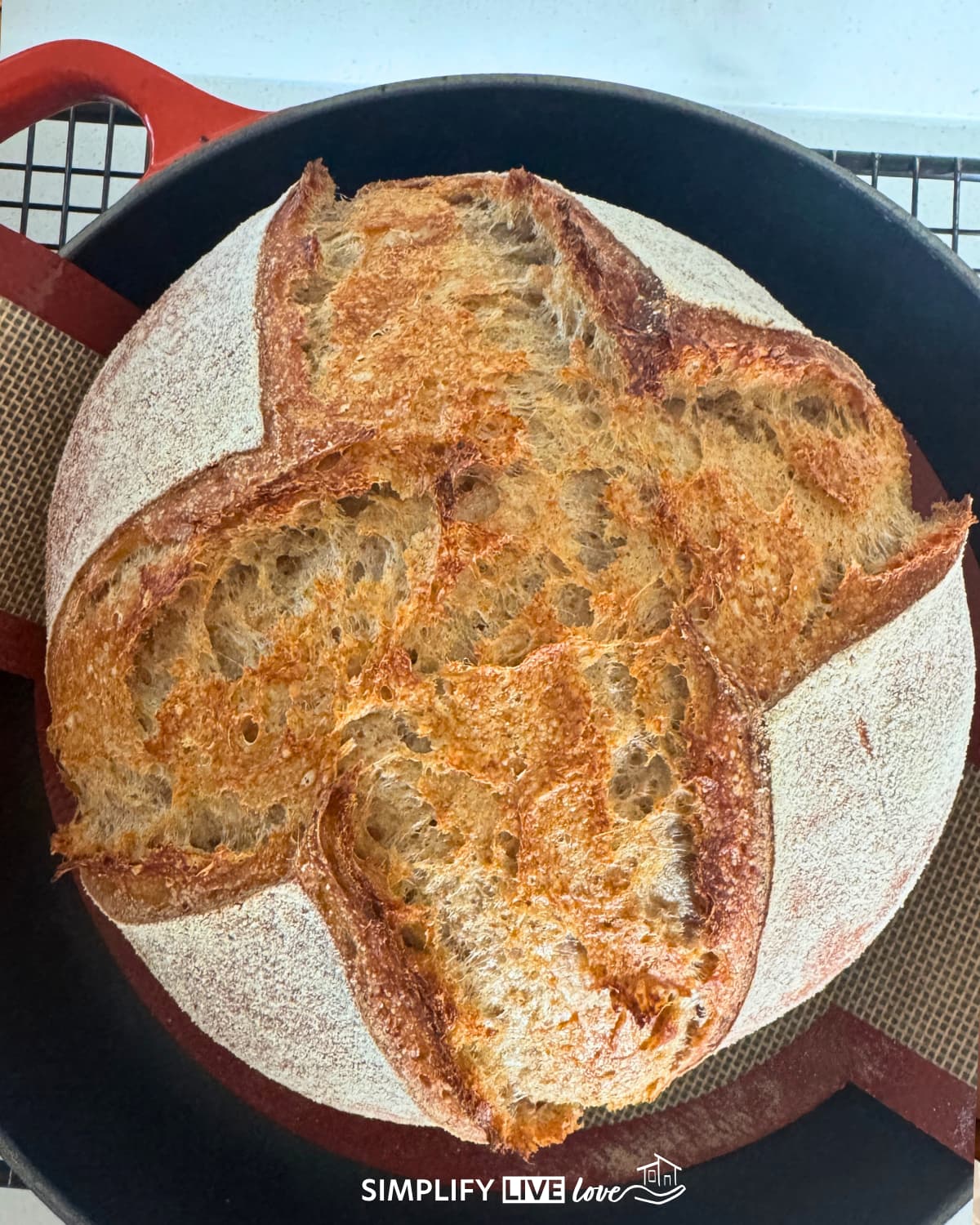
Mischbrot means “mixed bread” in German: usually a blend of rye and wheat flour. The ratio varies by region and baker, but it typically falls somewhere between 30% and 80% rye. My recipe is around 50% freshly milled rye. That gives it a deep, earthy rye flavor and dense, moist crumb that makes German bread so distinctive. But it also has enough wheat in the mix to shape the dough and get a good rise.
One thing that surprised me when I started making this bread: traditional Mischbrot is often made with a sourdough starter. Rye flour actually requires an acidic environment to bake properly. Without it, enzymes in the rye break down the starch and you end up with a gummy, dense crumb. The sourdough starter provides that acidity naturally, which is why this bread has been made the same way in German bakeries for centuries.
If you’ve been baking sourdough bread with freshly milled flour, this recipe will feel familiar in structure but different in feel. Rye dough is stickier, ferments faster, and is less forgiving with timing, but the flavor payoff is absolutely worth it.
Why Freshly Milled Rye Makes Better Mischbrot
Freshly milled rye takes everything that’s great about this bread and amplifies it:
- The flavor is earthier and more complex than store-bought rye flour
- The nutrition is significantly better since the bran and germ are fully intact
- The natural sugars feed your starter more actively, which can improve fermentation
I mill my rye berries fresh using my Nutrimill grain mill right before mixing the dough. Let it cool for a few minutes before adding it to your other ingredients — freshly milled flour can be slightly warm and you don’t want it to affect your starter.
Don’t have a grain mill yet? Store-bought whole rye flour will work in this recipe. The flavor won’t be quite as complex, but you’ll still end up with a far better loaf than anything you can buy at the grocery store.
Don’t Have a Grain Mill? How to Use Store-Bought Rye Flour
You don’t need a grain mill to make this recipe. Store-bought rye flour works well and will still produce a deeply flavorful, beautiful loaf — just with a slightly less complex flavor than freshly milled. Here’s what to look for at the store:
- Whole rye flour (also called dark rye or pumpernickel flour) — this is your best substitute. It still contains the bran and germ and behaves most similarly to freshly milled rye. Use it as a 1:1 swap.
- Medium rye flour — more refined than whole rye, with a lighter color and milder flavor. Still works well in this recipe and is easier to find in most grocery stores.
- Light rye flour — the most refined option with the least rye flavor. I like the rye flavor a lot so I wouldn’t really use this in my recipe.
One small adjustment if you’re using store-bought rye: it absorbs water a little differently than freshly milled. Start with 450g water and check the dough after the autolyse before adding more. It may need slightly less than freshly milled rye would.
Sourdough Fermentation Tips for Rye Bread
Fermentation timing is the trickiest part of this bread. Rye ferments significantly faster than wheat because it’s higher in sugars and enzymes that feed wild yeast. That means your bulk ferment and cold ferment windows are shorter and less forgiving than with an all-wheat sourdough.
Always watch your dough rather than just watching the clock. Before you mix, check your starter:
- Drop a small spoonful into a glass of water — if it floats, you’re ready (the float test).
- Your starter should look bubbly and have roughly doubled in volume.
- It should be domed or just beginning to fall. You want to catch it at or near its peak.
Pin this now to find it later
Pin ItTools and Supplies for Baking Sourdough Mischbrot
- Digital kitchen scale — Non-negotiable with this bread. Rye dough is sensitive to proportions in a way that makes volume measurements unreliable.
- Nutrimill grain mill — For freshly milled rye. Worth every penny and useful for so much more than just this bread. I’ve had mine for more than 20 years!
- Large bread bowl — I do my bulk ferment in my grandmother’s bread bowl — the same bowl she used to make weekly bread for her family of eight. Any large bowl works beautifully, or you can use a large plastic bowl with a lid.
- Dough scraper — Essential for working with sticky rye dough. It will save your sanity during shaping.
- Wooden spoon or silicone spatula — I actually use a Danish Dough Whisk. They say to avoid metal tools with sourdough, but I’ve never had any problems.
- Banneton proofing basket — A well-floured banneton is strongly recommended over a towel-lined bowl for this sticky dough. Rice flour works best to prevent sticking.
- Bread lame — For scoring before baking a good quality break lame is key. I love the Wire Monkey Lames!
- Silicone baking sling — Makes transferring cold dough into a hot Le Creuset much easier and safer. Make sure yours is rated to 450°F.
- Le Creuset bread oven or dutch oven — My preferred method for conventional oven baking. The enclosed environment traps steam naturally and gives you a beautiful crust.
- Heavy duty mixer — A Bosch or similar powerful stand mixer makes this much easier. Rye dough is dense and sticky and hard on a weaker motor. I’ve had an older version of this Bosch Universal Mixer. It’s not as sexy as the new model, but it’s been working just fine for over 20 years!
Sourdough Mischbrot Baking Timelines
Sourdough Mischbrot naturally spans two days with a cold ferment built in, but most of the hands-on time happens on day one.
Day two is mostly just preheating and baking after the cold ferment.
Timeline #1 – Late Evening Feeding for Morning Mixing and Evening Baking
- Feed starter late in the evening — 10:00 – 11:00 pm
- 7:00 – 8:00 am — check starter (float test or visual cues), then mix the dough
- 8:00 – 8:20 am — AUTOLYSE rest
- 8:20 am — add salt and knead
- 9:20 am — letter fold (check at 50 min if kitchen is warm)
- 10:20 am — divide dough
- 10:40 am — shape and place in bannetons
- 10:45 am — cover and refrigerate
- 8:45 – 10:45 pm — preheat oven, score, and bake straight from the fridge (10–12 hour cold ferment)
Timeline #2 – Morning Feeding for Evening Refrigeration and Next Morning Baking
- Feed starter in the morning — 10:00 – 11:00 am
- 4:00 – 5:00 pm — check starter (float test or visual cues), then mix the dough
- 4:00 – 5:20 pm — AUTOLYSE rest
- 4:20 – 5:20 pm — add salt and knead
- 5:20 – 6:20 pm — first rise
- 6:20 – 7:20 pm — letter fold, second rise
- 7:20 – 7:40 pm — divide dough
- 7:40 – 8:00 pm — pre-shape rest
- 8:00 – 9:00 pm — shape and place in bannetons
- 8:00 – 9:00 pm — cover and refrigerate
- Next morning 6:00 – 9:00 am — preheat oven, score, and bake straight from the fridge (10–12 hour cold ferment)
How to Make Sourdough Mischbrot: Step by Step
Step 1: Mill and mix
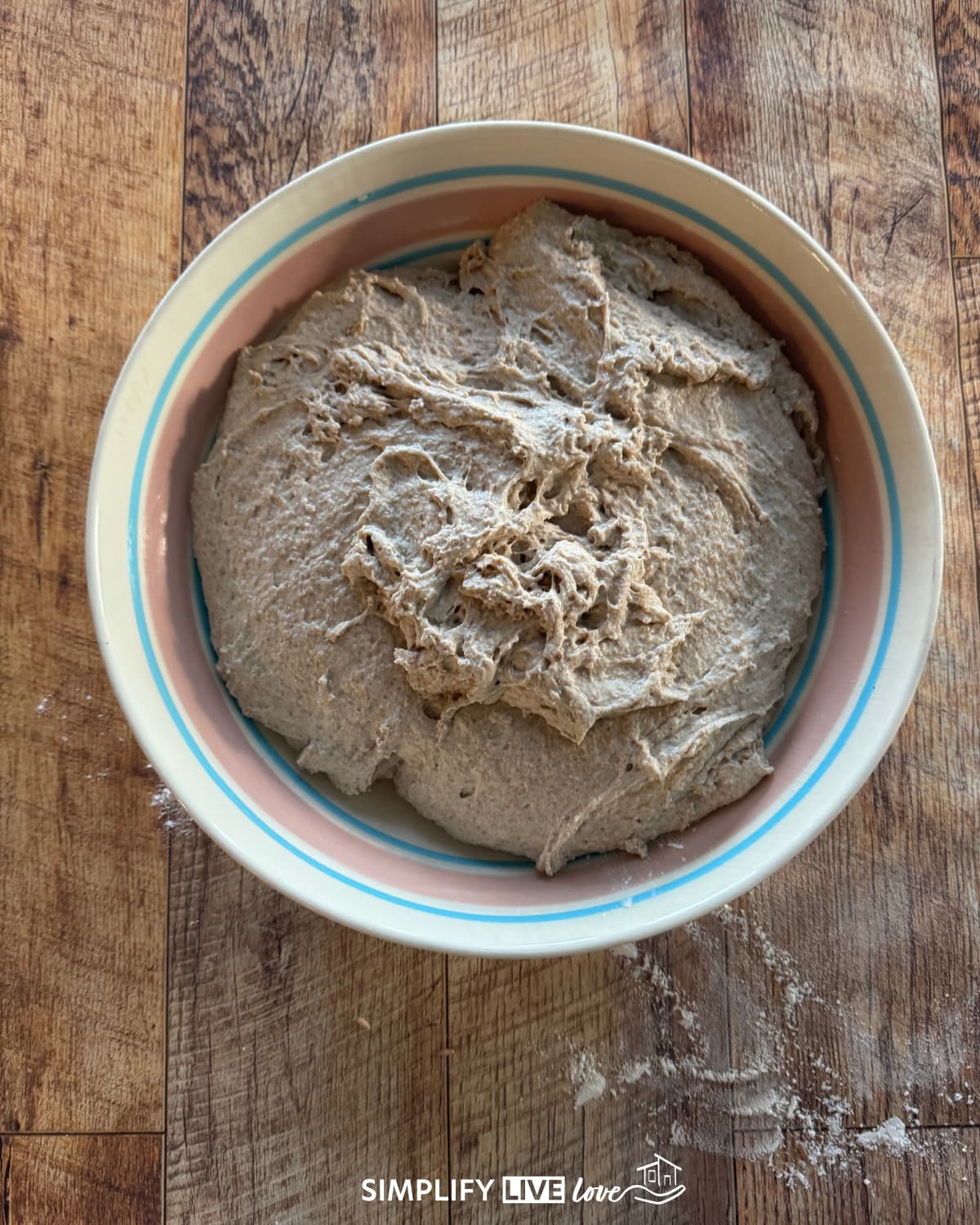
Mill your rye flour fresh and let it cool for a few minutes. Combine starter, rye flour, unbleached flour, and water in a stand mixer with a dough hook. Mix on low until a soft, sticky dough forms, about 1–2 minutes. This dough will be noticeably stickier than a wheat sourdough — that’s correct and expected. Cover and rest for 20 minutes (autolyse).
Freshly milled rye absorbs water aggressively and the dough may feel stiffer than expected right after mixing. Don’t add more water yet — give it the full 20 minute autolyse and it will loosen up significantly as the bran hydrates.
Step 2: Add salt and knead
After the autolyse, add the salt. Knead on low speed for 3–4 minutes. The dough will be sticky and dense when done. Resist adding more flour.
Step 3: First rise
Transfer dough to a lightly greased bowl and cover with a damp towel. Let rise for one hour. At 70°F this timing works well — if your kitchen is warmer, check at 50 minutes.
I do my bulk ferment in my grandmother’s bread bowl — the same bowl she used to make weekly bread for her family of eight. Any large mixing bowl will do.
Step 4: Letter fold and second rise
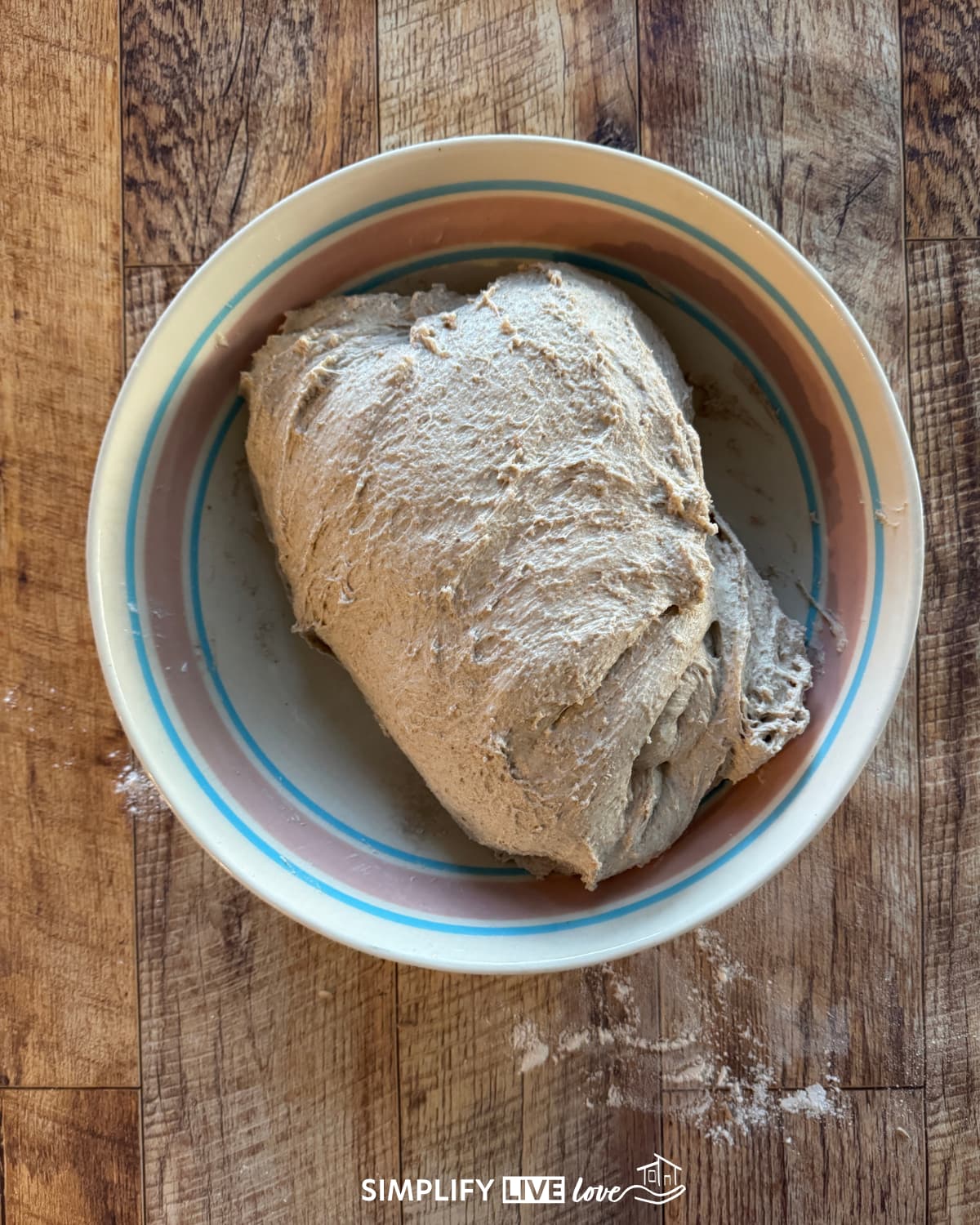
Turn dough out onto a lightly floured surface — use a dough scraper liberally, it will stick. Perform a series of letter folds:
- Pull one side of the dough up and fold over the center
- Rotate 90 degrees and repeat on all sides
- Return to container, cover, and let rise for another hour
Step 5: Divide and pre-shape
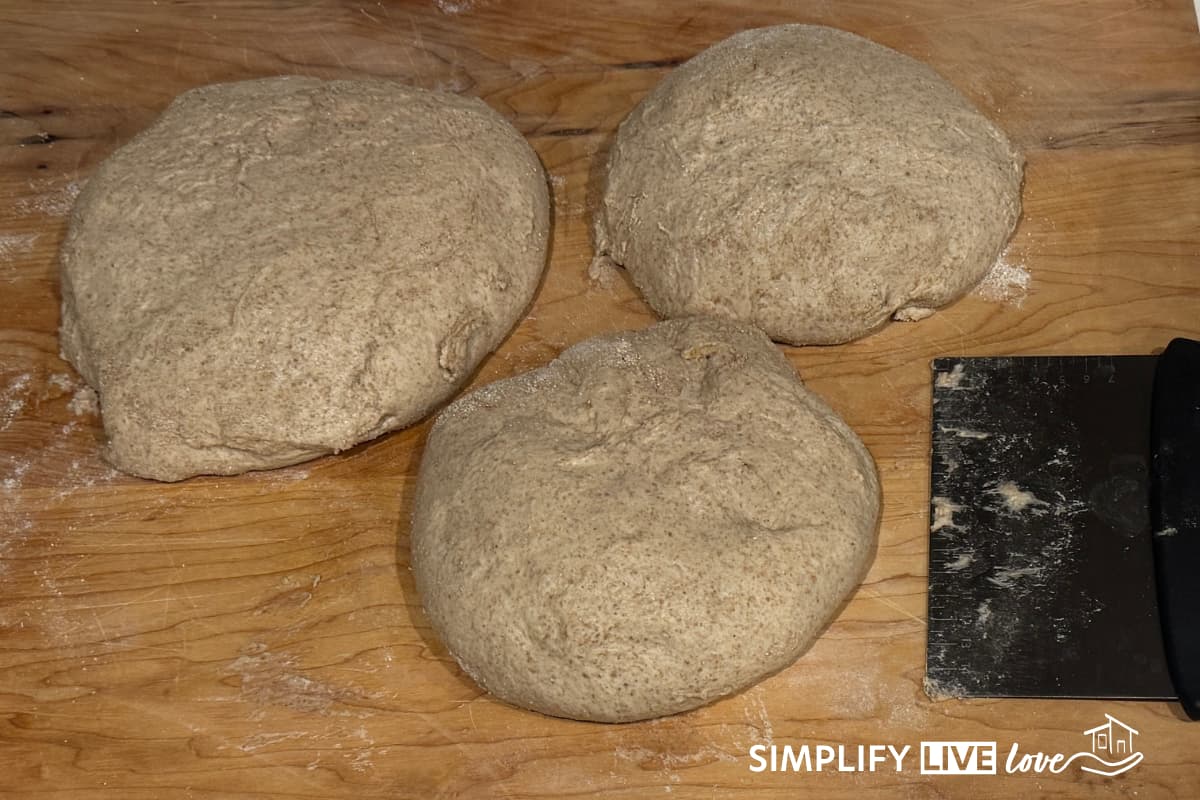
Turn dough out and divide in half (or into thirds or fourths if scaling up). Gently shape each piece into a rough round ball with the help of your dough scraper. Cover and let rest 20 minutes. This rest allows the gluten to relax so the dough is more cooperative for final shaping.
How to Shape Rye Dough and Cold Ferment Overnight
Shape each piece into as tight a ball as the dough will allow:
- Use wet hands rather than floured hands if the dough is extremely sticky
- Let your dough scraper do most of the work
- Don’t fight it — rye dough won’t behave like wheat dough and that’s fine
- Get it into a reasonably tight shape and move on
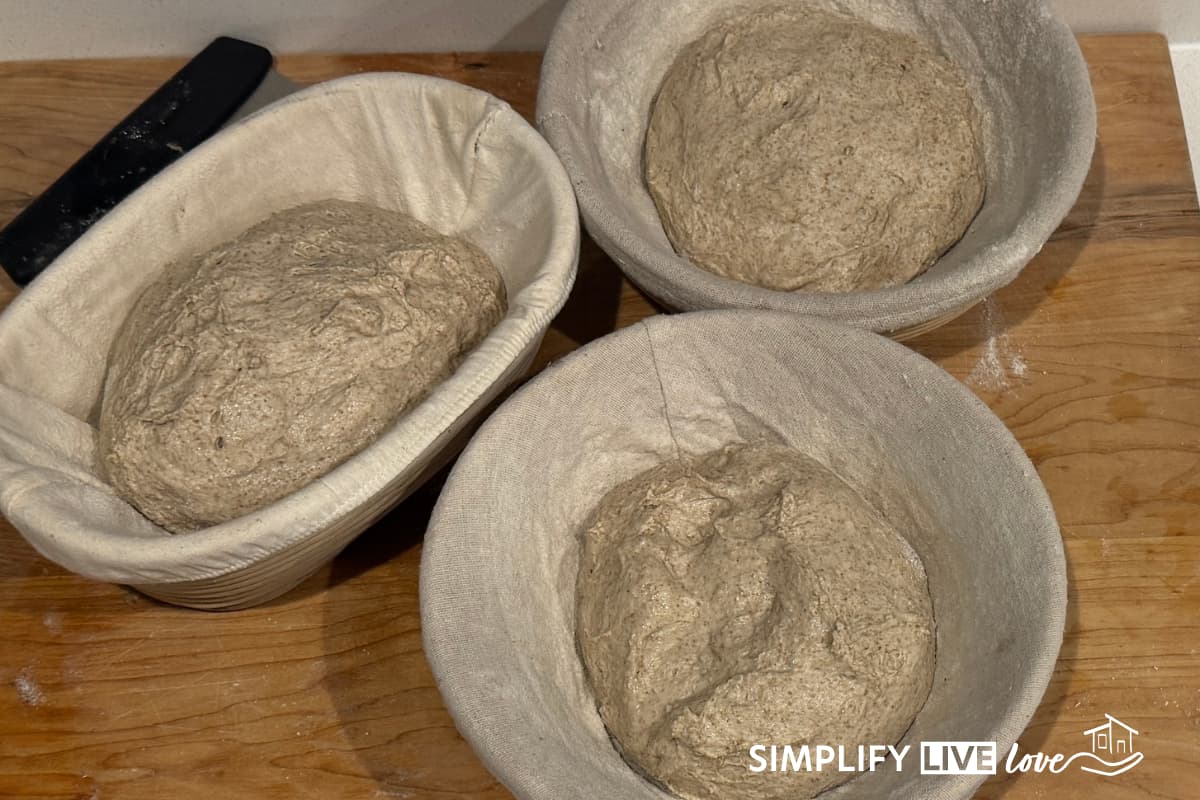
Place each loaf seam side up into a well-floured banneton. Rice flour is strongly recommended — rye dough is significantly stickier than wheat and will cling aggressively to anything that isn’t generously floured. Be more generous than you think you need to be.
Cover the bannetons and place immediately in the refrigerator. Cold ferment for 10–12 hours — this is the sweet spot for this recipe. Do not push beyond 14 hours.
The loaves will look modestly puffed in the fridge, not dramatically risen. That’s normal and correct. They go straight from the fridge into the oven — no need to bring them to room temperature first.
This recipe doubles beautifully. I regularly make a batch of three or four loaves, baking them one at a time and freezing the extras. If you’re going to the effort of milling your own rye, you might as well make it worth your while.
How to Score Sourdough Mischbrot
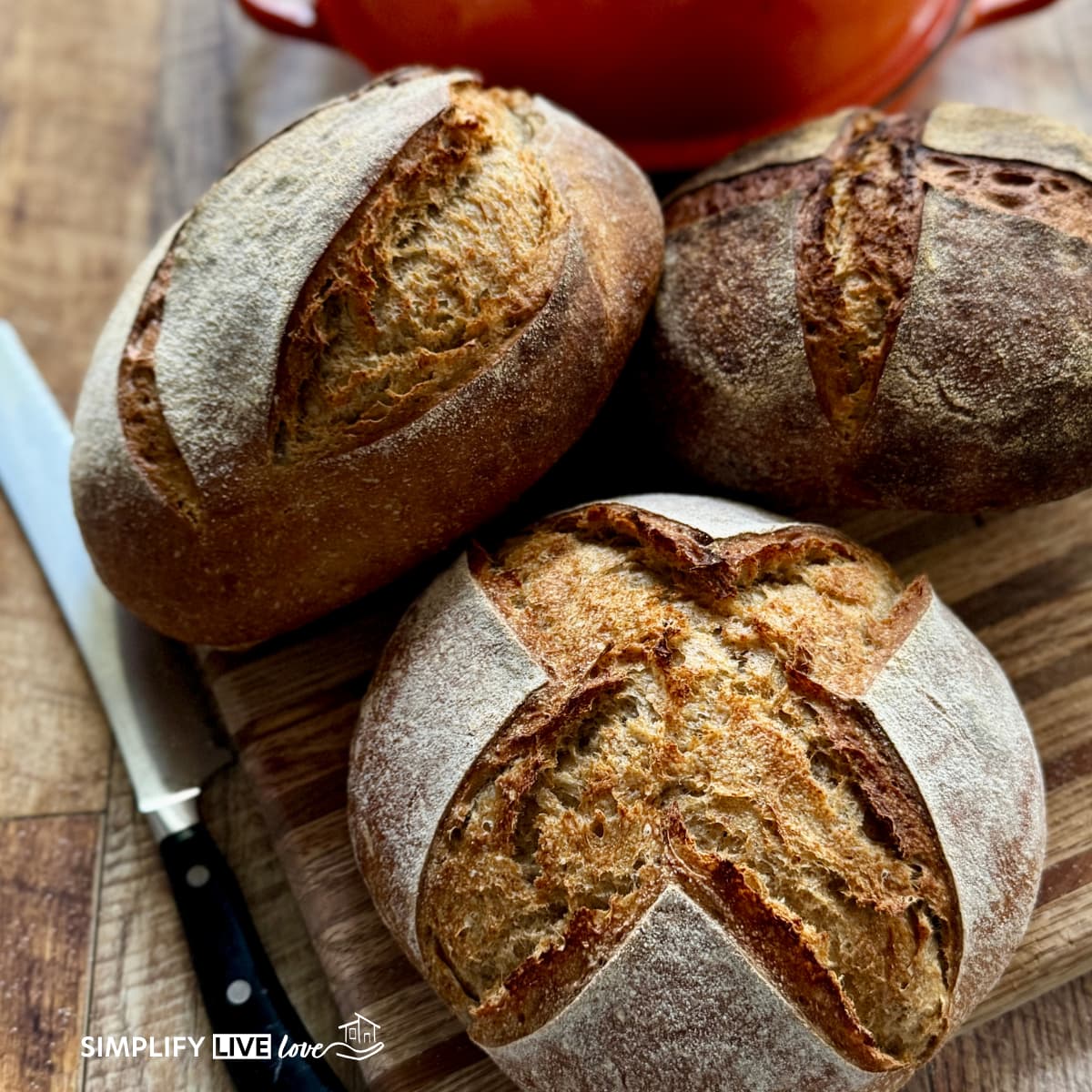
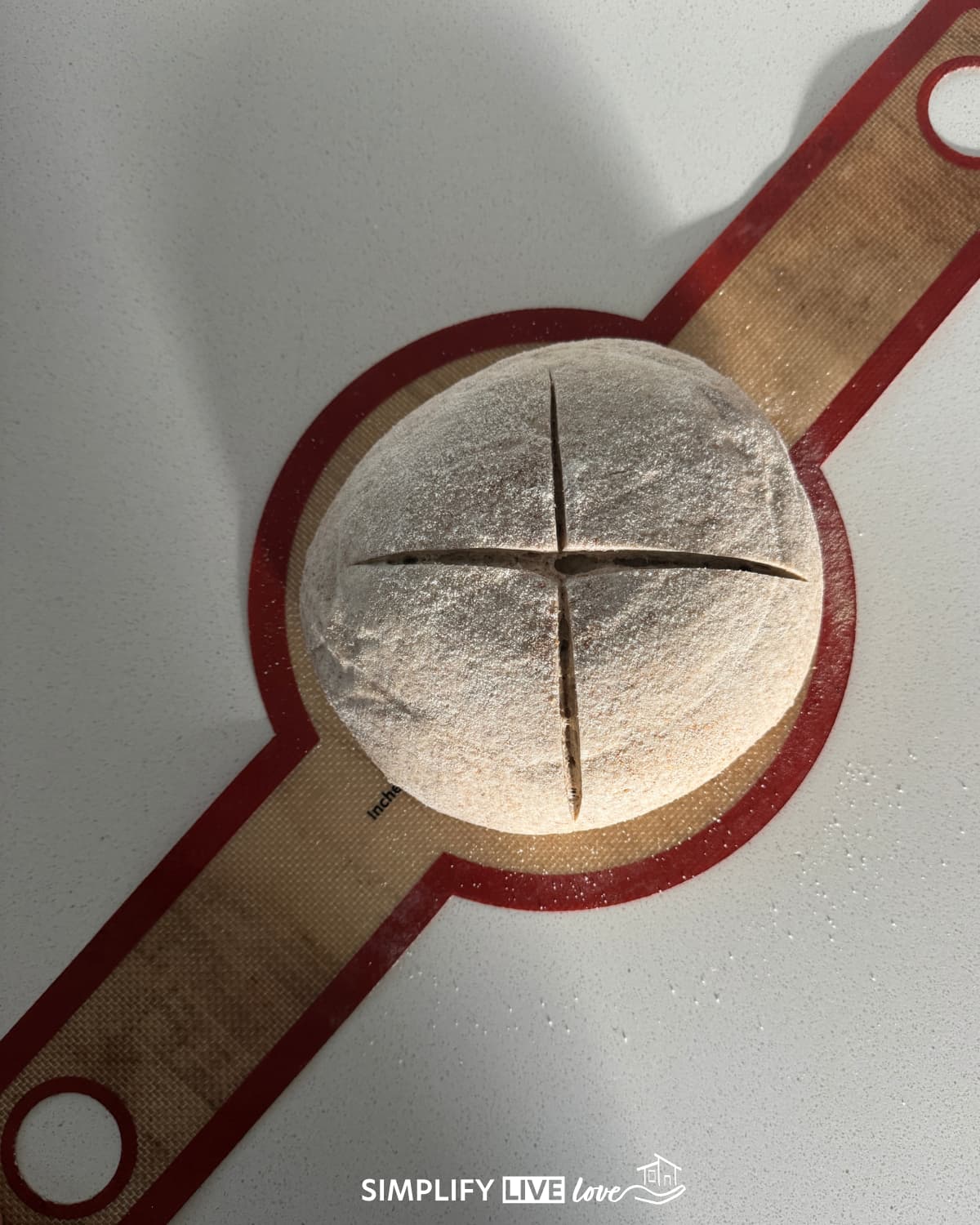
Cold rye dough scores beautifully. The cold firms it up enough that the blade moves cleanly. I’ve tested two scoring patterns with great results:
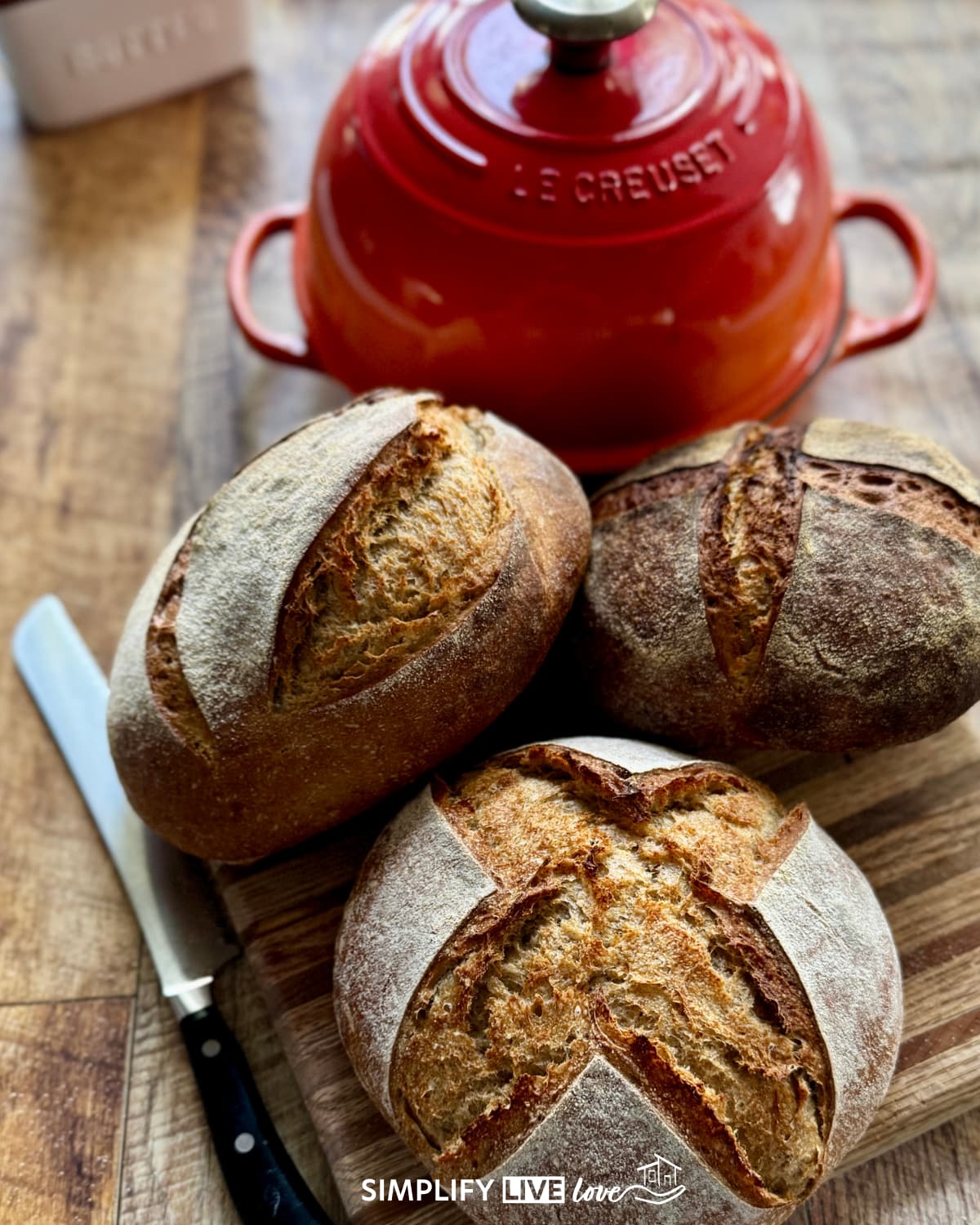
- Single S curve with two side slashes — produces a dramatic single ear and an elegant, refined look. My preferred score for the steam oven.
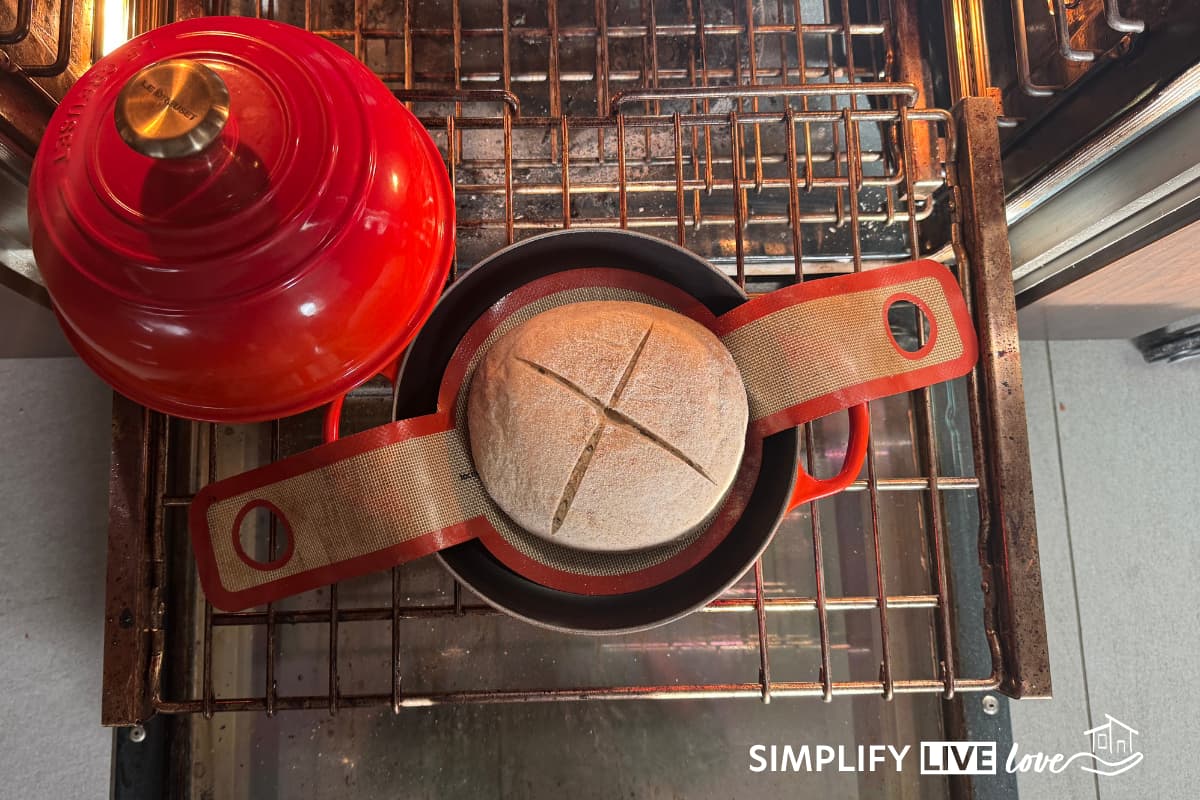
- X score — all four quadrants lift and open in the oven, giving a bold rustic appearance. Works beautifully in both the Le Creuset and the steam oven.
Use the corner of your bread lame rather than the full blade for the cleanest cut. Work quickly — you want the dough cold when it hits the oven.
Three Ways to Bake Sourdough Mischbrot
Method 1 — Le Creuset Bread Oven (Conventional Oven)
My preferred conventional oven method. The enclosed ceramic environment traps steam from the dough naturally, giving you oven spring and crust development without any extra setup.
- Place the Le Creuset bread oven inside your conventional oven and preheat to 450°F for 45–60 minutes — the ceramic needs to be fully saturated with heat before the dough goes in
- Remove your loaf from the fridge, turn it out onto your silicone baking sling, and score quickly
- Using the sling, carefully lower the dough into the hot bread oven
- Cover and bake at 450°F for 20 minutes — do not lift the lid
- Remove the lid, reduce temperature to 400°F, and bake another 15 minutes until deep brown
- The loaf is done when it’s a rich dark brown and sounds hollow when tapped on the bottom
- Cool on a rack for at least 45 minutes before slicing
Method 2 — Thermador Steam Oven
If you have a steam oven, this is a fantastic method for Mischbrot — no cast iron skillet tricks needed. I tested two variations:
Full steam convect: 450°F steam convect for 15 minutes, then 400°F steam convect for 15 minutes. Result: beautiful open, artisan-style crumb with a good crust.
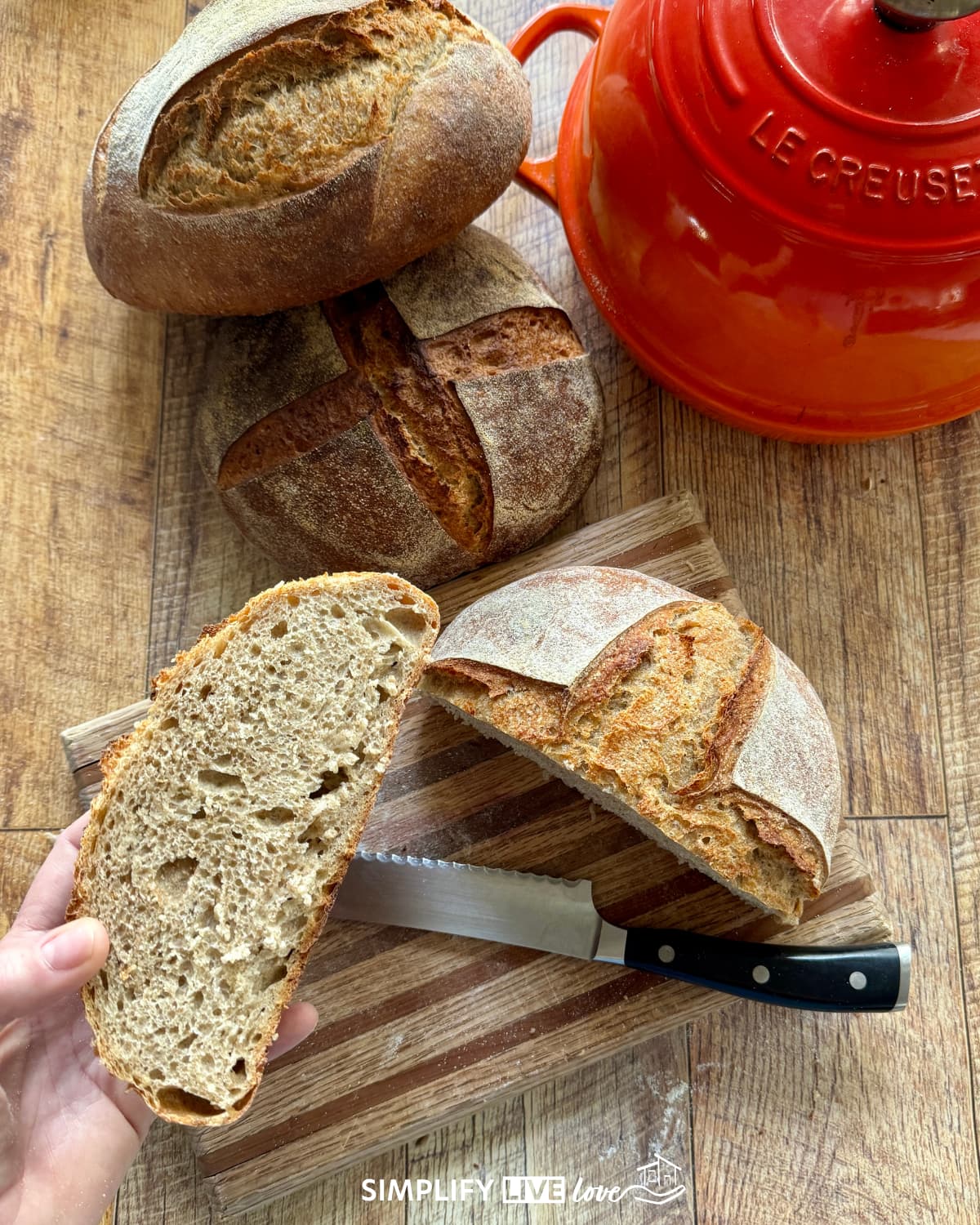
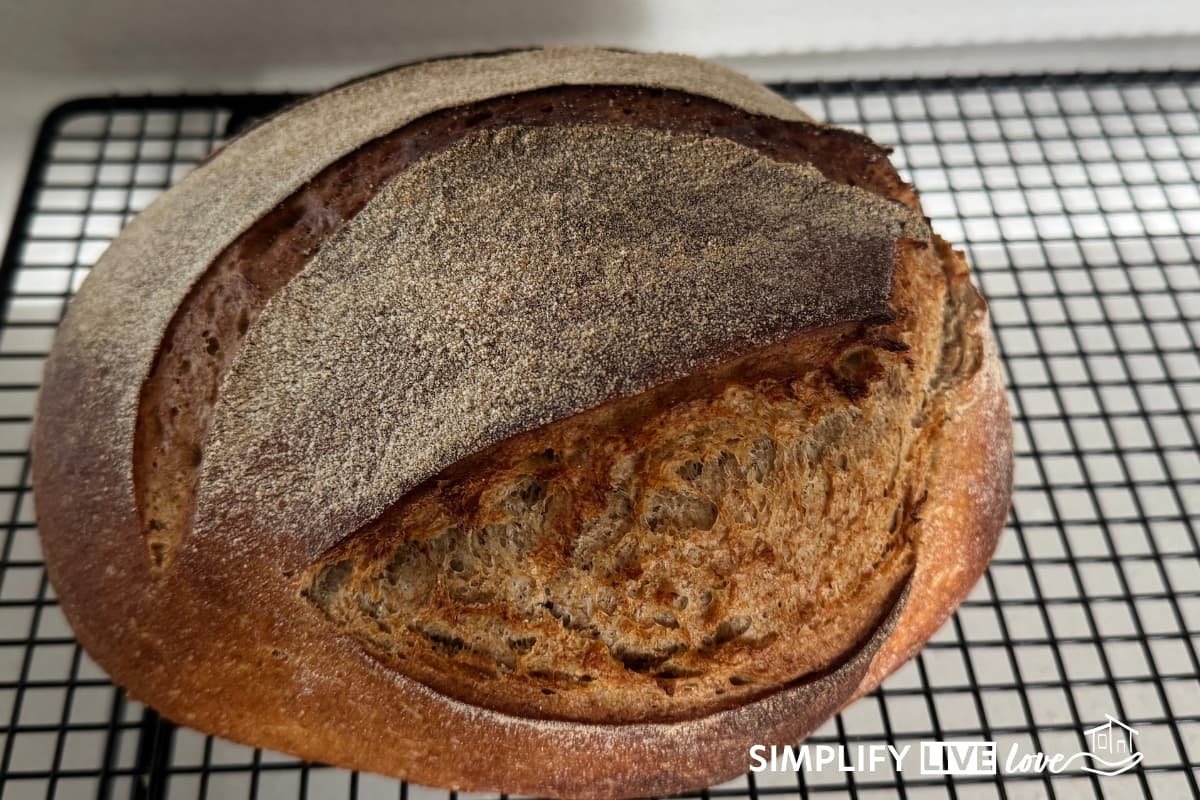
Steam convect then true convect (recommended): 450°F steam convect for 20 minutes, then 400°F true convect for 13 minutes. Result: spectacular oven spring, dramatic ear along the score, deep rich crust color, and a tighter more traditional Mischbrot crumb. This is the method I now recommend.
Both methods produce delicious bread with identical flavor. The difference is purely in crust development and crumb structure — the steam convect finish gives a more open artisan crumb, while the true convect finish gives better oven spring and a more traditional Mischbrot result.
Method 3 — Baking Stone with Steam (Conventional Oven)
The most accessible method for bakers who don’t have a Le Creuset or steam oven:
- Place a cast iron skillet on the bottom rack and a baking stone on the middle rack — preheat to 450°F for 45–60 minutes
- Turn cold dough out onto parchment paper or a silicone sling and score
- Place on the hot stone, immediately pour one cup of hot water into the cast iron skillet, and shut the oven door quickly
- Reduce heat to 425°F and bake 30–35 minutes until deep brown and hollow-sounding when tapped
- Cool on a rack for at least 45 minutes before slicing
Sourdough Mischbrot Frequently Asked Questions
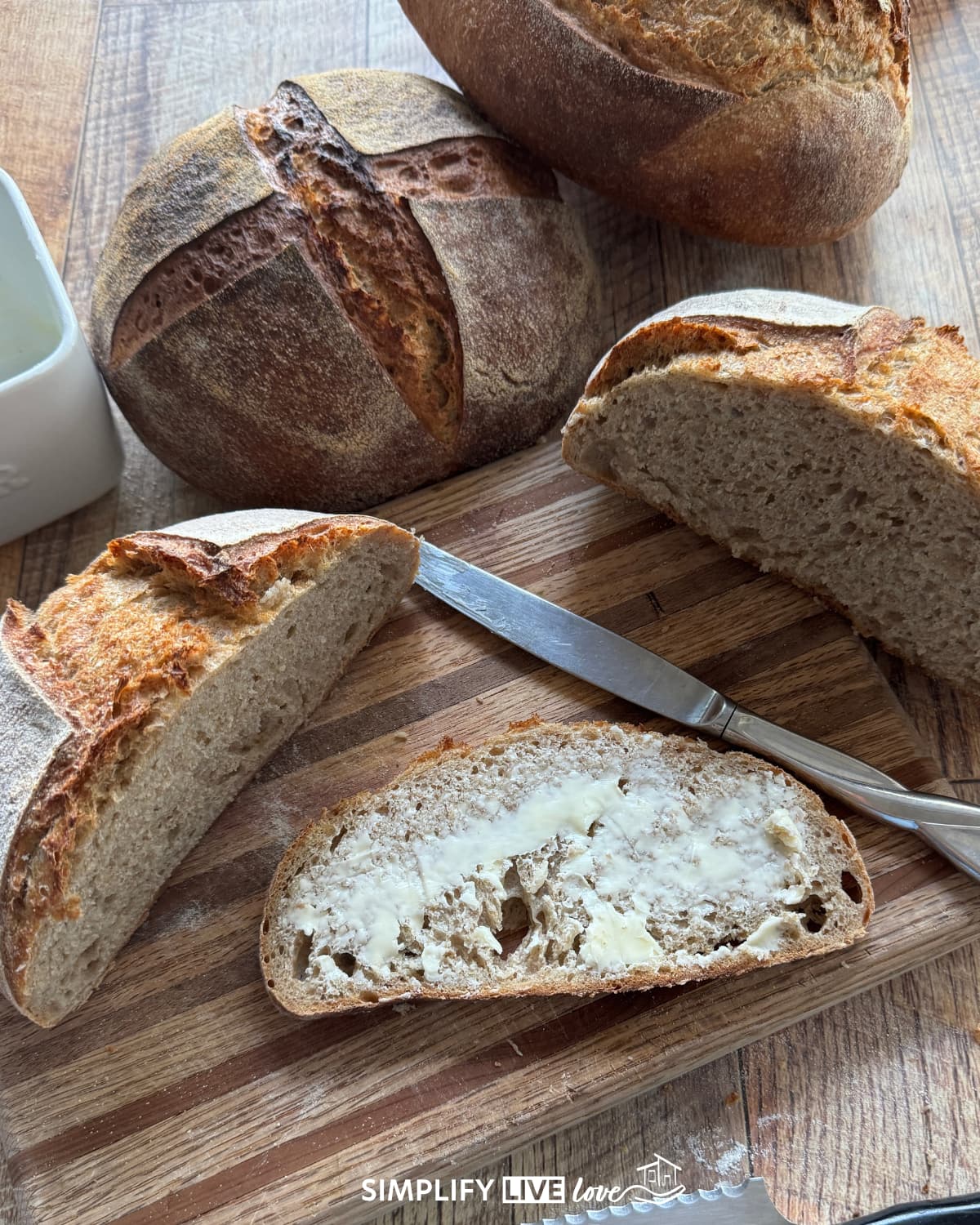
Mischbrot is a traditional German mixed bread made with a blend of rye and wheat flour. The name simply means “mixed bread” in German. It has a dense, moist crumb, a chewy dark crust, and a savory flavor that is completely unlike American sandwich bread. It’s almost always made with a sourdough starter, which gives it a mild tang and helps the rye flour bake properly.
No, not always. Some traditional Mischbrot is a sourdough bread, though it looks and tastes very different from the open-crumbed, artisan-style sourdough most American bakers are familiar with. The sourdough starter isn’t just for flavor here. Rye flour requires an acidic environment to bake correctly. Without it, enzymes in the rye break down the starch and the crumb becomes gummy.
For the rye component, freshly milled whole rye gives the best flavor and nutrition. For the wheat component, unbleached all-purpose flour works well at 50% rye. Tt has enough protein to give the dough structure without fighting the rye.
After the autolyse, your dough should feel soft, sticky, and slightly shaggy. With 50% rye it will be noticeably stickier than a wheat sourdough. Don’t mistake that stickiness for a hydration problem. If the dough tears rather than stretches when you pull it, add water a tablespoon at a time. When in doubt, wait out the autolyse before adjusting. Rye absorbs water aggressively and the dough will loosen significantly as it rests.
Cold fermenting slows fermentation way down and gives the dough a long, slow rise that develops more complex, tangy flavor than a same-day bake. It also makes scoring easier because cold dough holds its shape better under the blade, and it makes your baking schedule much more flexible. Shape in the evening and bake early the next day.
For this recipe, 10–12 hours is the sweet spot. Eight hours is workable if you’re in a pinch. Do not push beyond 14 hours. The rye content makes over-fermentation a real risk.
Yes. The loaves go directly from the refrigerator into the fully preheated oven regardless of which baking method you use. Cold dough scores more cleanly and the temperature contrast gives you a better oven spring.

Sourdough Mischbrot with Freshly Milled Rye
Ingredients
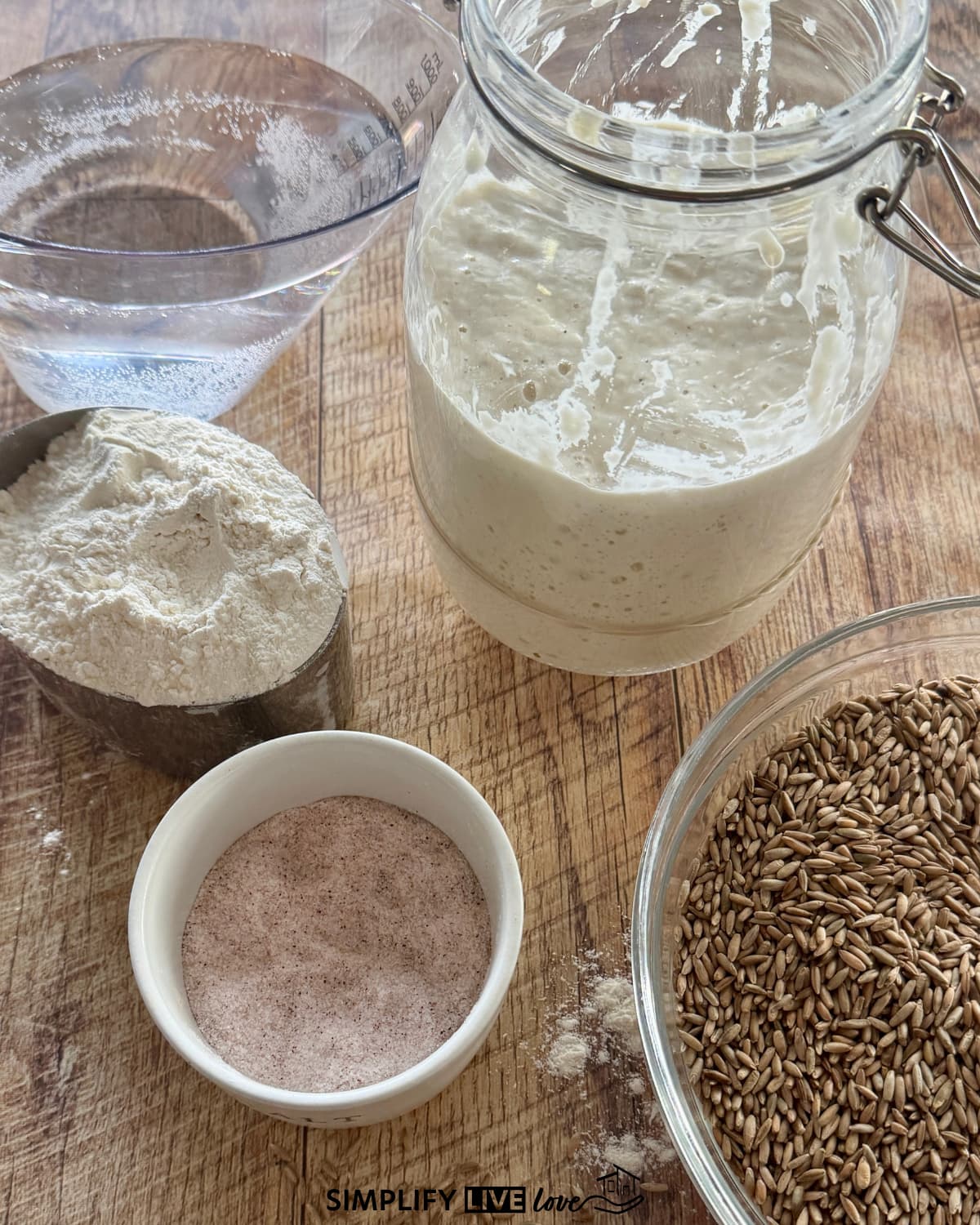
- 454 g active fed wheat starter, about 2 cups
- 344 g freshly milled rye flour
- 343 g unbleached all-purpose flour
- 450 –475g room temperature water, start with 450g; add more after autolyse if needed
- 2½ teaspoons Redmond’s Real Salt
Instructions
- Mill rye flour fresh and allow to cool a few minutes.
- Combine starter, both flours, and 450g water in a stand mixer with a dough hook. Mix on low until a soft, sticky dough forms, about 1–2 minutes. Cover and rest 20 minutes (autolyse). Add remaining water after autolyse if dough feels too stiff.
- Add salt. Knead on low speed for 3–4 minutes. Transfer to a lightly greased bowl and cover with a towel.
- Let rise for one hour, checking at 50 minutes if your kitchen is warm.
- Turn dough out onto a lightly floured surface and letter fold — pull one side up and fold over center, rotate 90 degrees, repeat on all sides. Return to bowl, cover, and let rise one more hour.
- Turn dough out and divide in half. Shape each piece into a rough round ball, cover, and let rest 20 minutes.
- Shape each piece into as tight a ball as the dough will allow. Place seam side up in generously rice-floured bannetons. Cover well.
- Place immediately in the refrigerator. Cold ferment for 10–12 hours, no longer than 14.
- When ready to bake, preheat oven to 450°F with your chosen baking vessel for 45–60 minutes.
- Remove loaves from fridge one at a time, keeping remaining loaves cold until their turn. Turn out onto silicone sling or parchment and score.
- Bake using your preferred method (see baking methods section above).
- Cool on a rack for at least 45 minutes before slicing — rye bread needs the full cooling time for the crumb to set properly.
Notes
- Active hands-on time is approximately 45 minutes — the rest is rising, resting, and cold fermenting. This bread fits easily into a real life schedule across two days.
- Freshly milled flour absorbs water differently than store-bought. Don’t panic if the dough feels stiffer at first. Give it time during the autolyse to hydrate fully before adjusting water.
- Hard white wheat is the mildest and most beginner-friendly freshly milled option. Hard red wheat gives a heartier, more robust flavor. For extra depth, swap 50–75g of the freshly milled flour for rye.
- Cold dough scores more cleanly than room-temperature dough — enjoy it!
- Store leftover bread in a loose bag at room temperature for about a day, or wrap tightly and freeze.