12 Typical German Breakfast Foods (and How to Serve Them in the US)

on May 24, 2024, Updated Nov 15, 2026
This post may contain affiliate links. Please read our disclosure policy.
A traditional German breakfast is one of my favorite meals on the planet. I grew up eating it as an Army kid in Heidelberg, then ate it again for a whole year as an exchange student in Tübingen in college. My kids would happily eat it every day after our spring break trip to Germany. Best of all, it takes almost no cooking. The tricky part is finding the right ingredients in the US, so here’s how I put one together at home in Eastern Iowa.

German Breakfast at a Glance
A typical German breakfast (Frühstück) is a relaxed, mostly cold spread built around good bread.
- Bread first: Brötchen rolls, farmer’s bread and pretzels are the star.
- Savory toppings: sliced cold cuts like salami and Leberwurst, plus plenty of cheese.
- One hot item: soft-boiled eggs served in egg cups.
- Sweet spreads: butter, honey, jam and hazelnut spread.
- On the side: fresh fruit, sliced veggies, yogurt with muesli, juice and coffee.
- In the US: order German bread from The Brot Box, or use Aldi and Costco rolls and homemade sourdough.
Love German food? Try my German Frikadellen and Gurken Salat.
Table of Contents
As an Amazon Associate I earn from qualifying purchases.

What Is a Typical German Breakfast?
In Germany, breakfast on weekends and holidays is a slow family affair. Everyone gathers around a table full of bread, meat, cheese and spreads, and nobody rushes off. In nice weather it moves outside. Weekday breakfasts are smaller, often just a roll with butter and jam and a cup of coffee, but the weekend spread is the one worth recreating.

12 Traditional German Breakfast Foods
- Brötchen (bread rolls): fresh, crusty rolls, split and piled with toppings.
- Bauernbrot (farmer’s bread): a hearty rye and wheat loaf.
- Brezeln (pretzels): great with butter, cheese or sliced meat.
- Cold cuts: ham, salami and Leberwurst (liverwurst).
- Cheese: Gouda, Emmental, Brie and whatever else you like.
- Boiled eggs: usually soft-boiled, sometimes hard.
- Spreads: butter, jam, honey and hazelnut spread.
- Fresh fruit: whatever is in season.
- Yogurt and muesli: a lighter option.
- Coffee or tea: a must for the grown-ups.
- Vegetables: sliced cucumbers, tomatoes and radishes.
- Smoked fish: salmon or herring, for those who like it.
Pin this now to find it later
Pin ItHow to Make a Traditional German Breakfast in the US
Serving a German breakfast here takes a little planning. Brötchen, German cold cuts and some cheeses aren’t in most American grocery stores, and a savory breakfast may surprise anyone used to pancakes and bacon. With a few smart swaps, you can still get close.
Start with Good German Bread
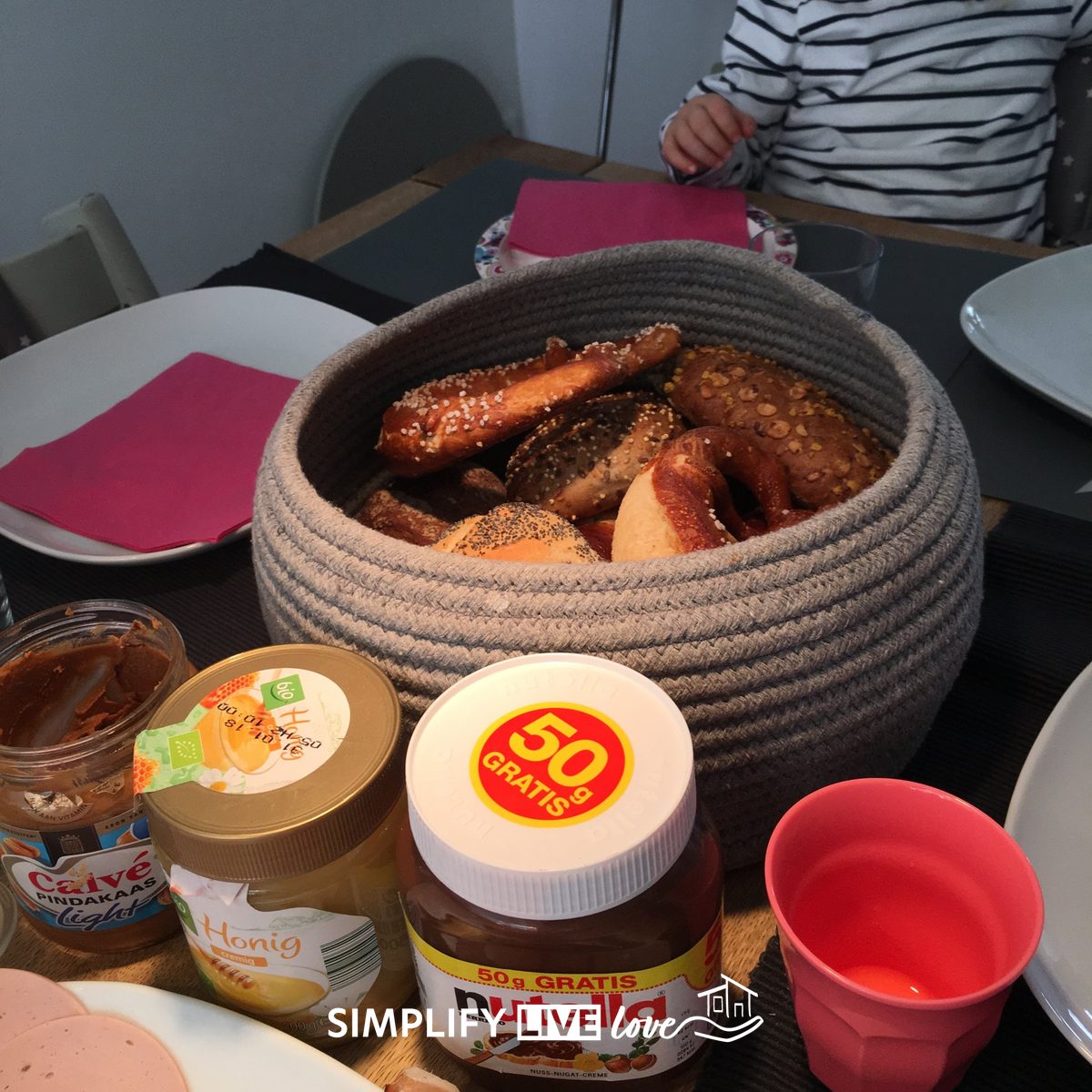
Bread is the most important part. In Germany, someone runs to the bakery every morning for fresh Brötchen, croissants, pretzels and baguettes. I’ve tried making my own artisan rolls, and they’re good but not quite the same. These days I buy croissants and pretzel rolls at Aldi or Costco, add a nice seeded loaf and a sliced baguette, and bake my own sourdough bread, which comes in a close second. Homemade 12 grain bread works well too.

Order Authentic German Bread from The Brot Box
The Brot Box delivers fresh German bread to your door. We tried the bestseller box and loved it. It arrived quickly, we put everything in the freezer, and we pulled out rolls whenever we wanted a German breakfast. Favorites include:
- Baker’s Rolls (Brötchen)
- Pumpkin Seed Rolls
- Pretzel Sandwich Rolls
- XL Oktoberfest Pretzels
- Stone Oven Bürli Bread
- Swiss Farmers Loaf
- Organic Tuscany Spread and Organic Nuts & Raisins Muesli

Get 10% off your first order with my Brot Box link.
German Cold Cuts and Cheese
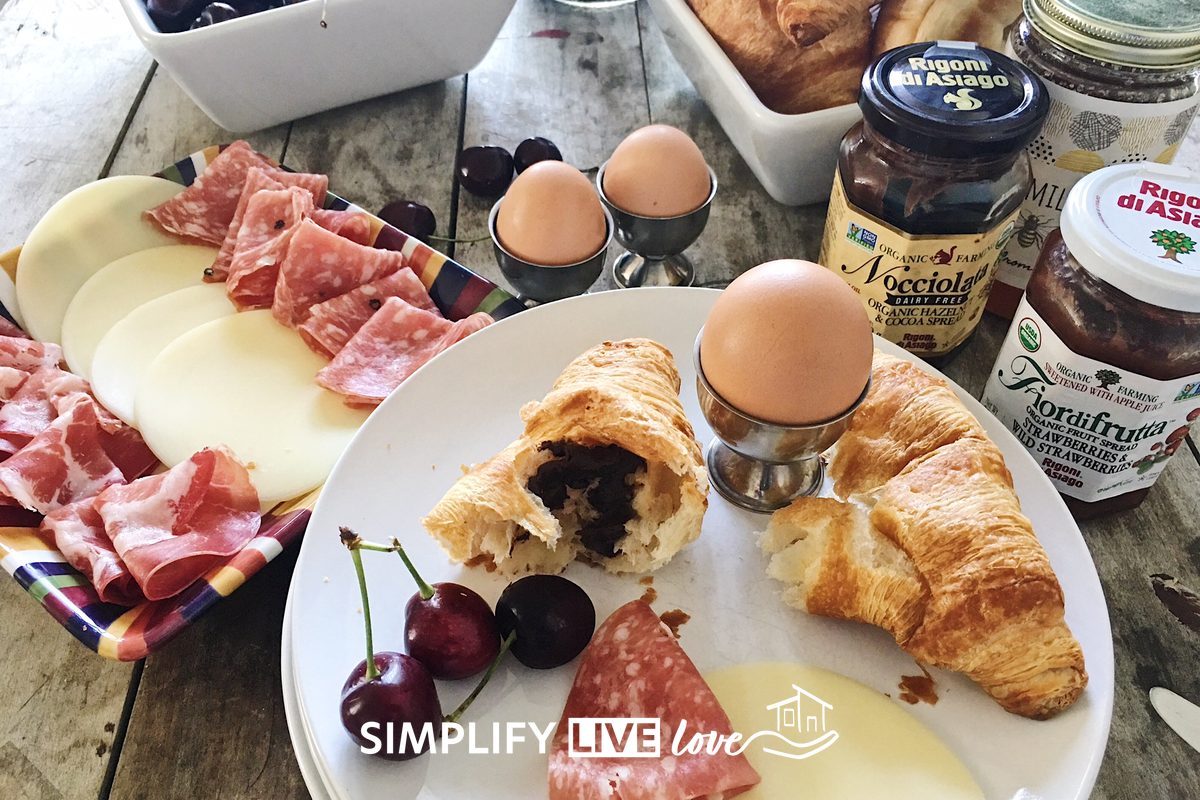
My kids love that Germans eat sliced meat for breakfast. Salami, Leberwurst and Kinderwurst all show up on the table.
- Leberwurst: a soft, spreadable liver sausage. Look for it at the deli counter or order it online.
- Kinderwurst: a mild lunch meat for kids, similar to mortadella without the fat cubes. I loved it as a kid, but mine weren’t fans, so I don’t hunt for it.
- Mortadella or bologna: the easiest US substitute for Kinderwurst.
- Where to shop: a good deli counter, a local German or European deli, and Aldi’s German Week, which usually brings in imported meats, cheeses and treats.
Don’t skimp on cheese. Soft, sliced and hard cheeses are all fair game, and the stinkier the better! Emmental and Gouda are classics. If you want to branch out, Comté from France’s Jura region, just across the border, is one of my favorites. Its nutty flavor is perfect on a crusty roll.
Soft-Boiled Eggs in Egg Cups
Eggs are the only thing you cook. Germans make soft-boiled eggs in electric egg cookers and serve them in little egg cups with small spoons. My kids think soft-boiled eggs are gross, but I grew up on them and still love them.
Fresh Fruit and Vegetables
Set out whatever is in season: cherries, currants, berries, kiwis or oranges, plus sliced cucumbers, tomatoes and radishes.
German Breakfast Spreads
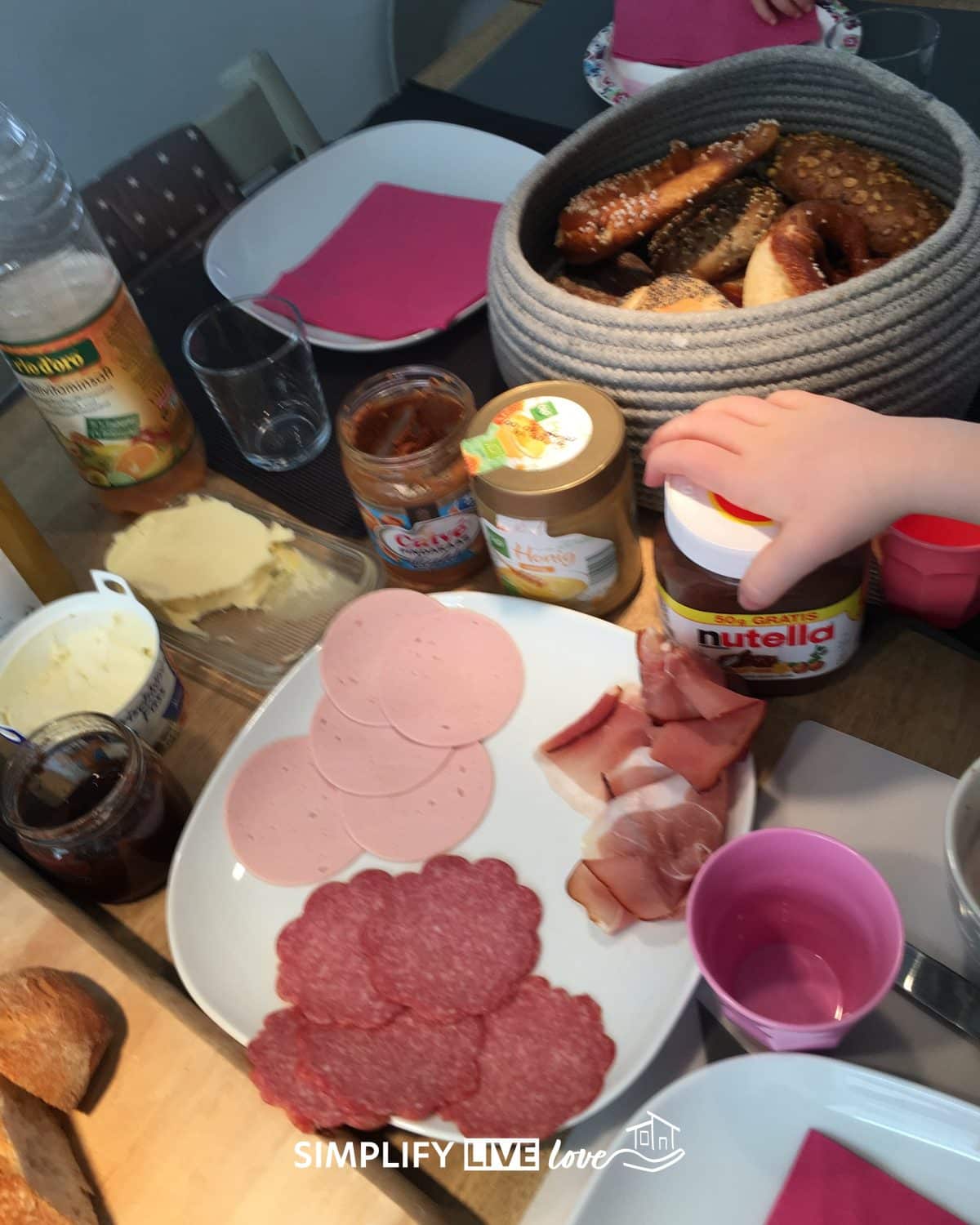
You need something for all that bread: honey, jam, real butter and hazelnut spread. I grew up on Nutella, but now I buy Nocciolata Organic Hazelnut Spread because the ingredients are better. Muesli with whole milk yogurt makes a nice lighter option.

Juice and Coffee
Germans serve several juices, especially multivitamin, apple and orange. German multivitamin juice is mostly fruit, and the closest I’ve found here is Knudsen juice. My kids were thrilled to drink as much juice as they wanted, since I rarely buy it. The grown-ups have coffee or cappuccino and take their time.
German Breakfast Shopping List
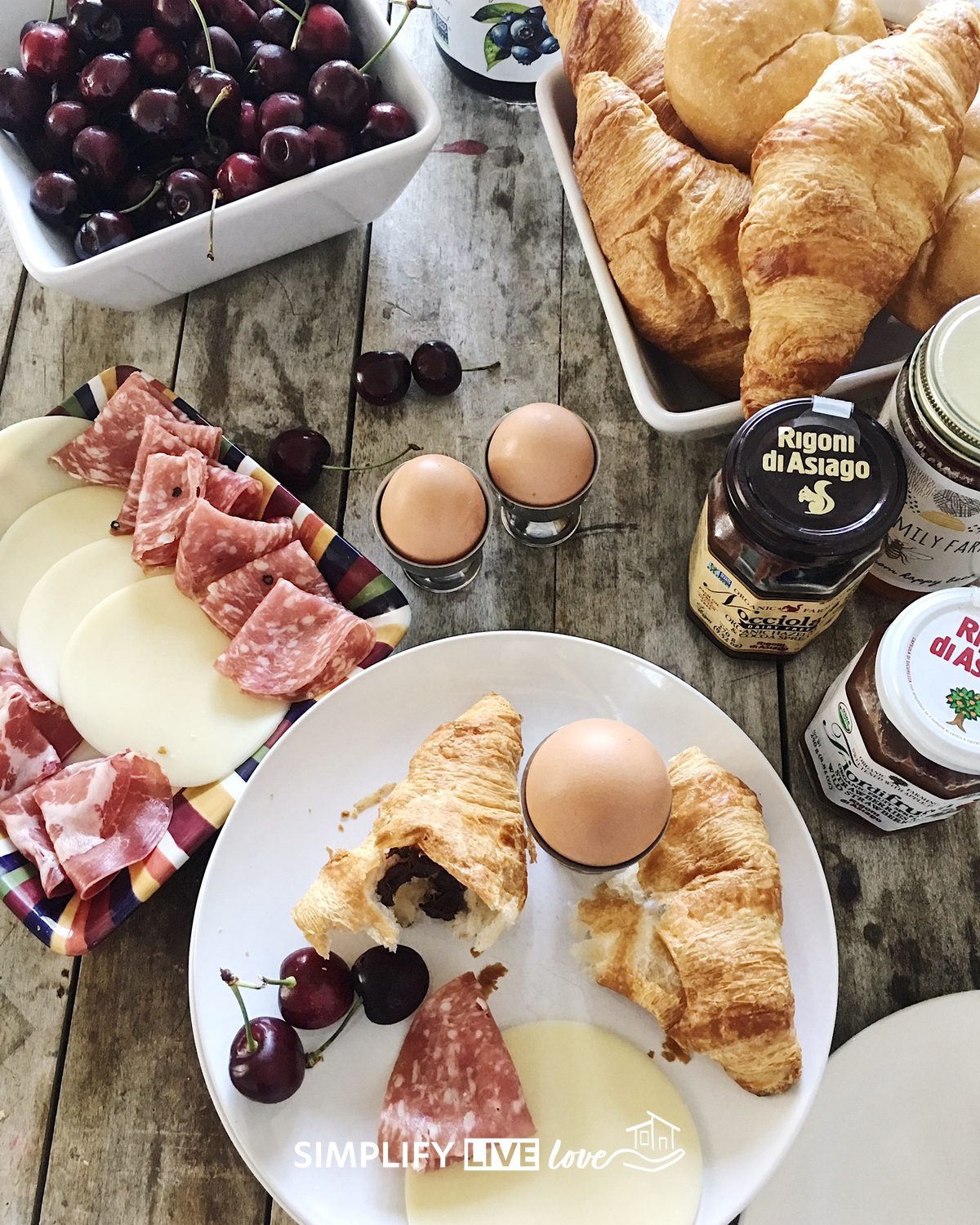
- Brötchen, pretzel rolls, croissants, farmer’s bread
- Salami, ham, Leberwurst, mortadella
- 2 or 3 cheeses (one soft, one sliced, one hard)
- Eggs
- Butter, honey, jam, hazelnut spread
- Seasonal fruit, cucumbers, tomatoes, radishes
- Yogurt and muesli
- Juice, coffee and tea
German Breakfast FAQ
Bread or rolls with butter, jam, honey, cold cuts and cheese. Weekend breakfasts add soft-boiled eggs, fruit, vegetables, yogurt with muesli, juice and coffee.
Both. It’s mostly savory with meat, cheese and eggs, with sweet spreads like jam, honey and hazelnut spread on the side.
Usually early on weekdays before work or school. Weekend breakfasts start later and can last a couple of hours.
A German breakfast is mostly cold, built around bread, cold cuts and cheese, and only the eggs are cooked. An American breakfast leans hot and heavy, with pancakes, bacon and hash browns.
Order bread from The Brot Box, check Aldi (especially during German Week) and Costco for rolls and pretzels, visit a German or European deli for cold cuts, and order specialty spreads and muesli online.
A mild German lunch meat made for kids, similar to mortadella without the visible fat. Mortadella or bologna is the closest US substitute.

More German Recipes and Travel Ideas
- German Pancakes
- German Frikadellen with Pan Fried Potatoes
- Gurken Salat (German Cucumber Salad)
- How to Have a Raclette Party at Home
- Is Heidelberg, Germany Worth a Stop?
- Tübingen: Southern Germany’s Medieval Gem, where I spent my college exchange year
- Visiting Neuschwanstein with Kids
Is a German breakfast something your family would enjoy? Tell me in the comments!











I love brotchen…why is it so hard for us to get it in the US! Sigh…
My family would love this for breakfast. We often have a meat and cheese tray with fresh bread for dinner. I think when we travel, this would be perfect!
We also love Rigoni di Asiago spreads! I’ve been using their black current jam as of recent in the kids PB&J’s. Great post Michelle!
Black currant jam sounds yummy, Ally! I have champagne currants growing in my garden and love them. 🙂
This is definitely a breakfast I would enjoy! It seems perfect for car trip-travel, too.
I have fond memories of German breakfasts from a trip I took years ago. I stayed with 8 host families for 5 weeks. When I got home, I did my best to replicate it every day for quite a while. The bread was definitely the hardest part! And it seemed everything was fresher there in Germany. Now, I’m inspired to try again! Thank you!
Don’t give up, Julie!! The bread is the hardest, but you can do it. 🙂
Nutella in the US is .ade mostly in Mexico and is not as good as it was many years ago. We have moved on to other brands we can find in an international market.